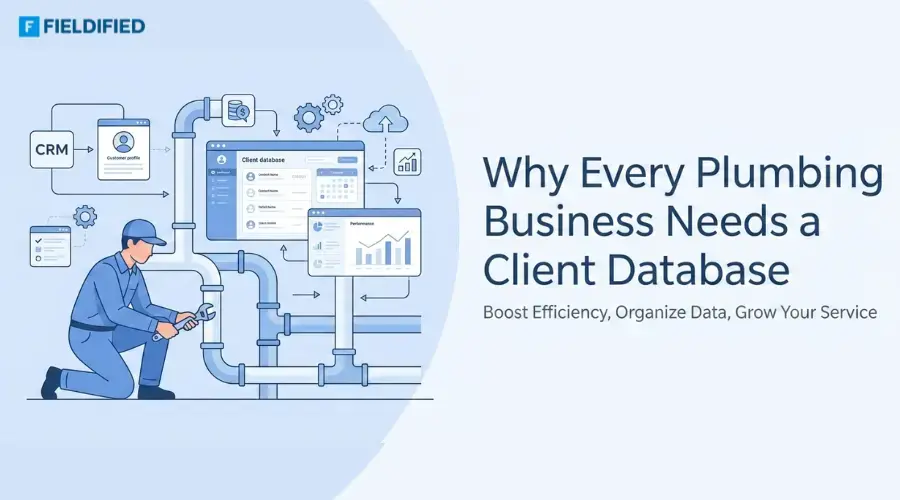





Running a plumbing business without a proper system to manage your clients is like trying to fix a leak in the dark. You might be lucky to think that you did it, but most of the time, it leads to trouble. Studies show that over 70% of businesses using a client database (CRM software) experience a 27% increase in customer retention. This proves that keeping track of your clients properly is not helpful but essential.
Customers want fast replies, smooth booking, and services that feel personal. Without a proper system, it’s easy to forget details, miss jobs, or delay invoices. A client database keeps all customer information in one place, helping your business stay organised and run smoothly.
So in this blog, you will learn about what a client database is, why it’s important for plumbing businesses, and how it helps with customer tracking, scheduling, invoicing, and improving service.
You’ll also get to know about the key features to look for in plumbing business software, the challenges and tips to maintain your database to use it for growing your business.
By the end of this blog, you will understand why a client database is an optional and must-have tool for any plumbing business that is aiming to succeed.
So, as we discussed, start with a basic question.
What is Client Database
A client database is a digital system where a business can store all of the customer information in one place. It keeps important details such as customer names, phone numbers, addresses, service history, and payment records. Instead of searching through notebooks or old files, business men can find anything quickly with just a few clicks.
For a plumbing business, a client database helps keep track of past and current jobs. It shows what work was done before, when it was completed, and what issues the customer faced. This makes future visits easier and more professional.
Most modern client databases are part of plumbing business software, which also helps with customer tracking, scheduling jobs, and managing invoices. By using a client database, plumbers can save time, avoid mistakes, and provide better service to their customers.
Why Client Database is Important for Plumbing Businesses
A client database is very important for plumbing businesses because it helps manage daily work in a simple and organised way. It keeps all customer information safe and easy to access, which improves overall efficiency. 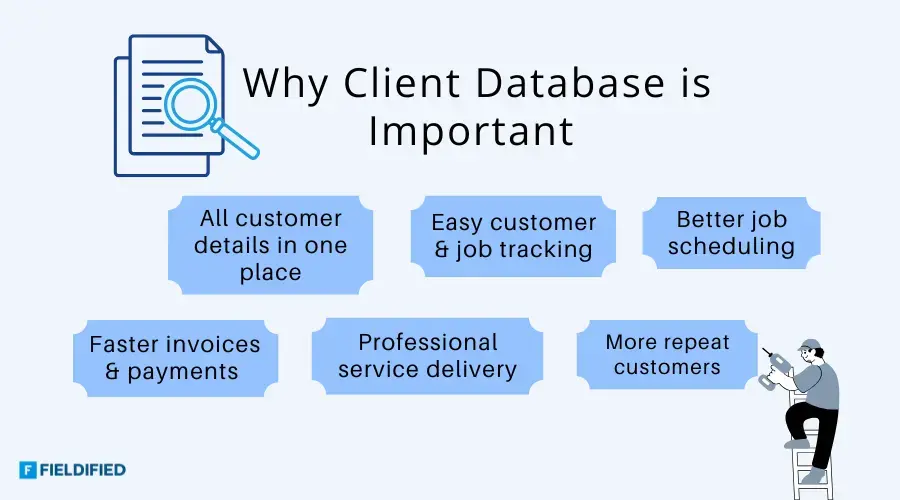
1. All customer details in one place – Names, contact numbers, addresses, and service history are stored properly, so nothing gets lost.
2. Better customer tracking – You can quickly check past jobs, recurring problems, and service dates to give faster and more accurate service.
3. Improved scheduling – With clear records of jobs and locations, planning daily work becomes easier and less confusing.
4. Faster invoicing and payments – It helps track invoices and pending payments, reducing delays and improving cash flow.
5. More professional service – Remembering customer details and past work builds trust and makes your business look reliable.
6. More repeat customers – Proper follow-ups and reminders help bring customers back for future services.
Using plumbing business software makes customer tracking smoother and reduces manual work, helping plumbers save time and avoid mistakes. This is the importance of a Client Database, so that you get the benefit of the software and grow your plumbing business efficiently.
How It Helps with Customer Tracking and More
A client database plays a key role in customer tracking by keeping all customer details and job history in one place. It records previous services, issues faced, and visit dates, making it easy to understand customer needs. With proper customer tracking, plumbers can follow up for maintenance, offer repeat services, and respond faster when a customer calls again. This helps build long-term relationships and trust.
When it comes to scheduling, a client database helps plan jobs more efficiently. Plumbers can view upcoming appointments, customer locations, and technician availability in advance. This reduces missed appointments, avoids double bookings, and saves travel time. Businesses can manage clients, jobs, and invoices in one tool, making daily operations smooth and organised.
A client database also simplifies invoicing and improves overall service quality. It helps create invoices quickly, track pending payments, and send reminders on time. With accurate records and better customer tracking, plumbers can provide personalised service, resolve issues faster, and deliver a more professional experience to every customer.
Key Features You Should Look For
Choosing the right plumbing business software for customer tracking can make daily work easier and help your business grow. Good software should reduce manual effort, save time, and keep everything well organised.
Below are the most important features you should look for:
1. Easy Client Information Management
The software should allow you to store all customer details in one safe place. This includes names, contact numbers, addresses, and job history.
You should be able to find customer records quickly without searching through files or notes. Easy access to information helps you respond faster and work more confidently.
2. Simple Job Planning and Scheduling
A good system should help you plan jobs without confusion. You should be able to view upcoming work, assign tasks to plumbers, and check availability easily.
This helps avoid missed visits and overlapping bookings. Clear scheduling also saves travel time and helps complete more jobs in a day.
3. Fast and Clear Invoicing
The software must make billing easy. You should be able to create invoices quickly after a job is done.
It should also help you track unpaid bills and send reminders when needed. This keeps payments on time and improves cash flow without extra effort.
4. Mobile-Friendly Access
Plumbers often work on-site, so the software should work well on mobile phones or tablets. A mobile CRM allows technicians to check job details, update work status, and add notes directly from the job location.
This real-time access improves accuracy, reduces paperwork, and ensures all information is updated instantly without returning to the office.
5. Service History and Notes
The system should save details of past jobs, materials used, and customer requests. These records help during repeat visits and make your service more professional. Knowing past issues helps you solve problems faster.
6. Reporting and Business Insights
Good software provides clear reports about jobs, earnings, and customer activity. These insights help you understand what services perform best and where improvements are needed. Data helps you make smarter business decisions.
7. Data Safety and Backup
Customer information is valuable, so the software should protect it well. Look for features like secure login and regular data backup. This ensures your data stays safe even if something goes wrong.
8. Easy to Learn and Use
The software should be simple for you and your team to understand. Training should not take too long. Easy tools reduce mistakes and increase productivity.
9. Reliable Support and Updates
Choose software that offers good customer support and regular updates. This helps solve problems quickly and keeps the system up to date with new features.
Selecting the right plumbing business software with these features will help you work smarter, deliver better service, and grow your business with confidence.
Challenges Plumbing Businesses Face Without a Client Database
Many small plumbing businesses still manage their clients using notebooks, basic Excel sheets, or even their own memory. This method may seem good in the beginning, but as the business grows, it creates many problems and slows down the daily work.
Here are some common issues plumbers face without a proper system:
1. Lost customer information
Paper notes can be lost or damaged, and important details about past jobs are easy to forget. This makes repeat work harder and less professional.
2. Poor scheduling
Without clear records of past jobs and customer locations, planning daily work takes more time and often leads to confusion or double bookings.
3. Delayed payments
Manually tracking invoices increases the chances of missed payments and late follow-ups, which affects the cash flow.
4. Weak customer service
Customers expect quick replies and personalised service. Without a client database, remembering customer history becomes difficult. All these problems lead to wasted time, unhappy customers, and lower profits for the business.
Tips to Maintain Your Client Database for Plumbing Businesses
A client database is useful only when it is kept clean, updated, and well organised. Many plumbing businesses invest in plumbing CRM software, but less than 40% of companies achieve over 90% user adoption of CRM systems, meaning most don’t know how to maintain their database properly, which reduces its value over time. 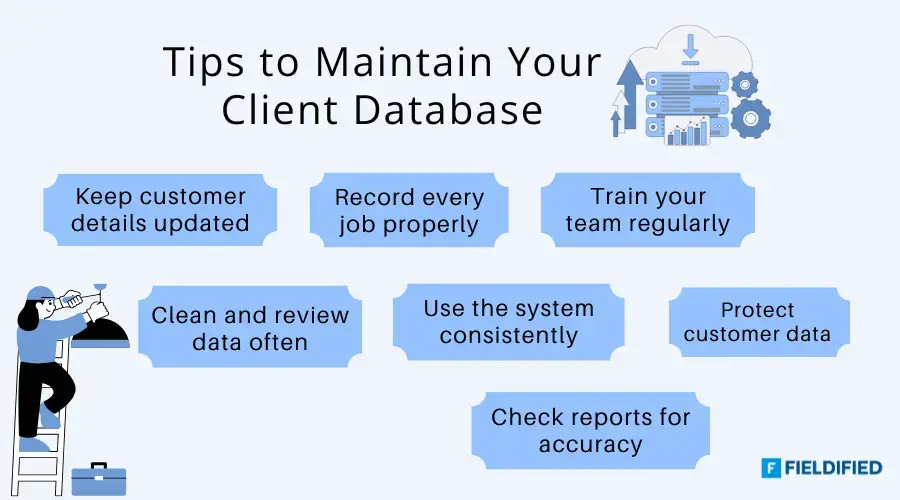 Below are simple and practical tips that help you to maintain your database and get you the best results:
1. Keep Customer Information Updated
Customer details can change over time, such as phone numbers or addresses. Make it a habit to update information after every job or customer call. Correct details help you contact your customers easily, so you don’t miss any jobs or make wrong visits.
2. Record Every Job Properly
Each job should be recorded clearly in the customer tracking system without missing any important detail. This includes the type of work done, date of service, materials used, and any special notes for future reference.
Proper job records help during repeat visits and improve overall service quality and customer satisfaction.
3. Train Your Team to Use the System
Your database will stay accurate only if everyone uses it correctly. Train your plumbers and office staff members to understand how to enter and update information correctly. Simple training helps reduce mistakes and missing data.
4. Review and Clean Data Regularly
Over time, databases can collect old or unused information. Reviewing data monthly or quarterly helps keep it organised and useful. Removing outdated records can improve system speed and accuracy.
5. Use Data Consistently
Always use the database instead of notebooks or personal notes. When all information is stored in one place, it stays accurate and complete. Consistent use also saves time and avoids confusion.
6. Protect Customer Data
Customer information is valuable and should be kept safe. Use strong passwords and limit access to authorised staff only. Regular backups help protect data from loss or system issues.
7. Use Reports to Check Accuracy
Reports help you see missing or incorrect data easily. They also show how well the database is being used. Reviewing reports helps improve data quality and business decisions.
Maintaining your client database properly helps plumbing businesses stay organised, serve customers better, and get long-term value from their software.
Conclusion
A client database is not just a helpful tool; it is essential for any plumbing business that wants to succeed. Managing clients, tracking jobs, scheduling work, and keeping invoices organised without a proper system can be confusing and time-consuming. Many small plumbing businesses rely on notebooks or memory, which often leads to missed appointments, lost information, delayed payments, and weaker customer service.
Using a client database through plumbing business software helps store all customer information in one place. It improves customer tracking, simplifies scheduling, creates invoices quickly, and keeps service history accurate. This allows plumbers to provide faster, personalised, and professional service, building customer trust and loyalty.
Overall, a client database saves time, reduces mistakes, improves efficiency, and gives business insights. For any plumbing business aiming to grow and stay competitive, it is a must-have tool.
FAQs
1. What is a plumbing software database?
A plumbing software database is a system that stores customer information, job history, invoices, and service records in one digital platform.
2. How does a plumbing software database improve customer tracking?
It helps track past services, recurring problems, and appointments, allowing plumbers to provide faster, personalized service.
3. Can a plumbing software database help with scheduling jobs?
Yes, it organizes appointments, technician availability, and locations, preventing double bookings and saving time.
4. Does plumbing software database simplify invoicing?
Absolutely. It allows creating invoices, tracking payments, and sending reminders efficiently, improving cash flow.
5. What features should I look for in a plumbing software?
Look for mobile access, easy client management, service history, reporting tools, data security, and user-friendly design.
6. Why is maintaining a plumbing software database important?
Regular updates and clean data ensure accurate customer information, better service, fewer mistakes, and business growth.
Blog Summary
- A client database helps plumbing businesses store all customer information in one place using plumbing business software for easy access and better organisation.
- It improves customer tracking by saving service history, job details, and past issues, allowing plumbers to deliver faster and more personalised service.
- Scheduling becomes smoother as plumbers can plan jobs, manage appointments, and avoid double bookings or missed visits.
- Invoicing and payment tracking become easier, helping businesses reduce delays and maintain a healthy cash flow.
- Without a client database, plumbing businesses face many problems like lost data, poor scheduling, and weak customer service.
- Maintaining a clean and updated database ensures long-term efficiency, better decision-making, and steady business growth.