




Starting a tree service business can be a rewarding path for people who enjoy outdoor work, hands-on skills, and building something of their own. Tree care services are always in demand, whether it’s routine pruning, emergency storm cleanup, or full tree removal services.
But turning skills into a profitable arborist business takes more than a chainsaw and a truck. Licensing, safety, pricing, equipment, and daily operations all matter. Many beginners underestimate these details and struggle early.
This guide walks you through 11 essential steps to start a tree service business the right way. Each step focuses on practical decisions beginners actually face, helping you build a solid foundation without unnecessary complexity.
1. What Does a Tree Service Business Actually Involve?
Before you invest money, understand the scope of work.
A tree service business may include:
- Tree removal services
- Tree trimming and pruning
- Stump grinding
- Emergency storm cleanup
- Ongoing tree care services for residential or commercial clients
Some businesses operate as full arborist businesses with certified expertise. Others start small, similar to a landscaping business, and expand services over time.
Beginner tip: Start with services you can safely deliver today, then expand as skills and equipment grow.
2. Is a Tree Service Business Profitable for Beginners?
Profitability depends on service mix, pricing, and efficiency.
Tree removal services often generate higher revenue but carry higher risk and equipment costs. Tree care services like pruning and maintenance offer steadier income with lower overhead.
Factors that impact profit:
- Local demand
- Equipment ownership vs rentals
- Crew size
- Insurance costs
- Operational efficiency
Many beginners start solo, then scale once cash flow stabilises.
3. What Licenses and Permits Do You Need?
Licensing requirements vary by location, but most tree service businesses need:
- Business registration
- Local trade license
- Tree removal permits (for certain areas or protected species)
Some states or cities require proof of training or certification before offering tree removal services.
Educational resources from the International Society of Arboriculture (ISA) outline arborist certification requirements and explain how professional credentials support safety, compliance, and long-term business credibility.
4. Do You Need Arborist Certification to Start?
You can legally start a tree service business without certification in many regions. However, certification builds trust and reduces liability.
Benefits of arborist certification:
- Higher credibility
- Safer work practices
- Better pricing power
- Reduced risk
ISA certification is widely recognised and recommended for long-term growth.
5. How Important Is Safety in Tree Care Services?
Safety is non-negotiable in a tree service business.
Tree removal and pruning involve:
- Working at height
- Heavy equipment
- Power tools
- Unpredictable tree behaviour
You’ll need:
- Personal protective equipment (PPE)
- Safety training
- Emergency procedures
Industry safety standards matter. OSHA’s safety guidelines for tree care and logging operations outline best practices that help reduce injury risks when working at height, handling power tools, or managing unpredictable tree conditions.
Ignoring safety can end a business before it grows.
6. What Equipment Should You Buy vs Rent?
This is where many beginners overspend.
Rent First If:
- You’re testing demand
- Jobs are infrequent
- Cash flow is limited
Buy When:
- Work volume is consistent
- Equipment is used weekly
- Rental costs exceed ownership costs
Core equipment may include:
- Chainsaws
- Ropes and climbing gear
- Chippers
- Trucks
A smart rent-vs-buy strategy protects early profits.
7. How Should You Price Tree Removal Services?
Pricing is one of the hardest parts for beginners.
Tree service pricing depends on:
- Tree size and location
- Risk level
- Time required
- Disposal costs
Avoid underpricing to win jobs. It leads to burnout and losses.
Best practice:
- Price for risk, not just labour
- Include cleanup and disposal
- Adjust pricing as experience grows
Transparent pricing builds long-term trust.
8. Should You Start Solo or Build a Team?
Both paths work.
Solo Operator
- Lower costs
- Easier management
- Limited job size
Small Crew
- Larger jobs
- Faster completion
- Higher overhead
Many arborist businesses start solo and hire part-time help during peak seasons before building a permanent team.
9. How Do You Find Customers for a Tree Service Business?
Early growth depends on visibility and trust.
Effective beginner marketing:
- Google Business Profile
- Local referrals
- Yard signs after jobs
- Partnerships with landscaping businesses
Word of mouth grows fast when service is reliable and communication is clear.
10. How Do You Manage Jobs Without Getting Overwhelmed?
As jobs increase, manual tracking becomes risky.
Common beginner challenges:
- Missed appointments
- Lost customer details
- Delayed invoices
- Confusing schedules
This is where field service software becomes helpful, not to complicate work, but to organise it.
Tools designed for service businesses help manage:
- Job schedules
- Customer information
- Invoices
- Team coordination
As job volume grows, many service businesses start using simple job management and scheduling tools to keep everything organised in one place, such as Fieldified’s job management and scheduling features.
11. When Should You Systemise Operations?
Systemising too early feels unnecessary. Too late creates chaos.
You’re ready to systemise when:
- Jobs overlap
- Admin work eats evenings
- Customers expect updates
- Invoicing gets delayed
A simple operational system keeps your tree service business running smoothly as it grows.
Many service businesses explore field service management systems at this stage to keep jobs, customers, and communication organised.
Manual vs Systemised Tree Service Operations
| Area | Manual | Systemized |
|---|---|---|
| Scheduling | Phone & notes | Centralized |
| Customer records | Scattered | Organized |
| Invoicing | Delayed | Faster |
| Growth readiness | Limited | Scalable |
Systems don’t replace skill. They protect it.
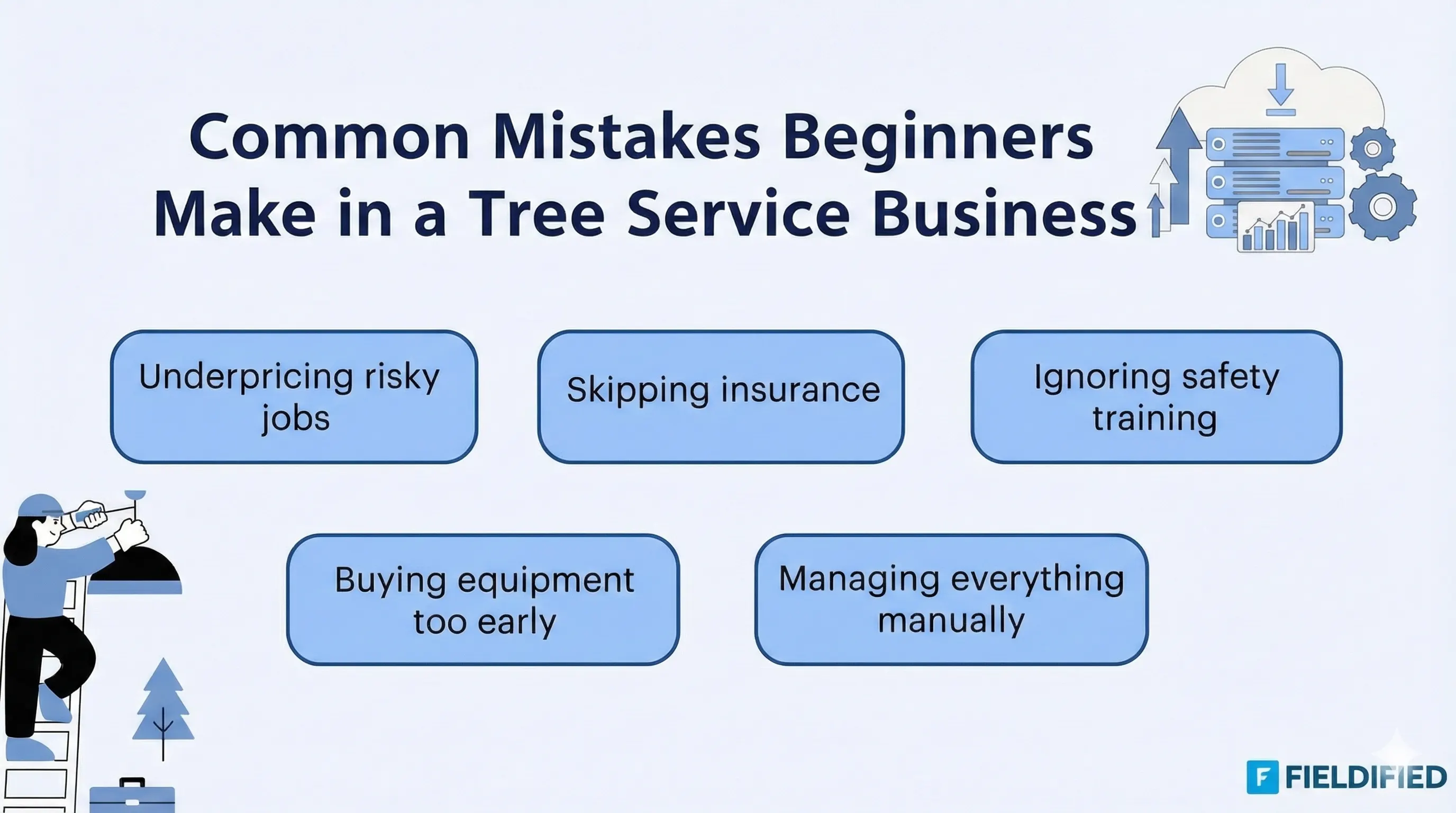
Common Mistakes Beginners Make in a Tree Service Business
Starting a tree service business comes with a steep learning curve. These common mistakes can slow growth and increase risk if not addressed early.
Underpricing high-risk jobs
New owners often charge too little to win work. This leads to thin margins and unsafe shortcuts on complex tree removal services.
Skipping insurance
Operating without proper liability and workers’ compensation insurance exposes the business to serious financial risk from accidents or property damage.
Ignoring safety training
Tree work is hazardous. Skipping formal safety training increases injury risk and can lead to costly downtime or legal issues.
Buying equipment too early
Purchasing expensive machinery before steady demand exists can strain cash flow. Renting first is often more practical.
Managing everything manually for too long
Relying on spreadsheets and paperwork slows scheduling, billing, and follow-ups as jobs increase.
Avoiding these mistakes helps new tree service businesses stay safer, more organised, and financially stable during the critical early stages.
How Much Does It Cost to Start a Tree Service Business?
Startup costs for a tree service business depend on how you begin—solo or with a small crew.
Solo operator: ₹3–7 lakhs ($4,000–$9,000)
Covers essential climbing gear, chainsaws, safety equipment, basic insurance, licensing, and a reliable vehicle. Most start with pruning and small removals.
Small crew: ₹10–25 lakhs ($12,000–$30,000+)
Costs rise with trucks, chippers, stump grinders, additional PPE, and employee insurance.
Main expense areas:
- Equipment and safety gear
- Insurance and workers’ compensation
- Licensing and certifications
- Vehicle and fuel costs
Starting lean is realistic. Many beginners rent heavy equipment, buy used tools, and focus on lower-risk tree care services first. Safety should never be the shortcut - growth can wait.
How Do Tree Service Businesses Find Consistent Work?
Finding steady work is one of the biggest challenges for beginners in the tree service business. Success comes from balancing different job types, client segments, and long-term relationships.
Emergency vs Scheduled Jobs: Emergency tree removals provide high-paying, immediate income, but scheduled maintenance and pruning offer predictable, recurring work. A healthy mix ensures cash flow stability.
Residential vs Commercial Clients: Residential jobs often rely on word-of-mouth and repeat business. Commercial clients can provide larger contracts and ongoing service agreements, adding consistency.
Repeat Customers Matter: Loyal clients reduce the need for constant marketing. Offering quality service, clear communication, and follow-up maintenance builds trust and ensures repeat work.
Reputation Compounds Over Time: Positive reviews, referrals, and a strong local presence naturally attract more clients. A reliable track record amplifies growth without extra effort.
Focusing on these factors early helps tree service businesses move from sporadic, unpredictable work to a sustainable, reliable workflow.
How Technology Supports a Growing Tree Service Business
As a tree service business expands, manual tracking and spreadsheets quickly become overwhelming. Technology provides structure, clarity, and efficiency, allowing teams to scale without chaos.
Job Tracking: Keep all jobs, from pruning to large removals, organised in one place. Track status, technician assignments, and completion details in real time.
Scheduling: Automated calendars prevent double bookings, optimise technician routes, and allow quick adjustments for emergencies. Visibility across the team ensures everyone knows where they need to be.
Invoicing: Digital invoicing reduces errors, speeds up payments, and links jobs directly to billing records, eliminating time-consuming paperwork.
Customer Communication: Automated notifications, follow-ups, and service reminders enhance client satisfaction and encourage repeat business.
Why Systems Matter: As volume grows, consistent processes prevent missed jobs, scheduling conflicts, and billing mistakes. The right system transforms operational complexity into reliable, scalable workflows.
Implementing technology early helps tree service businesses handle growth efficiently, maintain quality, and focus on delivering excellent service instead of firefighting administrative tasks.
Growth Takes Structure, Not Just Effort
Starting a tree service business requires skill, discipline, and patience. Real success comes from working smarter, not just harder, as demand and complexity grow.
Platforms like Fieldified can help organise jobs, schedules, customer communication, and invoicing in one place, providing clarity and reducing operational stress.
When you’re ready, exploring tools that support your workflows can help your business scale efficiently without disrupting how you work today.
FAQs
Is a tree service business profitable for beginners?
Yes. Beginners can build a profitable tree service business by setting proper pricing, following safety practices, managing costs efficiently, and focusing on repeat clients and reliable service delivery.
Do I need certification to start a tree service business?
Certification isn’t always mandatory, but arborist credentials boost credibility, demonstrate safety expertise, and support long-term growth, helping attract clients and differentiate your tree service business from competitors.
What insurance does a tree service business need?
Essential coverage includes general liability, workers’ compensation, and equipment insurance. These protect the business, employees, and clients against accidents, property damage, and operational risks while ensuring legal compliance.
Is tree removal more profitable than pruning?
Tree removal jobs usually pay more per project but involve higher risks, equipment costs, and liability. Pruning provides steadier, lower-risk income, making both services valuable depending on your business model.
When should I use field service software?
Field service software is helpful once scheduling, job tracking, or administrative tasks become hard to manage manually. It centralises operations, improves visibility, and helps teams handle growth efficiently.