




Running a tree service business is not just about skilled arborists and reliable equipment. It’s about getting the right crew to the right job at the right time, every single day. When dispatching relies on phone calls, whiteboards, or spreadsheets, delays and confusion quickly creep in.
This is where tree service dispatch software becomes essential. As tree companies grow beyond one or two crews, manual coordination starts slowing productivity, increasing fuel costs, and putting pressure on office staff. Dispatch and routing systems help restore control by bringing scheduling, crew assignments, and route planning into one clear workflow.
This guide explains how dispatch and routing software works for tree service businesses, what problems it solves, and when it becomes necessary, without sales language or technical overload.
What Is Tree Service Dispatch & Routing Software?
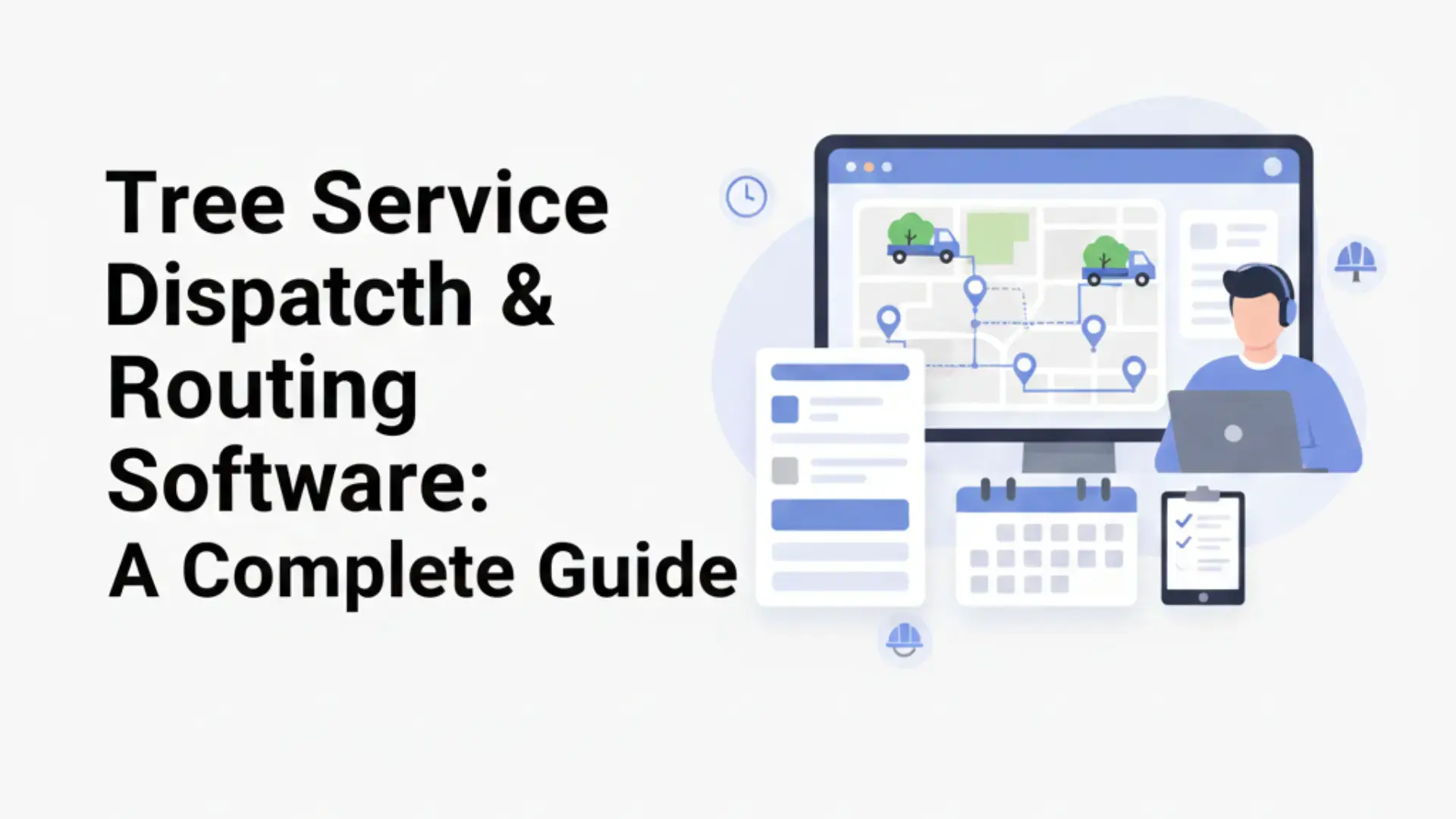
Tree service dispatch software is a system designed to manage how jobs are assigned, scheduled, and routed to arborist crews in the field.
At its core, it helps office teams:
- Assign jobs to available crews
- Plan efficient daily routes
- Track job status in real time
- Communicate updates without endless calls
When routing features are included, the software also functions as tree service routing software, organising jobs based on location, priority, and crew availability to reduce unnecessary travel and downtime.
Unlike general job dispatch software, arborist-focused tools account for:
- Job size variability
- Equipment requirements
- Crew skill levels
- Weather-related changes
Related Read: Starting a Tree Service Business - 11 Essential Steps for Beginners
How Tree Service Dispatch Software Works in Daily Operations
Dispatch software supports the full job flow, from the first call to job completion.
Job intake and scheduling
- Service requests are logged centrally
- Jobs are scheduled based on availability and urgency
- Dispatchers see the full calendar at a glance
Crew assignment
- Crews are assigned based on skills, equipment, and workload
- Conflicts and overlaps are easier to spot
- Last-minute changes are handled faster
Routing and daily planning
- Jobs are grouped geographically
- Routes are optimised to reduce drive time
- Crews receive clear daily plans
Field communication
- Crews access schedules on mobile devices
- Status updates reduce back-and-forth calls
- Office teams stay informed without micromanaging
This workflow replaces scattered tools with one coordinated system. According to Salesforce, dispatch management software automates scheduling, optimises routes, and improves technician utilisation.
Related Read: 15 Actionable Tree Service Marketing Tips to Get More Tree Jobs Quickly
Why Routing Matters for Tree Service Crews
Routing is not just about directions. For tree service companies, it directly affects productivity and costs.
Poor routing leads to:
- Excessive fuel use
- Crew fatigue
- Missed arrival windows
- Fewer jobs completed per day
Tree service routing software helps by:
- Sequencing jobs logically
- Reducing backtracking
- Balancing workload across crews
Better routing allows crews to spend more time working and less time driving.
Realted Read: Fieldified vs Jobber: Which Is Better for Small Teams?
Key Features to Look for in Tree Service Dispatch Software
Not all dispatch systems fit tree care operations. The most effective platforms include features designed for real field conditions.
Real-time dispatching
- Immediate job reassignment when schedules change
- Faster response to emergency calls
Route optimization
- Automatic grouping by location
- Adjustments for job duration and crew size
Crew availability tracking
- Clear visibility into who is working, idle, or booked
- Reduced the overloading of certain crews
Mobile access for arborists
- Daily schedules in one place
- Job details without phone calls
Integration with scheduling tools
Dispatch software works best when connected to tree service scheduling and management systems, reducing duplicate data entry and confusion.
Tree Service Dispatch Software vs Manual Scheduling
Many tree service businesses rely on manual methods longer than they should. The differences become obvious as operations grow.
Manual scheduling
- Whiteboards and spreadsheets
- Heavy reliance on dispatcher memory
- Slow updates and miscommunication
Dispatch software
- Centralised job visibility
- Faster adjustments
- Consistent workflows
Manual systems work for very small operations. Once multiple crews are involved, dispatch software prevents daily operational strain.
Dispatch Challenges Unique to Tree Care Businesses
Tree service operations are not predictable, and dispatch systems must adapt.
Variable job duration
Tree removals, pruning, and emergency work vary widely in time and complexity.
Equipment constraints
Jobs may require:
- Cranes
- Chippers
- Specialized trucks
Dispatch systems must account for which crew has access to which equipment.
Weather disruptions
Storms can cancel or create urgent jobs instantly. Dispatch software helps reassign crews quickly without confusion.
These challenges are often overlooked in generic dispatch platforms.
How Arborist Dispatch Software Improves Crew Productivity
Productivity in tree service work doesn’t improve by asking crews to move faster or work longer. It improves when unnecessary friction is removed from the day.
Arborist dispatch software supports this by bringing structure to how work is assigned and executed. Jobs are scheduled with realistic time windows, travel is planned intentionally, and crews know exactly what’s expected before they arrive on site.
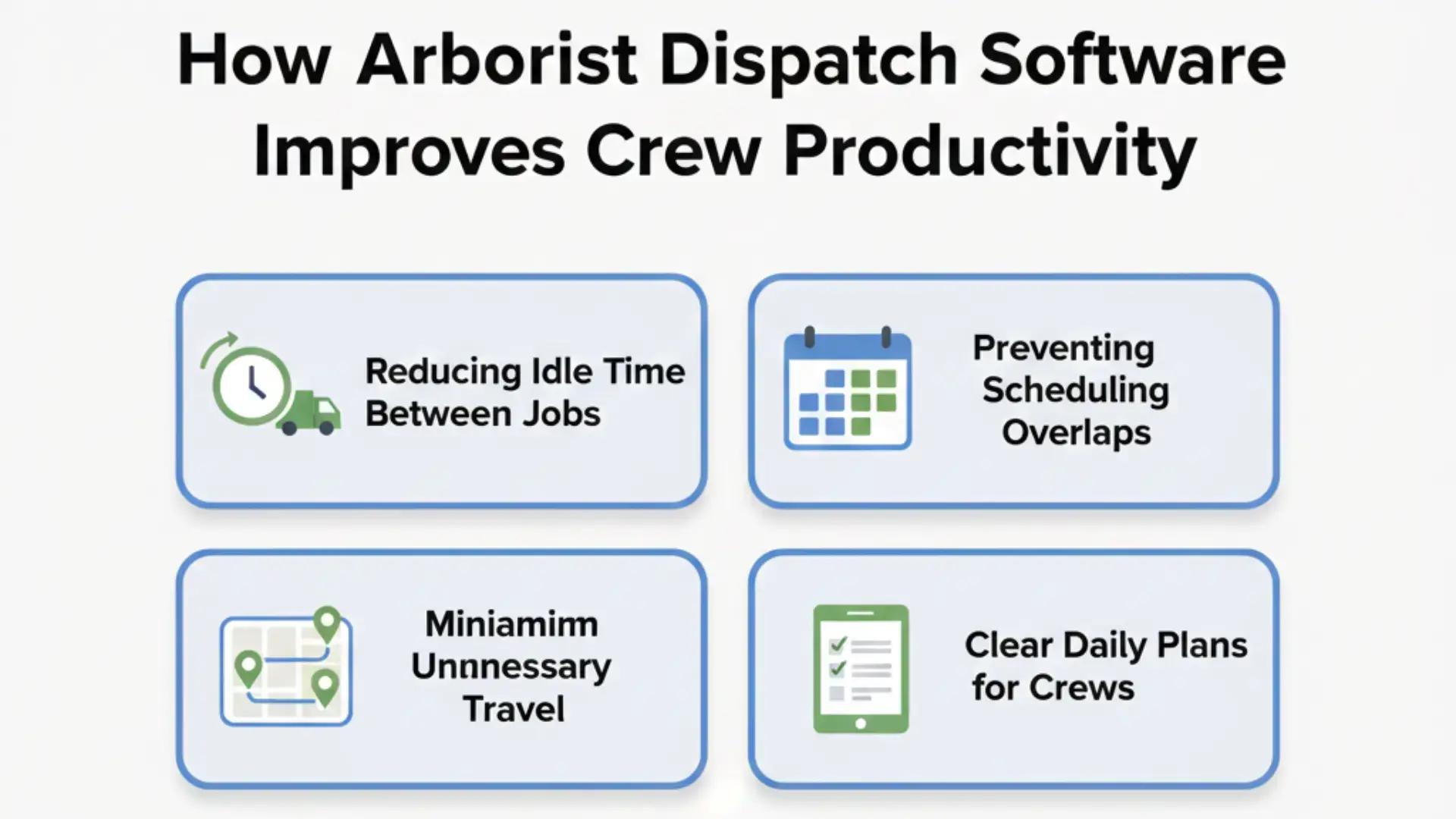
Key productivity improvements come from:
- Reducing idle time between jobs by assigning the next task before a crew finishes the current one
- Preventing scheduling overlaps that force last-minute reshuffling or downtime
- Minimising unnecessary travel through smarter routing and service-area planning
With clear daily schedules, crews spend less time waiting for instructions and more time working. Dispatchers also shift from constant problem-solving to proactive coordination. Over time, teams complete more jobs with the same resources, without extending workdays or increasing fatigue.
Related Read: How Arborist Job Scheduling Software Improves Crew Productivity
When Does a Tree Service Business Need Dispatch Software?
Most tree service companies reach a tipping point.
Signs include:
- Dispatchers are overwhelmed with calls
- Crews are waiting for instructions
- Missed or double-booked jobs
- Difficulty tracking daily progress
This usually happens when:
- You manage more than two crews
- Job volume becomes unpredictable
- Growth starts stressing office operations
At this stage, dispatch software becomes an operational necessity, not a luxury.
Related Read: 10 Must-Have Apps for Arborists to Run Their Business Efficiently
How Dispatch Data Helps Identify Bottlenecks in Tree Service Operations
Most tree service businesses feel operational friction long before they can clearly explain it. Crews feel rushed. Dispatchers feel overwhelmed. Jobs spill into overtime. Dispatch software quietly captures the data that explains why this happens.
By tracking:
- Job start and completion times
- Delays between assignments
- Travel gaps between jobs
Dispatch systems reveal where productivity is being lost, not through effort, but through structure. For example, repeated delays in certain service areas may point to routing inefficiencies. Frequent job overruns may signal scheduling assumptions that no longer match reality.
This insight allows managers to adjust planning instead of pushing crews harder. Over time, operations become calmer, not just faster.
How Dispatch Software Reduces Dispatcher Burnout
Dispatcher fatigue is one of the least discussed problems in tree service operations.
Without structured tools, dispatchers:
- Juggle constant phone calls
- Rework schedules manually
- Rely on memory instead of systems
Tree service dispatch software reduces cognitive load by centralizing decisions. Instead of reacting all day, dispatchers work from a live dashboard that shows crew status, job progress, and upcoming conflicts.
This shift improves:
- Accuracy
- Response time
- Job satisfaction
Healthier dispatch workflows lead to fewer mistakes and more consistent daily execution.
The Role of Dispatch Software in Seasonal Demand Planning
Tree service demand is rarely steady. Storm seasons, pruning cycles, and municipal contracts create sudden spikes.
Dispatch software supports seasonal planning by:
- Showing historical job volume patterns
- Identifying peak congestion periods
- Helping managers adjust crew allocation in advance
Instead of scrambling when demand surges, businesses enter busy seasons with clearer expectations. This reduces overtime dependency and prevents rushed scheduling decisions that affect service quality.
Seasonal planning is a long-term operational advantage, not just a scheduling feature.
How Dispatch Software Improves Safety and Compliance
Tree care is high-risk work. Poor scheduling increases that risk.
When crews are rushed or overbooked:
- Safety steps are skipped
- Fatigue increases
- Communication breaks down
Dispatch software supports safer operations by:
- Preventing unrealistic job stacking
- Ensuring proper crew allocation
- Allowing clear job notes and hazard reminders
When crews know where they need to be and have enough time to do the work correctly, safety improves naturally.
What Happens When Dispatch Software Is Not Adopted Early Enough
Many tree service businesses delay adopting dispatch systems until operations feel unmanageable.
By then, they often face:
- Disconnected processes
- Dispatcher dependency on individuals
- Resistance to change from crews
Early adoption allows teams to grow into the system gradually. Workflows become habits instead of corrections. This makes scaling smoother and less disruptive.
Dispatch software works best when introduced as a support system, not an emergency fix.
Dispatch Software as a Foundation for Future Automation
Dispatch and routing systems often become the backbone for future improvements.
Once dispatch is structured, businesses can later:
- Integrate scheduling automation
- Improve job costing accuracy
- Connect customer communication tools
Without dispatch clarity, automation creates confusion. With it, automation becomes helpful instead of overwhelming.
This long-term view is rarely discussed, but it matters for businesses planning sustained growth.
Why Dispatch Consistency Matters More Than Speed
Many companies chase faster dispatching. Consistent dispatching delivers better results.
Dispatch software helps standardize:
- Job assignment rules
- Routing logic
- Communication flow
Consistency reduces mistakes, customer complaints, and internal stress. Speed follows naturally when systems are stable.
Reliable operations outperform rushed ones over time.
Common Mistakes When Choosing Tree Service Dispatch Software
Choosing the wrong dispatch system doesn’t just waste money. It can slow crews down, frustrate dispatchers, and make daily operations harder than they were before.
Overbuying features
Many platforms are built for large enterprises, not tree service teams. Extra features may look impressive during demos, but often go unused. Instead of helping, they add steps, menus, and confusion. The result is slower dispatching and lower adoption.
Ignoring crew usability
Dispatch software must work in the field, not just in the office. If arborists struggle to check assignments, update job status, or view routes on mobile, the system breaks down quickly. Tools that feel complicated on-site usually get bypassed altogether.
Overlooking routing as a core function
Some systems treat routing as a secondary add-on. For tree services, routing affects fuel costs, arrival times, and crew fatigue. Weak routing logic leads to inefficient days, even if scheduling looks organized on paper.
The most effective tree service dispatch software balances capability with simplicity. It supports daily decisions without getting in the way of the work itself.
Dispatch Software and Long-Term Operational Growth
Dispatch tools are not just about today’s schedule.
Over time, they:
- Create consistent workflows
- Reduce dependency on individual dispatchers
- Improve visibility into performance trends
As operations scale from local to regional, standardised dispatch processes prevent chaos and burnout.
This is where dispatch connects naturally with broader tree service management systems.
When dispatch is integrated with scheduling and operations, platforms like Fieldified support smoother coordination across crews without adding administrative complexity.
How Dispatch Software Supports Better Customer Experience
Customers notice operational efficiency.
Dispatch software helps by:
- Improving arrival accuracy
- Reducing missed appointments
- Enabling faster responses to urgent requests
Consistent scheduling builds trust, even before work begins.
For location-based services, structured dispatch and routing also align with Google’s guidance on proximity and relevance in local service visibility.
Tree Service Dispatch Software and Scheduling Tools Work Best Together
Dispatch software alone is powerful. Combined with tree service scheduling, it becomes transformative.
Together, they provide:
- Long-term planning visibility
- Short-term dispatch flexibility
- Clear communication between the office and the field
This integration reduces friction rather than adding new layers of management.
Related Read: 5 Signs Your Contracting Business Has Outgrown Spreadsheets
Building Control and Consistency in Tree Service Operations
Tree service dispatch and routing software helps growing operations regain control without adding pressure to crews or office staff. It brings clarity to daily work and consistency to long-term operations.
When tree service businesses are ready to move beyond manual coordination, platforms like Fieldified fit naturally into that transition. Explore better systems when the timing feels right.
FAQs
What is tree service dispatch software used for?
It helps assign jobs, manage crew schedules, optimise routes, and track job progress for tree service businesses with multiple crews.
How is tree service routing software different from dispatch software?
Routing focuses on travel efficiency, while dispatch software manages job assignment, scheduling, and communication across crews.
Is Arborist Dispatch Software suitable for small tree companies?
Yes. Small businesses benefit once manual scheduling starts causing delays, confusion, or missed jobs.
Can dispatch software handle emergency tree service jobs?
Yes. Real-time dispatch tools allow quick reassignment of crews during storms or urgent service requests.
Does dispatch software replace scheduling tools?
No. It works best alongside scheduling systems to manage both long-term planning and daily job coordination.