





Running a tree care or arborist business means juggling crews, equipment, customer expectations, and unpredictable workdays. Many owners work hard, yet still lose time to missed appointments, overlapping jobs, or unclear schedules. This is where arborist job scheduling software starts to matter.
Crew productivity rarely drops because teams lack skill. It drops because jobs are poorly sequenced, communication breaks down, or schedules change without clarity. As tree service businesses grow, manual planning systems struggle to keep up. This blog explains how arborist job scheduling software helps crews work more efficiently, stay organized, and complete more jobs without increasing stress.
Whether you manage a small tree service team or oversee multiple crews, understanding how scheduling affects productivity can change how your business runs day to day.
What Is Arborist Job Scheduling Software?
Arborist job scheduling software is a digital system designed to plan, assign, and manage tree service jobs across crews and timeframes. Instead of relying on paper calendars, whiteboards, or spreadsheets, scheduling happens in one central place.
For arborists and tree care businesses, this type of job scheduling software typically supports:
- Assigning jobs to crews
- Viewing daily or weekly schedules
- Adjusting jobs when delays occur
- Tracking job status in real time
- Coordinating teams across locations
Unlike general scheduling tools, tree service scheduling software is built for field-based work. It accounts for job duration, crew availability, and travel time, which are common challenges in arborist operations.
Related Read: What Is Tree Care Field Service Software? A Complete Guide.
Why Scheduling Is a Productivity Problem for Arborist Crews
Crew productivity often suffers before owners realize scheduling is the issue. Many tree service businesses lose hours each week due to small inefficiencies that add up quickly.
Common scheduling challenges include:
- Crews are waiting for instructions in the morning
- Jobs running longer than expected without adjustments
- Two crews booked for the same equipment
- Emergency jobs disrupting planned work
- Admin staff spending hours rearranging schedules
When schedules are unclear, crews either rush or wait. Both reduce productivity. Arborist job scheduling software helps prevent these problems by creating structure around daily work instead of reacting to issues as they arise.
How Arborist Job Scheduling Software Improves Crew Productivity
This is where scheduling software makes its biggest impact. Productivity improves not because crews work harder, but because they work with clarity.
Clear Daily Plans Reduce Wasted Time
When crews start the day knowing exactly where they are going, what equipment is needed, and how long the job should take, downtime drops. Clear schedules reduce morning delays and unnecessary calls back to the office.
Faster Job Assignments Keep Crews Moving
Manual scheduling often slows down job assignment. With arborist job scheduling software, managers can assign or reassign jobs quickly without confusion. Crews receive updates immediately, which keeps work moving even when plans change.
Better Coordination Between Crews and Office
Scheduling software creates a shared view of operations. Office staff can see where crews are, which jobs are active, and what’s coming next. This reduces back-and-forth communication and keeps everyone aligned.
Related Read: 10 Must-Have Apps for Arborists to Run Their Business Efficiently
How Tree Service Scheduling Software Supports Field Crews
Tree service scheduling software isn’t just an office tool. It directly supports field crews by giving them access to accurate job information.
Crews benefit from:
- Clear job details before arrival
- Address and customer information in one place
- Updated schedules when changes occur
- Fewer interruptions from last-minute calls
This clarity allows arborists to focus on the work itself instead of chasing information. Over time, fewer misunderstandings mean smoother job completion and higher daily output.
Many tree service businesses find that structured job scheduling tools help crews stay coordinated and reduce confusion between office staff and field teams.
Related Read: Starting a Tree Service Business - 11 Essential Steps for Beginners
Manual Scheduling vs Arborist Scheduling Software
Many tree service businesses start with manual systems. They work at first but struggle as job volume increases.
Manual Scheduling Limitations
- Difficult to update in real time
- No shared visibility for crews
- High risk of double booking
- Heavy reliance on memory or notes
Scheduling Software Advantages
- Centralised job planning
- Real-time updates
- Better workload balance
- Less admin time spent rescheduling
The difference shows up in crew productivity. Manual systems react to problems. Arborist job scheduling software prevents many of them.
How Scheduling Impacts Safety and Job Quality
Poor scheduling doesn’t just affect speed. It affects safety and workmanship.
When jobs are overbooked or rushed, crews may:
- Skip safety checks
- Work longer hours than planned
- Rush complex removals
- Miss warning signs on site
Clear schedules reduce pressure. Crews work within realistic timeframes and approach jobs with focus. This improves safety outcomes and reduces costly mistakes.
Related Read: 15 Actionable Tree Service Marketing Tips to Get More Tree Jobs Quickly
How Scheduling Helps Handle Emergency Tree Jobs
Emergency jobs are part of tree care work. Storm damage, fallen trees, and blocked access points require a fast response.
Scheduling software helps by:
- Showing available crews instantly
- Reorganising planned jobs quickly
- Communicating changes clearly
- Preventing overlap and confusion
Instead of chaos, emergencies become controlled adjustments. This protects productivity across the rest of the schedule.
How Tree Care Scheduling Tools Support Business Growth
As tree service businesses grow, scheduling becomes more complex. Adding crews, expanding service areas, or taking on larger contracts increases planning demands.
Tree care scheduling tools support growth by:
- Managing higher job volume
- Balancing workloads across crews
- Supporting seasonal spikes
- Reducing reliance on one person to plan everything
Growth without structure often leads to burnout. Scheduling tools help businesses scale without losing control. According to workforce management and small business planning frameworks provided by the U.S. Small Business Administration, service businesses with structured planning systems often improve productivity, reduce inefficiencies, and gain better operational control as they scale.
The Role of Scheduling in Customer Experience
Customer experience directly affects repeat work and referrals. Scheduling plays a major role.
When schedules are clear:
- Crews arrive on time
- Customers know what to expect
- Fewer reschedules occur
- Communication feels professional
Reliable scheduling builds trust. That trust turns into positive reviews and long-term customer relationships.
Research from the International Society of Arboriculture highlights how professionalism and reliability influence customer confidence in tree care services. Scheduling is a quiet but important part of that professionalism.
When Arborist Businesses Outgrow Manual Scheduling
Many owners don’t realize they’ve outgrown manual scheduling until problems pile up.
Signs include:
- Admin work spilling into evenings
- Crews are calling for clarification daily
- Lost customer details
- Missed follow-ups
At this stage, productivity losses aren’t obvious in one place. They show up as stress, delays, and missed opportunities. Arborist job scheduling software restores structure before these issues become permanent.
How Scheduling Software Improves Team Accountability
Clear schedules create accountability without micromanagement.
Everyone knows:
- Who is assigned to which job
- Expected timelines
- Job status throughout the day
These key benefits of scheduling software and transparency help teams take ownership of their work. Accountability improves naturally when expectations are visible.
The Long-Term Impact of Scheduling on Operational Efficiency
Scheduling is not just about today’s jobs. Over time, structured scheduling creates valuable patterns.
Businesses gain insight into:
- Average job durations
- Crew performance trends
- Seasonal workload changes
- Staffing needs
These insights help owners make better decisions. Scheduling becomes a foundation for smarter operations, not just daily planning.
How Job Scheduling Software Fits Into Tree Service Management
Scheduling doesn’t work alone. It connects with other parts of tree service management, including:
- Job tracking
- Customer communication
- Invoicing
- Reporting
When scheduling is part of a broader job management workflow, tree care businesses gain even more operational clarity. Integrated solutions, like Fieldified’s job management tools, help connect scheduling with dispatch, customer info, and job tracking so crews spend less time coordinating and more time working.
Common Mistakes Tree Service Businesses Make With Scheduling
Even with tools available, mistakes still happen.
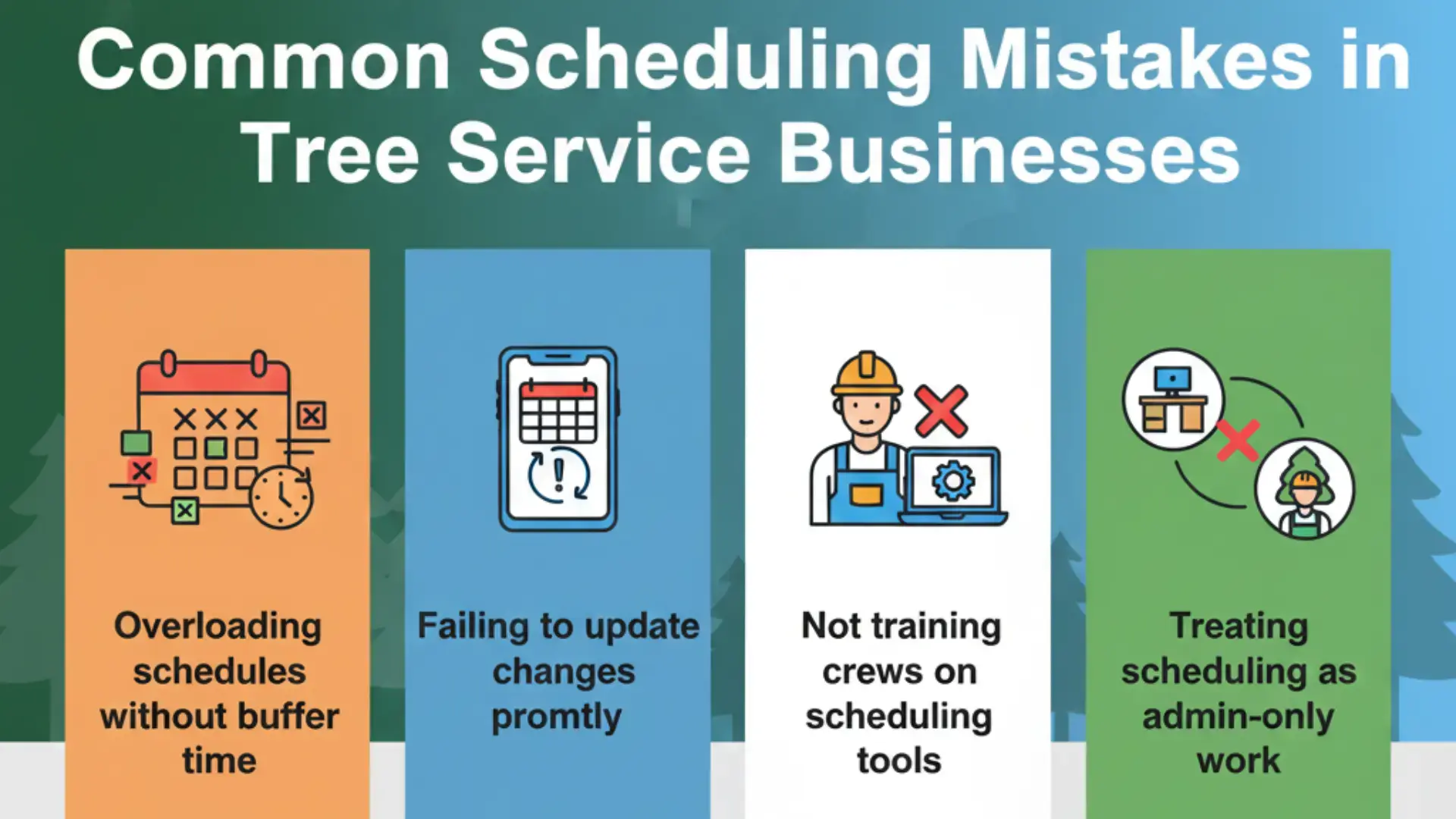
Common issues include:
- Overloading schedules without buffer time
- Failing to update changes promptly
- Not training crews on schedule for use
- Treating scheduling as admin-only work
Avoiding these mistakes keeps scheduling effective and supports consistent productivity.
Related Read: What Challenges Field Teams Face (And How CRM Solves Them)
How Scheduling Improves Crew Morale
Productivity is tied to morale. Crews who feel rushed, confused, or overworked burn out faster.
Clear scheduling helps by:
- Setting realistic expectations
- Reducing last-minute changes
- Supporting work-life balance
- Creating predictable workdays
Happier crews work more efficiently and stay longer.
How Arborist Job Scheduling Software Reduces Hidden Productivity Loss
Hidden productivity loss often goes unnoticed.
Examples include:
- Waiting for job details
- Driving unnecessary routes
- Repeating admin tasks
- Fixing preventable errors
Scheduling software reduces these losses by making work predictable and organised. Small gains each day add up to significant productivity improvements over months.
Measuring Productivity Improvements After Scheduling Changes
Improvement should be visible, not assumed.
Track changes in:
- Jobs completed per day
- Time spent scheduling and rescheduling
- Crew idle time
- Missed or delayed jobs
Clear metrics help confirm whether scheduling changes are working and where adjustments are needed.
External Perspective: Why Scheduling Matters in Field Services
Field service research consistently shows that structured scheduling improves workforce efficiency and reduces operational friction.
According to workforce management studies published by the U.S. Small Business Administration, service businesses with structured planning systems experience better productivity and cost control as they scale.
These insights apply directly to arborists and tree care operations.
Bringing Structure Without Overcomplication
Scheduling software should simplify work, not complicate it. The goal isn’t to add layers of process, but to remove confusion.
When implemented thoughtfully, arborist job scheduling software supports:
- Clear daily plans
- Better crew coordination
- Predictable growth
- Sustainable productivity
The result is a business that runs smoothly even as demand increases.
Final Thoughts on Scheduling and Productivity
Crew productivity improves when work is organised, expectations are clear, and systems support daily operations. Arborist job scheduling software helps tree care businesses move away from reactive planning and toward structured workflows.
As tree service operations grow, tools like Fieldified offer a way to manage scheduling and job coordination without disrupting how teams already work. Exploring better systems at the right time often prevents bigger problems later.
FAQs
What is arborist job scheduling software?
Arborist job scheduling software helps tree service businesses plan, assign, and manage jobs efficiently across crews, reducing confusion and improving daily productivity.
How does scheduling software improve crew productivity?
It reduces downtime, prevents scheduling conflicts, improves communication, and ensures crews know their tasks, locations, and timelines before starting work.
Is scheduling software useful for small tree service businesses?
Yes. Even small teams benefit from clearer schedules, fewer missed jobs, and reduced admin time as job volume increases.
Can scheduling software handle emergency tree jobs?
Yes. It allows managers to quickly adjust schedules, assign available crews, and communicate changes clearly during urgent situations.
Does scheduling software replace manual planning completely?
It reduces reliance on manual systems, but still allows flexibility. The goal is structured planning with room for real-world adjustments.