 EN
EN DE
DE ES
ES FR
FR NL
NL PT
PT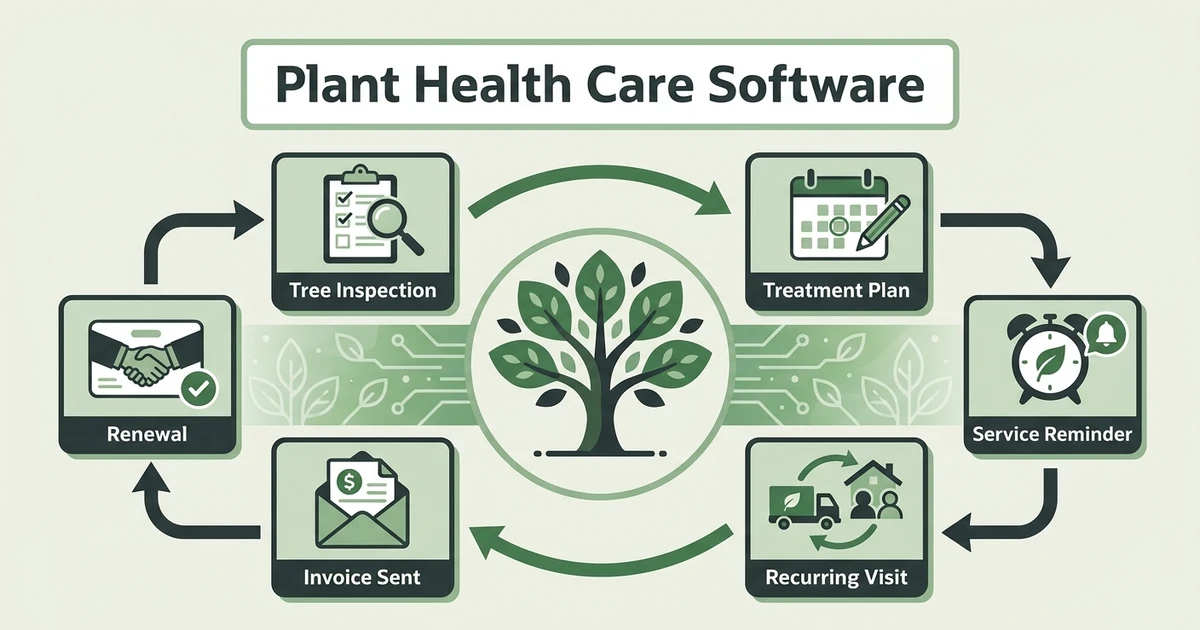





Quick Answer: Plant Health Care Software
Plant health care software helps arborists manage PHC inspections, treatment plans, service reminders, customer records, recurring visits, and follow-up invoices in one workflow. For tree care companies, it turns scattered treatment notes into a repeatable system for long-term tree health and recurring revenue.
Fieldified helps tree service and arborist companies manage the work from first customer call to final payment. Plant health care adds another layer: long-term tree history, repeat visits, and treatment follow-up.
A removal is finished once the tree is gone. PHC is different. The value is in observing the tree over time, explaining the plan, returning at the right interval, and keeping the customer engaged before problems become emergencies.
That is why plant health care software matters. It gives your team a place to track what was seen, what was recommended, what was approved, and what needs to happen next.
Why Plant Health Care Programs Break Without a System
Plant health care programs break when the treatment plan lives in too many places. The arborist has notes in a truck notebook. Photos sit on a phone. The office has the customer record. The next visit is a reminder on someone’s calendar.
That works until the first busy season hits. A mature oak needs follow-up after soil compaction notes. A client asks whether the last treatment was applied before summer heat. A renewal reminder gets missed because the person who remembered it was out that week.
BLS says grounds maintenance workers held about 1.3 million jobs in 2024, including 60,100 tree trimmers and pruners and 29,600 pesticide handlers, sprayers, and applicators for vegetation in its occupational profile. That mix matters because PHC often sits between arborist expertise, customer communication, and regulated treatment work.
Software does not manage licensing for you, but it can help keep treatment notes, customer approvals, and service history from getting lost.
What Plant Health Care Software Should Track
Plant health care software should track the customer, the tree, the observation, the treatment plan, and the next action. If it only stores appointments, it will not support PHC well.
For a tree care company, the core PHC record should include:
- Customer and property details
- Tree species, location, and condition notes
- Photos from inspections and follow-up visits
- Soil, pest, disease, and stress observations
- Recommended treatment plan and visit frequency
- Product application notes where relevant
- Customer approvals and messages
- Renewal reminders, scheduled visits, invoices, and payments
This is where tree service and arborist software supports the work better than a generic spreadsheet. The customer history, scheduled visit, invoice, and follow-up all need to stay connected.
PHC is also a communication workflow. The customer may not understand why a tree needs multiple visits. Your team needs a record that makes the recommendation clear and shows what changed from one visit to the next.
How PHC Software Turns One-Time Tree Work Into Recurring Revenue
Picture an arborist inspecting a mature oak. The tree has soil compaction around the root zone, visible pest pressure, and prior pruning history. The arborist recommends monitoring, soil care, and a treatment schedule.
On paper, that plan is easy to lose. The inspection gets done, the first treatment is billed, and the follow-up is left to memory. By the time the office remembers, the customer may have moved on or the tree may have declined.
Landscape Management describes PHC as a way for tree care professionals to develop a recurring revenue model, noting that a tree can only be removed once but treatments can happen repeatedly in its PHC revenue article. That is the business case, but the workflow has to support it.
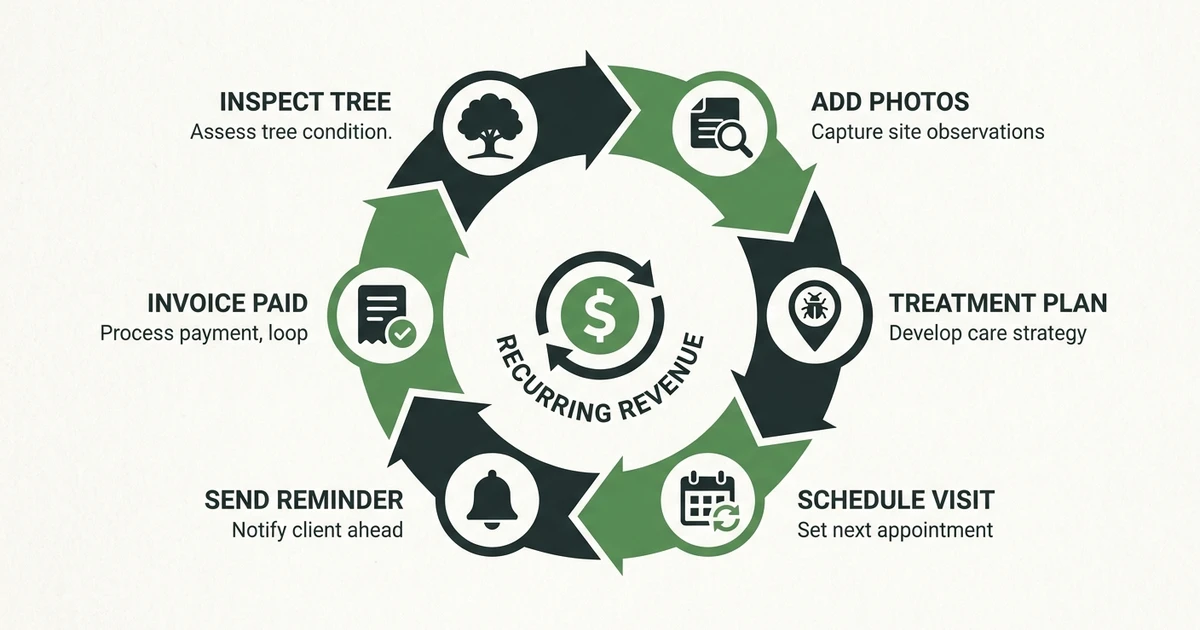
A repeatable PHC workflow looks like this:
- Inspect the tree and record photos.
- Add condition notes and recommended next steps.
- Send the customer a quote or treatment plan.
- Schedule the first visit after approval.
- Set the next inspection or treatment reminder.
- Invoice after each completed visit.
- Review the record before the next visit.
Use a recurring revenue model to estimate how PHC visits could affect monthly revenue. Then use the software workflow to make sure those visits actually get scheduled, completed, and billed.
Book a demo and see how Fieldified keeps PHC customer history, recurring visits, reminders, and invoices connected in one workflow.
Plant Health Care Software vs Spreadsheets and Paper Notes
Spreadsheets can list customers and dates. Paper notes can capture what the arborist saw. Neither is enough when PHC becomes a real service line with repeat visits and treatment history.
The weak point is continuity. PHC depends on knowing what happened last time, what changed, and what the customer approved. If that record is scattered, the next visit starts with guesswork.
| PHC Need | Spreadsheet or Paper Workflow | Software Workflow |
|---|---|---|
| Inspection notes | Notebook or loose file | Attached to customer and property |
| Photos | Stored on personal phones | Linked to the tree care record |
| Treatment history | Rebuilt from memory | Visible before each visit |
| Service reminders | Manual calendar tasks | Recurring reminders and scheduled visits |
| Billing | Recreated after each visit | Invoice tied to completed work |
TCIA’s discussion of diagnostic PHC describes a shift toward root-cause thinking, soil health, client education, and proactive care instead of only reacting to visible decline in its PHC trends article. That kind of care needs a record that survives beyond one appointment.
The better your record, the easier it is to explain why the next visit matters. Customers are more likely to renew when they can see the plan, the history, and the next step.
How Fieldified Supports PHC Scheduling, Reminders, and Billing
Fieldified helps arborist teams keep client records and tree care history in one place. That matters when PHC work depends on prior photos, notes, approvals, and service history.
Your office can schedule recurring PHC visits, assign work to the right crew, and keep the service plan attached to the job. That reduces the risk of sending a crew without the right context.
Fieldified also supports repeat service reminders, which helps turn PHC into a real operating rhythm. Instead of waiting for the customer to call when a tree looks worse, your team can follow up at the right interval.
When the visit is complete, invoicing and payment follow-up should not wait until the end of the week. PHC only becomes predictable revenue when completed visits turn into sent invoices and collected payments.
What to Look for Before Choosing PHC Software for Arborists
Before choosing PHC software, look past the calendar. The tool has to support field observations, customer education, recurring work, and billing. This is also where arborist CRM software matters, because PHC needs customer history to carry forward from one visit to the next.
Use this checklist:
- Can you attach photos and notes to the customer record?
- Can recurring PHC visits be scheduled without rebuilding the job each time?
- Can the office see treatment history before answering a customer question?
- Can reminders trigger follow-up before the next season?
- Can completed visits connect to invoices and payment status?
- Can your crew use it from the field without extra admin work?
TCIA says ANSI A300 standards provide standard practices and specification-writing guidelines for arborists, urban foresters, horticulturalists, landscape architects, and contractors on its standards page. Starting January 1, 2024, TCIA says the standards became available as one consolidated document.
That reinforces the same point for business operations: PHC work benefits from clear records, repeatable specifications, and consistent communication. Your software should make that easier, not add another place for details to hide.
Frequently Asked Questions
What is plant health care software?
Plant health care software helps arborists manage inspections, treatment plans, service reminders, recurring visits, customer history, photos, invoices, and follow-ups. It keeps PHC details connected from one visit to the next.
How does plant health care software help with recurring revenue?
It gives the office a way to schedule future visits, send reminders, track treatment history, and invoice after each completed service. That makes PHC less dependent on memory and easier to repeat over a season.
What should arborists track in a PHC program?
Track tree condition, site photos, symptoms, soil notes, pest or disease pressure, prior pruning, recommended treatments, customer approvals, visit dates, and invoice status. Those details help the arborist explain the plan and keep future visits consistent.
Can plant health care software manage customer follow-ups?
Yes. A good workflow should show which customers need a renewal reminder, seasonal inspection, or treatment follow-up. That helps the office stay ahead of repeat work instead of waiting for the customer to call.
Is Fieldified useful for PHC work?
Yes. Fieldified helps arborists manage customer records, scheduling, reminders, job details, invoices, and payment follow-up. That makes it useful for tree care companies building PHC programs around repeat visits.
Conclusion: Make Plant Health Care Easier to Repeat
PHC is not just a tree care service. It is a long-term customer workflow. The value comes from observing, recording, following up, and returning at the right time.
If your PHC notes live in notebooks, phones, spreadsheets, and inboxes, repeat work will slip. Plant health care software gives those details one place to live.
Book a Fieldified demo to manage PHC inspections, treatment reminders, scheduling, invoices, and payment follow-up from one place.