 EN
EN DE
DE ES
ES FR
FR NL
NL PT
PT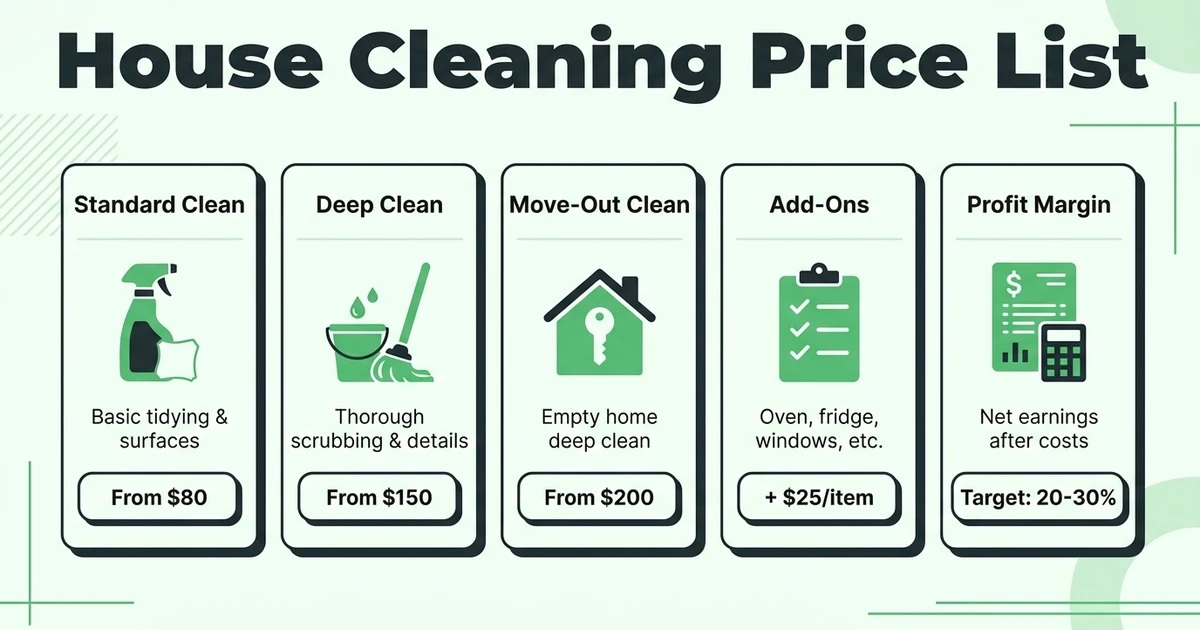





Quick Answer:
A house cleaning price list template should turn your pricing math into a rate sheet your team can reuse. Separate standard cleans, deep cleans, move-in or move-out cleans, recurring visits, add-ons, exclusions, and quote notes so customers see clear options while your team protects scope.
Fieldified helps cleaning businesses manage quotes, recurring jobs, schedules, invoices, and payments from one place. A clear rate sheet makes that workflow easier because the office, cleaner, and customer start from the same scope.
This page is not meant to replace a full pricing formula. Use the existing guide on how much to charge for house cleaning when you need to calculate rates from labor, supplies, overhead, and margin.
Use this page when you already know your pricing logic and need to turn it into a practical house cleaning rate sheet.
Use this as a price list template, not a pricing formula
A house cleaning price list is the customer-facing version of your pricing system. It should not do every piece of math in public. It should organize your services so customers can compare options and your team can quote from a consistent starting point.
Use the price list to document:
- Service types
- Included rooms and tasks
- Home-size rows
- Add-on options
- Exclusions
- Quote notes
- Update date
Cleaning is physical work that depends on training and repeatable standards. BLS reported that on-the-job training was required for 97.8 percent of maids and housekeeping cleaners in 2025 in its Occupational Requirements Survey profile. A clear price list helps turn those standards into repeatable quotes.
BLS says building and grounds cleaning occupations are projected to have about 788,700 openings each year from 2024 to 2034, and the group’s May 2024 median annual wage was $36,790 in its Occupational Outlook Handbook profile. A shared rate sheet helps new cleaners and office staff explain the same service promise.
House cleaning price list template by job type
Use this table as a format for your own cleaning price list. The numbers are market signals, not fixed rules. Your final rows should reflect your city, wages, travel, supplies, insurance, home condition, and included tasks.
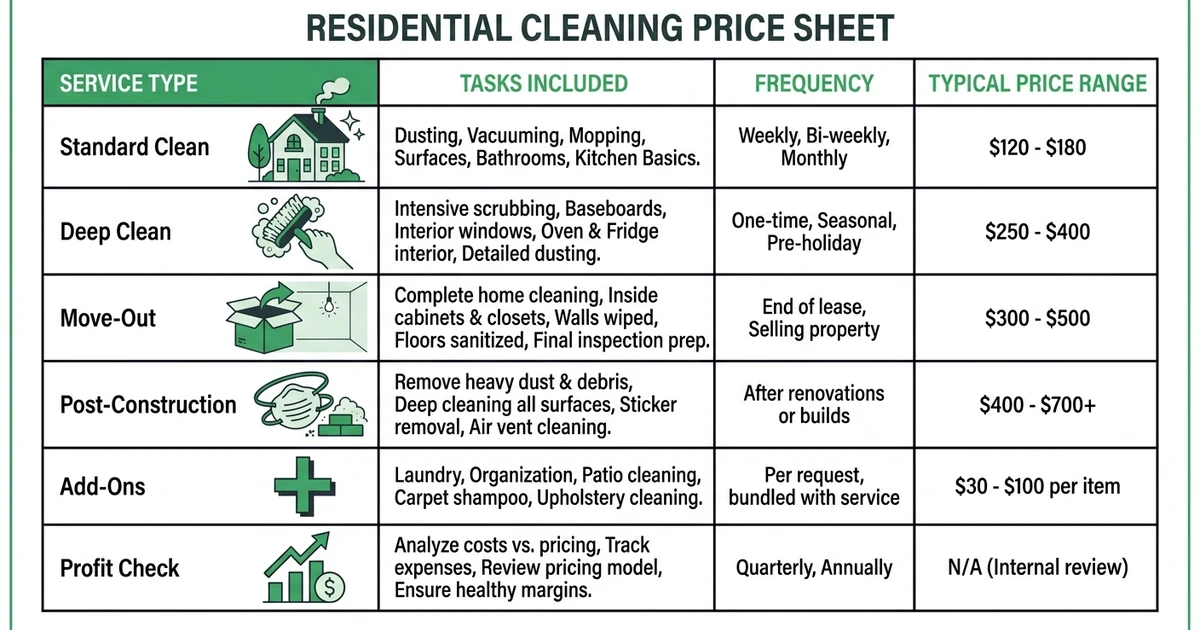
TIDY’s 2026 cost guide lists the following typical ranges by cleaning type in its house cleaning cost guide. Treat these as reference ranges, then build your own template rows around scope.
| Price list row | Typical reference range | Add a scope note for |
|---|---|---|
| Standard or recurring clean | $100-$250 | Maintained homes, routine tasks, recurring frequency |
| Standard visit benchmark | $100-$300, with a national average around $180 | One-time standard clean, home size, current condition |
| Deep cleaning | $200-$450 | Baseboards, buildup, appliance interiors, first-time detail |
| Move-in or move-out cleaning | $250-$550 | Empty home, inside cabinets, fridge, oven, turnover deadline |
| Post-construction cleaning | $300-$800+ | Dust level, debris, surface detail, safety limits |
This table should sit beside your own job math. Use the service price calculator and the profit margin calculator for service businesses to test whether a row covers cost and profit before you publish it on your sheet.
What to include in a standard cleaning rate sheet
Your standard cleaning row should describe a maintained home. It should not quietly include neglected buildup, interior appliances, laundry, dishes, post-party cleanup, or move-out work.
For a clean rate sheet, break standard service into simple rows:
| Standard clean row | What to list |
|---|---|
| Home size | Studio, 1 bedroom, 2 bedroom, 3 bedroom, 4+ bedroom, or square-foot bands |
| Visit frequency | One-time, weekly, biweekly, monthly |
| Included tasks | Dusting, vacuuming, mopping, kitchen surfaces, bathrooms, trash |
| Not included | Interior appliances, heavy buildup, windows, laundry, dishes |
| Quote note | Final price may change if the home needs deep cleaning first |
A solo cleaner moving from verbal quotes to packaged pricing might keep three standard rows: one-time standard clean, biweekly standard clean, and weekly standard clean. The service is similar, but the recurring rows are easier to plan because the home stays in better condition.
Avoid listing only bedroom count. A tidy small home may be easier than a cluttered apartment with pet hair, dishes, and heavy bathroom buildup.
How to list deep cleaning and move-out cleaning without scope creep
Deep cleaning and move-out cleaning need separate rows because customers often assume “cleaning” includes everything. A price list should make the difference visible before the quote is approved.
Use clear scope language:
| Service row | Include | Clarify |
|---|---|---|
| First-time deep clean | Detail work, heavier bathroom and kitchen cleaning, baseboards if included | Does not include hoarding, biohazards, pest waste, or unsafe conditions |
| Move-out clean | Empty-home cleaning, inside cabinets if included, appliance interiors if included | Customer must confirm utilities, access, trash removal, and deadline |
| Post-construction clean | Dust removal and surface cleaning within your team’s limits | Does not include contractor debris, hazardous material, or high-access work unless agreed |
Write add-ons as separate rows instead of hiding them in the base service. That protects the cleaner and makes the customer’s choice clearer.
For example, a 3-bedroom home can appear three times on your rate sheet: standard recurring clean, first-time deep clean, and move-out clean. The home is the same size, but the included work is not the same.
Hourly, flat-rate, and add-on rows to include
A good house cleaning price list can include more than one pricing model. The goal is not to force every job into one format. The goal is to show which rows are fixed and which rows need review.
| Price list row | Best for | Note to include |
|---|---|---|
| Hourly cleaning | First-time, unknown, or messy jobs | Minimum hours may apply |
| Flat-rate package | Recurring standard cleans | Price assumes maintained condition |
| Per-square-foot range | Larger homes and simple comparisons | Final quote depends on condition and scope |
| Add-on row | Extras like ovens, windows, and inside cabinets | Must be selected before arrival |
Many cleaning businesses use hourly pricing for first visits, then move reliable recurring customers to flat-rate rows once the scope is known.
Check whether your cleaning price covers labor, overhead, and profit.
Use Fieldified’s service price calculator before you send the quote, then keep the approved cleaning job organized from estimate to invoice.
Add-on cleaning services to include in your price list
Add-ons protect your time. They help customers choose the service level they want instead of expecting every detail inside the base clean.
Common add-on rows include:
- Inside oven
- Inside refrigerator
- Inside cabinets
- Interior windows
- Window tracks
- Blinds
- Baseboards
- Laundry
- Dishes
- Pet hair removal
- Garage sweep-out
- Patio or balcony sweep
Price add-ons by time and difficulty. Write each add-on into the quote so the cleaner and customer agree before the job starts.
How to keep your cleaning price list updated
Your rate sheet should have an owner and an update habit. Otherwise, old prices keep circulating in text messages, PDFs, and saved notes long after your costs change.
Review the sheet when:
- Wages change
- Fuel costs change
- Supply costs change
- Insurance or overhead changes
- Recurring routes change
- Add-ons start taking longer than expected
- Cleaners report repeated scope issues
Use quote management for cleaning jobs when you want approved scope to stay attached to the customer record. That helps avoid disputes about what was included.
For deeper rate calculation, use the guide on how much to charge for house cleaning. Keep this price list as the quick quoting companion your team uses after the pricing logic is set.
Then track how long each row actually takes. If deep cleans keep running over, raise the row, narrow the included scope, or move the service back to custom quote only.
Frequently Asked Questions
What is a house cleaning price list template?
A house cleaning price list template is a reusable rate sheet that organizes service types, home sizes, add-ons, exclusions, quote notes, and update dates. It helps your team quote consistently without rebuilding the same pricing explanation for every lead.
What should a cleaning rate sheet include?
A cleaning rate sheet should include standard cleaning, deep cleaning, move-in or move-out cleaning, recurring visits, hourly or flat-rate rows, add-ons, excluded tasks, travel notes, and a reminder that final pricing depends on scope and condition.
Should I show exact cleaning prices on my price list?
You can show starting prices or ranges when the scope is predictable. For first-time, deep, move-out, or heavily customized jobs, use the price list as a guide and confirm the final quote after reviewing the home and requested tasks.
How do I prevent scope creep on a cleaning price list?
Separate included tasks from add-ons, name excluded work clearly, and attach quote notes to the customer record before the job is scheduled. That keeps the customer, cleaner, and office aligned.
How often should I update my house cleaning price list?
Review the rate sheet whenever labor, fuel, supplies, insurance, travel, or service scope changes. At minimum, check it quarterly so old package prices do not quietly eat into profit.
Conclusion
A cleaning price sheet is not just a list of numbers. It is how you standardize scope, explain options, and keep cleaning jobs from drifting into unpaid extras.
Start with your pricing math, then turn it into simple rows for standard cleaning, deep cleaning, move-out work, recurring visits, and add-ons. Add exclusions and quote notes so everyone knows what is included before the job is scheduled.
Fieldified helps cleaning businesses turn approved estimates into scheduled jobs, invoices, payment reminders, and repeat customer follow-ups. Book a demo to see how your cleaning workflow can run from quote to payment in one place.