




Running a roofing business often means handling more leads than you can comfortably track. Estimates go out. Calls are made. Messages are exchanged. Then silence. Many roofing jobs are lost not because of pricing or quality, but because follow-ups fall through the cracks. This is where a roofing leads CRM becomes less about software and more about control.
Roofers rely heavily on timing, trust, and consistency. When follow-ups are delayed or forgotten, potential customers move on. This guide explains why follow-ups matter, where most roofing businesses struggle, and how better systems help roofers win more jobs without adding pressure or complexity.
Why Roofers Lose Jobs After Getting Leads
Most roofing businesses generate enough leads to stay busy. The problem starts after the first interaction.
Estimates are sent, then forgotten
Quotes are emailed or shared over messaging apps. Without a system, there’s no clear way to track who needs a follow-up and when.
Lead information is scattered
Customer details sit in phones, notebooks, inboxes, or spreadsheets. No single place shows the full picture.
Follow-ups depend on memory
Office teams or owners try to remember who to call back. Field teams are busy on-site. Important conversations get delayed.
These gaps don’t look serious at first. Over time, they quietly reduce conversion rates.
Why Follow-Ups Matter in Roofing Businesses
Roofing decisions are rarely instant. Customers compare estimates, wait for approvals, or discuss timelines.
Timing builds trust
A timely follow-up reassures customers that you’re reliable. Long gaps create doubt, even if the work quality is strong.
Consistency wins jobs
Most customers choose the contractor who stays engaged without being pushy. Consistent follow-ups keep your business visible.
Missed follow-ups cost real revenue
Well-established CRM education resources show that consistent follow-up processes significantly improve lead conversion rates and customer trust across service-based businesses.
Follow-ups are not about selling harder. They are about staying present during the decision-making window.
Related Read: How to Automate Follow-Ups and Invoicing for Field Jobs
Common Roofing Follow-Up Mistakes
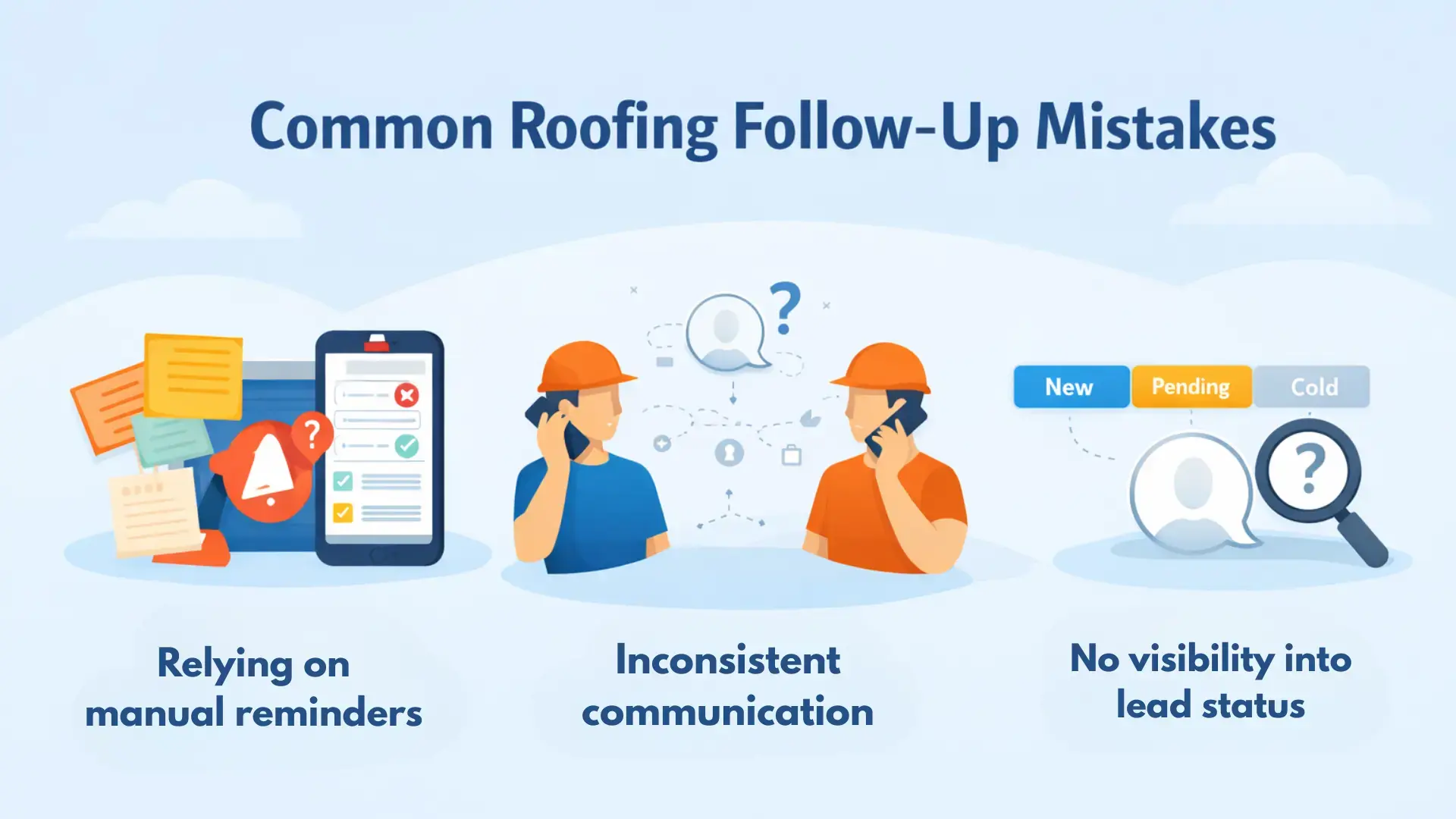
Many roofing businesses lose potential jobs not because they ignore follow-ups, but because their follow-up process lacks structure. These mistakes show up gradually and often go unnoticed until leads start slipping away.
Relying on manual reminders
Sticky notes, phone alarms, and calendar alerts work when lead volume is low. As inquiries increase, these methods stop being reliable. Reminders get missed, notes get buried, and follow-ups depend on someone remembering at the right time. When follow-ups rely on memory, consistency becomes impossible.
Inconsistent communication across teams
In many roofing businesses, follow-ups are handled by different people. Office staff may call. Field teams may message. Without shared visibility, some leads receive multiple follow-ups while others hear nothing at all. This inconsistency creates confusion for customers and makes the business appear disorganised.
No visibility into lead status
Without clear lead stages, teams can’t tell which leads are new, which are waiting on approval, and which have gone cold. Time gets wasted chasing the wrong opportunities, while serious prospects don’t receive timely attention. Over time, this reduces conversion without anyone noticing why.
These issues are rarely caused by a lack of effort. They happen because there is no single system guiding how follow-ups should work.
Related Read: What Challenges Field Teams Face (And How CRM Solves Them)
What Is a Roofing Leads CRM
A roofing leads CRM is a system designed to manage leads, follow-ups, and customer interactions in one place, tailored for roofing workflows.
Unlike generic CRMs built for sales teams, roofing-focused systems support:
- Job-based work
- Field and office coordination
- Ongoing customer relationships
Roofing CRM vs generic CRM
Generic CRMs focus on pipelines and deals. Roofing business CRM systems connect leads to estimates, jobs, and service history.
Where it fits in the roofing business management
A CRM becomes the backbone of roofing business management by linking customer data, communication, and job progress into one workflow.
Related Read: How to Choose the Right CRM for Your Service Business
How a Roofing Leads CRM Improves Follow-Ups
Follow-ups become easier when roofing teams no longer depend on memory or scattered notes. A roofing leads CRM introduces a structure that supports consistent communication without adding extra work.
Centralised lead tracking
Every lead is stored in one place, along with their contact details, estimate history, and past communication. Calls, messages, and emails are logged automatically or added with minimal effort. This gives teams a complete view of each customer, so no one has to search through inboxes or phones to understand what has already been discussed.
Clear follow-up reminders
Instead of relying on personal reminders, the system highlights which leads need attention and when. Follow-up tasks are visible inside the workflow, making it easy to act at the right time. This reduces delays and ensures that no lead is forgotten during busy periods.
Shared visibility across teams
Both office staff and field teams see the same lead status in real time. If someone has already followed up, everyone knows. If a lead is waiting on approval, it’s clearly marked. This shared visibility prevents duplicate calls and missed updates, while keeping communication consistent.
With this structure in place, follow-ups feel like a natural part of daily work rather than an extra task teams have to remember.
Manual Follow-Ups vs CRM-Based Follow-Ups
Manual follow-ups
- Notes in diaries or phones
- Calls are made when remembered
- No clear history
- High risk of missed leads
CRM-based follow-ups
- Lead stages are tracked automatically
- Follow-up tasks are visible to everyone
- Full conversation history
- Predictable, repeatable process
Manual systems feel simple at first. CRM-based systems reduce effort as the business grows.
Related Read: 5 Signs Your Contracting Business Has Outgrown Spreadsheets
How Better Follow-Ups Help Roofers Win More Jobs
Better follow-ups don’t mean more calls. They mean better timing and clarity.
Faster response times
Customers notice when responses are quick and consistent.
Professional experience
Clear communication builds confidence, especially for high-value roofing jobs.
Reduced lead leakage
Leads don’t disappear because the system keeps them visible until closed or lost.
Over time, this leads to higher conversion without increasing marketing spend.
What to Look for in a Roofing Leads CRM
Not all tools suit roofing businesses.
Simplicity over features
Complex systems reduce adoption. Ease of use matters more than advanced dashboards.
Mobile access for field teams
Field crews should update lead status or notes directly from the site.
Integration with operations
The CRM should support estimates, scheduling, and job progress as part of roofing management software.
Some service-focused platforms, including purpose-built field service CRM solutions, are designed to match how roofing businesses actually operate.
Long-Term Impact of Better Follow-Up Systems
The real value of a structured follow-up system becomes visible over time. As consistent habits form, roofing businesses begin to operate with more confidence and less friction.
Predictable pipeline
When every lead and follow-up is tracked, upcoming work becomes easier to anticipate. Teams can see how many jobs are in progress, how many are awaiting approval, and what is likely to convert next. This visibility helps owners plan workloads, manage capacity, and avoid last-minute scheduling pressure.
Less dependency on individuals
Follow-ups no longer depend on a single person remembering what needs to be done. If someone is absent or leaves the business, lead history and next steps remain intact. This creates continuity and reduces risk as the business grows or team roles change.
Better forecasting
Over time, collected data shows patterns in response times, conversion rates, and job timelines. This replaces guesswork with informed planning. Roofing businesses can allocate crews, materials, and time more accurately, leading to smoother operations and fewer surprises.
At this stage, CRM stops being just a tracking tool and becomes a system that supports long-term stability and smarter decision-making.
Independent business research on operational systems shows that process visibility and structured workflows improve planning accuracy and long-term operational consistency in service businesses.
CRM Adoption Challenges in Field Teams
Even good systems fail if teams don’t use them.
Resistance to change
Field teams prefer simple tools. Overcomplicated systems create friction.
Too much data entry
If updates take too long, they won’t happen consistently.
Lack of training
Clear onboarding helps teams understand how CRM supports their daily work.
Successful adoption focuses on small, practical workflows first.
Related Read: What is a Field Service CRM & Why Small Business Needs It
Using CRM as Support, Not Pressure
CRM works best when it supports teams instead of monitoring them.
Reduced mental load
Clear systems replace constant reminders.
Better coordination
Everyone knows what’s happening without chasing updates.
This mindset improves adoption and long-term value.
Bringing Structure to Roofing Follow-Ups
Roofing businesses don’t lose jobs because they lack skill. They lose jobs because follow-ups break down. A well-chosen roofing leads CRM brings clarity to customer communication and helps teams stay consistent without extra effort.
Platforms like Fieldified show how service-focused systems can support follow-ups as part of broader roofing business management. When your current process feels scattered, exploring better systems can create lasting improvements.
FAQs
What is a roofing leads CRM used for?
A roofing leads CRM helps track leads, manage follow-ups, and centralise customer communication so roofing businesses don’t lose jobs due to missed responses.
Is a roofing leads CRM suitable for small roofing businesses?
Yes. Small roofing businesses benefit from better lead visibility, organised follow-ups, and reduced reliance on memory as job volume increases.
How is the roofing business CRM different from generic CRM?
Roofing business CRM supports job-based workflows, field coordination, and service timelines, unlike generic CRMs designed mainly for sales pipelines.
Does a CRM replace manual follow-ups completely?
A CRM doesn’t replace communication. It supports consistent follow-ups by organising reminders, lead stages, and customer history in one system.
How long does it take to see results from better follow-up systems?
Most roofing businesses notice improved response times and organisation within weeks, while conversion and forecasting benefits improve over several months.