 EN
EN DE
DE ES
ES FR
FR NL
NL PT
PT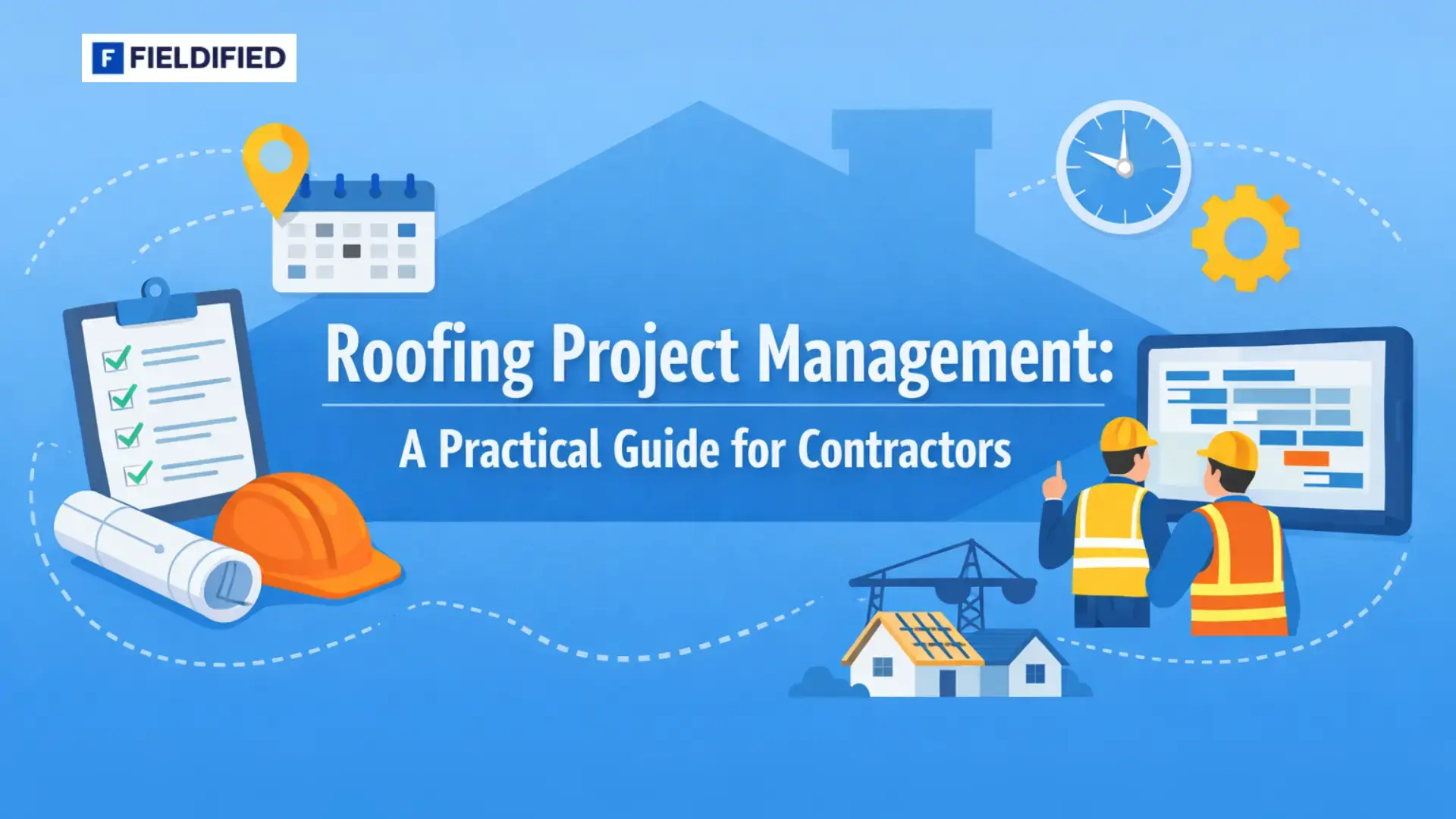





Roofing jobs rarely fail because of poor workmanship. They fail because of missed handoffs, unclear schedules, and jobs that slowly drift off track. Roofing Project Management exists to prevent exactly that.
As roofing businesses grow, handling jobs through calls, notebooks, and spreadsheets becomes harder to manage. Crews overlap. Materials arrive late. Customers ask for updates that are difficult to answer clearly. This is where Roofing Project Management for contractors becomes less about planning charts and more about control, clarity, and consistency.
This guide breaks down how roofing project management actually works in the field, why it matters, and how contractors can apply it without adding unnecessary complexity.
What Is Roofing Project Management?
Roofing Project Management is the process of planning, tracking, and completing roofing jobs in a structured way. It covers everything from job approval to final inspection.
At its core, it focuses on:
- Organising roofing jobs into clear stages
- Coordinating crews, materials, and schedules
- Tracking progress without relying on memory
- Keeping customers informed throughout the job
Unlike general project management, roofing work involves changing weather, field-based crews, and tight timelines. Roofing Project Management for contractors adapts to these realities instead of fighting them.
Related Read: Roofing CRM Software - Organise Quotes, Jobs, and Teams
Why Roofing Project Management Matters for Contractors
Roofing work is operationally intense. Multiple jobs often run at the same time, each with its own crew, materials, and deadlines.
Without structure:
- Jobs overlap unexpectedly
- Crews wait for instructions
- Customers feel ignored
- Owners stay stuck in daily firefighting
Strong roofing project management supports roofing business management by creating visibility across jobs. Contractors know what’s happening, what’s delayed, and what needs attention—without constant calls or guesswork.
Related Read: How to Choose the Right CRM for Your Service Business
Common Roofing Project Management Challenges
As roofing businesses take on more work, the cracks usually appear in coordination, not effort. These challenges show up even in well-run teams and tend to grow with job volume.
Lack of job visibility
Many contractors track jobs across whiteboards, spreadsheets, messages, and memory. When information lives in multiple places, no one has a clear, real-time view of what’s active, delayed, or waiting on materials. This makes it difficult to prioritise work or respond confidently when customers ask for updates. Small delays often go unnoticed until they start affecting schedules and cash flow.
Scheduling conflicts
Roofing scheduling is rarely fixed. Weather changes, material delays, and crew availability force frequent adjustments. Without a structured way to update schedules, changes are communicated informally and often inconsistently. Crews may arrive on-site without materials, or two jobs may be planned for the same team. What starts as a minor shift quickly becomes a day lost.
Poor communication between the office and the field
Office teams handle customers, estimates, and planning. Field teams handle execution. When these groups don’t share the same job information, instructions get outdated, and progress updates lag behind reality. This gap leads to rework, customer frustration, and unnecessary back-and-forth calls.
Over-dependence on individuals
In many roofing businesses, one person holds everything together mentally. When they’re busy, absent, or leave the business, progress slows immediately. Knowledge isn’t shared, and decisions stall.
These challenges don’t point to weak management. They signal the need for clearer systems that support how roofing work actually happens.
Related Read: What Challenges Field Teams Face (And How CRM Solves Them)
Roofing Project Management Process Explained Step by Step
A clear roofing project management process helps contractors move jobs forward without confusion or last-minute fixes. Each stage builds on the previous one, so gaps early in the process often create problems later.
Job approval and scope confirmation
Once a customer approves the estimate, the full scope must be locked in. This includes roof type, materials, access requirements, timelines, and any special conditions. Clear scope confirmation prevents disputes, change orders, and misunderstandings once work begins.
Scheduling and crew assignment
Roofing scheduling is not just about dates. It involves matching the right crew size and skills to the job while accounting for weather, existing workloads, and equipment availability. Proper scheduling reduces downtime and avoids overlapping commitments that stretch teams too thin.
Material coordination
Materials should arrive when crews are ready, not days too early or too late. Coordinating suppliers with Job schedules prevents site clutter, theft risks, and costly delays caused by missing materials.
Job execution and progress tracking
During execution, regular status updates matter. Tracking progress helps office teams respond to issues quickly and keeps customers informed without constant phone calls.
Quality checks and completion
Final inspections confirm work meets standards before closing the job. Customer sign-off marks completion and ensures nothing is missed.
When each step is visible and tracked, roofing projects stay predictable and easier to manage. Roofing Project management follows core project planning principles, including defined workflows, task sequencing, and accountability, as outlined in widely accepted project management frameworks.
Related Read: The Complete Guide to Contractor Scheduling Software
Manual Roofing Project Management vs System-Based Management
Roofing projects can be managed in very different ways depending on the tools a business relies on. The difference becomes clearer as job volume increases.
Manual management
Notes in diaries or phones
Job details are written down wherever there is space. Over time, information gets scattered across notebooks, personal devices, and messages, making it hard to see the full picture.
Updates shared verbally
Changes are communicated through calls or quick conversations. If someone misses the update, work continues based on outdated information.
Job status remembered, not recorded
Progress lives in someone’s head. When that person is unavailable, the team loses visibility into what’s been completed and what’s pending.
High risk of missed steps
Follow-ups, inspections, or material orders are easy to forget, especially during busy periods or weather delays.
System-based management
Job stages are clearly defined
Each project moves through visible stages, from estimate to completion. Everyone knows what comes next without asking.
Updates visible to the whole team
Office staff and field crews see the same information, reducing confusion and repeated questions.
Scheduling adjusted centrally
When delays happen, schedules can be updated once and reflected everywhere, keeping teams aligned.
Accountability without micromanagement
Work is tracked by progress, not constant check-ins, creating clarity without pressure.
Manual methods work at low volume. Structured systems support growth without chaos.

How Roofing Project Management for Contractors Improves Job Completion and Profitability
Good project management does more than organise tasks. It directly affects outcomes.
- Fewer delays due to clear scheduling
- Better crew utilisation across jobs
- Lower rework from missed instructions
- Higher customer satisfaction through clear communication
Over time, this leads to healthier margins and fewer disputes. Research on workflow optimisation shows that structured processes improve operational efficiency, reduce delays, and increase scalability for small businesses.
Related Read: How Roofers Can Win More Jobs with Better Follow-Ups
Tools Used in Roofing Project Management for Contractors
Roofing project management tools vary in complexity.
Common categories include:
- Job tracking systems
- Roofing scheduling tools
- Field service management platforms
- Roofing management software
Some contractors rely on spreadsheets. Others adopt systems designed for field-based work. The key is choosing tools that match how roofing jobs actually run.
Educational resources on construction workflows and operational planning often highlight the importance of system-based visibility in managing service projects effectively.
Related Read: Why Field Teams Switch from WhatsApp to Field Service CRM
What to Look for in Roofing Project Management Systems
When evaluating tools, contractors should prioritise usability over features.
Key considerations:
- Simple job tracking
- Clear roofing scheduling
- Mobile access for field crews
- Shared visibility across teams
- Support for real-world roofing workflows
Overly complex systems reduce adoption. Practical systems support daily work without slowing teams down.
Long-Term Impact of Better Roofing Project Management
The benefits become clearer over time.
Predictable scheduling
Future workloads are easier to plan.
Better crew utilisation
Teams stay productive without overlap.
Improved job margins
Delays and rework decrease.
Stronger business continuity
Knowledge stays in the system, not in one person’s head.
This is where roofing project management shifts from a task tool to an operational backbone.
Is Roofing Project Management Software Worth It for Contractors?
For small operations, manual methods may seem sufficient. As job volume grows, the cost of missed steps increases.
Roofing project management software becomes valuable when:
- Multiple jobs run simultaneously
- Teams are split between the office and the field
- Owners want visibility without constant follow-ups
Many contractors explore structured systems when spreadsheets start breaking under pressure.
Platforms like Fieldified support roofing workflows by combining job tracking, scheduling, and team coordination into one operational view—without forcing enterprise-style complexity.
Bringing It All Together
Roofing Project Management is not about control. It’s about clarity. Contractors don’t lose jobs because they lack skill. They lose efficiency when work becomes scattered.
Structured roofing project management helps contractors stay organised, responsive, and confident as job volume grows. When current processes feel stretched, exploring better systems can create lasting stability.
FAQs
How do roofing contractors manage multiple projects at the same time?
Roofing contractors manage multiple projects by using clear job stages, shared schedules, and centralised updates that prevent crew overlap, delays, and missed handoffs.
What happens when roofing projects are not managed properly?
Poor roofing project management for contractors leads to missed deadlines, material delays, crew confusion, customer frustration, and reduced profit due to rework and inefficiencies.
Why is roofing project management important for contractors?
It helps contractors avoid delays, manage multiple jobs, improve scheduling accuracy, and maintain clear communication across teams and customers.
Can small roofing businesses benefit from project management systems?
Yes. Even small teams benefit from better job visibility, organised scheduling, and reduced dependence on memory as job volume increases.
Is roofing project management software hard to use?
Most roofing-focused systems prioritise simple workflows, mobile access, and quick updates, making them easier to adopt than generic project tools.
How long does it take to see results from better project management?
Many contractors notice improved organisation and scheduling within weeks, while profitability and long-term operational benefits develop over several months.