 EN
EN DE
DE ES
ES FR
FR NL
NL PT
PT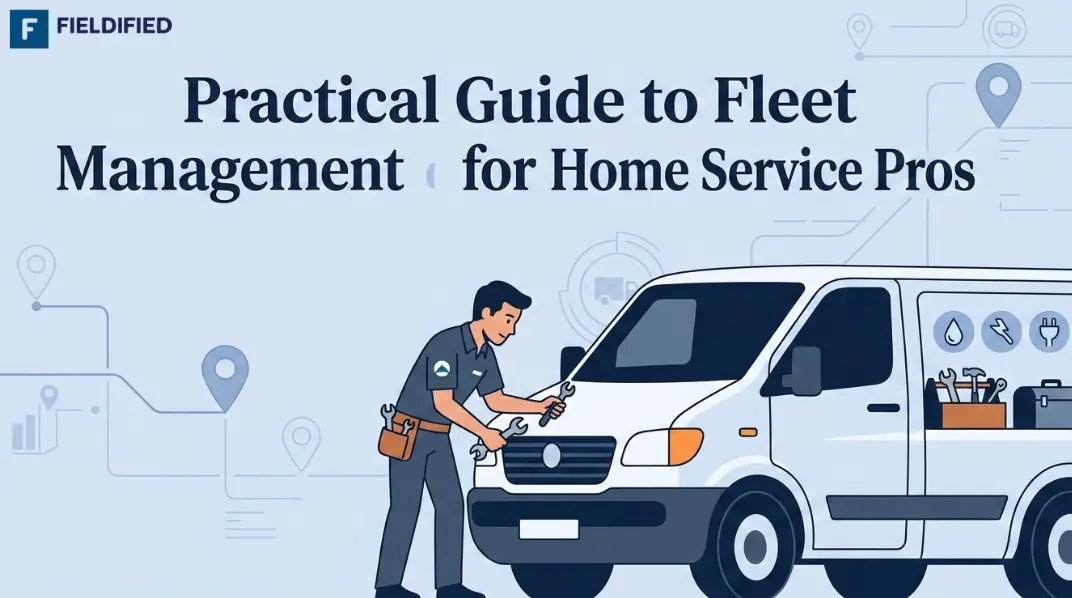





Completing a job, sending an estimate to the client, and moving to the next location is your daily routine. However, managing multiple vehicles and daily service calls without proper planning can quickly become overwhelming. This is where most field service businesses get confused and lose track of their daily operations.
Many home service pros struggle to manage fleets while also handling clients and jobs. Managing your fleet can become stressful if not properly handled.
In this blog, we will share a practical, simple guide to fleet management, what it is, how to improve it, and we will also look at best practices to follow. This guide will help your vehicles stay on the road longer and help your business run smoothly.
What is Fleet Management?
Fleet management means managing and maintaining the vehicles you use to get to your job. This management includes planning, tracking, maintaining, and controlling all your business vehicles to ensure they work properly and do not cause problems in daily operations.
It includes things like:
- Tracking vehicle location
- Managing fuel usage
- Planning and optimizing routes
- Scheduling regular maintenance
- Monitoring driver performance
- Reducing repair and breakdown costs
Let’s take an example of a house cleaning company. If a cleaner has 4–5 jobs in different areas in one day, proper route planning helps them reach each home on time. Without planning, the cleaner may waste time in traffic or travel longer distances, which increases fuel costs.
If the company regularly checks and services its vans, there are fewer chances of sudden breakdowns. This means cleaners can complete their jobs without delay, and customers stay happy.
Also, if the company tracks fuel usage and driver behavior, it can reduce unnecessary expenses and improve overall efficiency. That’s how fleet management helps the service company save time and money, providing better service to customers.
How to Improve Fleet Management to Boost Business Performance
Fleet is an important asset for your business, so to manage it properly, you have to plan smartly and monitor everything regularly. Studies say that 65% of small fleet managers handle all operations alone, which leads to wasted time and prevents them from focusing properly on their main jobs. As a result, this can lead to poor customer service and reduced overall efficiency.
Below are some fleet management tips you should follow to reduce the time spent on fleet management:
1. Strategic Route Optimization
Route optimization plays a very important role in fleet management. If drivers do not follow planned routes, they may waste time, fuel, and energy. Strategic route optimization means planning the best and shortest routes before starting the day.
Plan routes in advance to reduce travel time and fuel use.
- Use route planning software to check traffic conditions and road closures.
- Avoid using heavy traffic areas, and try to find shortcuts when possible.
- Try to group nearby jobs so drivers do not travel back and forth between distant areas.
When routes are planned properly, drivers can complete more jobs in less time. It also helps them reach customers on time, which improves customer trust and satisfaction.
2. Preventive Maintenance Scheduling
Preventive maintenance means servicing vehicles before problems happen. Many businesses wait until a vehicle breaks down, which leads to higher repair costs and sudden delays.
Instead, you should create a regular maintenance schedule for each vehicle. Check the engine oil, brakes, tires, battery, and lights weekly or monthly. Keep proper records of servicing dates and next service reminders.
Regular maintenance increases the life of vehicles and reduces unexpected breakdowns. It also keeps drivers safe on the road and protects your business from emergency repair expenses.
3. Fuel Consumption Monitoring
Fuel is one of the biggest expenses in fleet businesses. Many field service businesses face late arrivals and poor customer service because of inefficient fuel management, which affects fleet operations and on-time performance. That’s why it is important to monitor your fuel consumption regularly.
Check how much fuel each vehicle uses per day or week. Compare fuel usage with distance traveled. If you notice unusual fuel consumption, it may be due to poor driving habits or vehicle issues.
Encourage drivers to avoid harsh acceleration, speeding, and keeping engines running unnecessarily. Small improvements in driving behavior can reduce fuel costs significantly over time.
4. Driver Performance Evaluation
Drivers are a key part of fleet management. Even if you have good vehicles, poor driving can increase costs and create risks.
Monitor driving behavior such as speeding, sudden braking, and long idle times. Provide basic safety training to drivers and explain the importance of responsible driving. Reward drivers who maintain good performance and follow safety rules.
When drivers feel responsible and valued, they perform better. Safe driving reduces accidents, vehicle damage, and insurance claims, which helps to protect your business financially.
5. Choose the Right Vehicles
Before managing your fleet, make sure to purchase or choose the right vehicles that do not create problems later. Choosing the wrong vehicles can increase fuel costs, maintenance issues, and delays in service.
- Avoid vehicles with high fuel consumption.
- Do not choose vehicles that require frequent repairs.
- Select vehicles that are suitable for your service type and tools.
- Make sure the spare parts and servicing are easily available.
6. Real-Time Vehicle Tracking
Real-time vehicle tracking allows you to know where your vehicles are at any moment. This improves control and transparency in your operations.
With GPS tracking systems, you can monitor vehicle location, speed, and travel history. This helps in managing delays and handling emergency service requests quickly. According to the 2024 Fleet Technology Trends report, GPS tracking solutions help fleets improve customer service and on-time delivery performance.
It also helps you provide accurate arrival times to customers. When customers know exactly when your team will arrive, it increases trust and professionalism.
7. Service-to-Vehicle Matching Strategy
Every job does not require the same type of vehicle. Assigning the wrong vehicle to a job can waste fuel, space, and time.
Create a system where vehicles are assigned based on job type. For example, small repair jobs may only need a compact van, while large equipment jobs may need bigger vehicles.
This improves efficiency and reduces unnecessary fuel and maintenance costs. It also helps your team carry the right tools without overloading the vehicle.
8. Inventory and Tool Management
Fleet management is mostly about vehicles, but it also includes managing what’s carried inside service vehicles. Many service delays happen when technicians reach the job location and realize that important tools or materials are missing.
That’s why it’s important to check tools, equipment, and supplies before reaching the job location. Ensure every vehicle is properly stocked with the necessary tools and keep some extra materials to support add-on services during visits. Inspect inventory at the end of each day.
Restock important items before the next shift. This reduces emergency returns to the warehouse and helps technicians complete jobs in one visit, improving customer satisfaction.
9. Downtime Reduction Planning
If your vehicle is not on the road, your business is not earning. Vehicle downtime directly affects your business revenue.
Track how many days a vehicle stays unused due to repairs or delays. Identify the main reason for downtime and fix those issues early. You can also keep one backup vehicle for emergency cases. Reducing downtime increases job completion rates and improves overall productivity.
10. Customer Communication Linked with Fleet Movement
One of the biggest competitive advantages is transparency. Connect your fleet tracking system with customer notifications. Send automated messages when the technician is on the way.
- Share estimated arrival times.
- Inform customers about delays in advance.
This small step builds trust and reduces customer complaints. Also, make your business look more professional and organized.
11. Data-Driven Decision Making
Many small service businesses make decisions based on guesswork. Instead, use data from fleet reports. Data helps you to make decisions faster and helps your business to grow.
Analyze fuel costs, route efficiency, repair frequency, and driver performance monthly. Identify patterns and improve weak areas.
12. Digital Documentation Management
Every vehicle has important documents such as registration, insurance, pollution certificates, and service records. Managing these documents manually is risky because papers get lost, damaged, or forgotten.
Follow these tips to manage your vehicle documents properly:
- Store all documents in digital format and keep backup copies in cloud storage or secure folders.
- Set reminders for renewal dates so you do not miss important deadlines.
- Keep scanned copies of insurance and registration in the driver’s phone for quick access.
- Maintain a digital record of servicing history for each vehicle.
Expired documents can lead to heavy fines, legal issues, and even vehicle seizure in some cases. Update them as soon as possible.
Digital documentation keeps everything organized and saves time. It also reduces stress because you know all records are safe, updated, and easy to access.
Using Fleet Management Software and Its Benefits
Technology makes fleet management easier, more efficient, and accurate. Managing multiple fleets every day may feel like a constant juggle. You may have to deal with vehicles, customers, spreadsheets, fuel, and maintenance simultaneously. However, you are not that multitalented who can manage everything.
Instead of handling everything manually, using fleet management software (FMS) can be a smarter and more efficient decision. This advanced automotive software helps businesses manage vehicle operations in a smarter, faster, and more organized way. 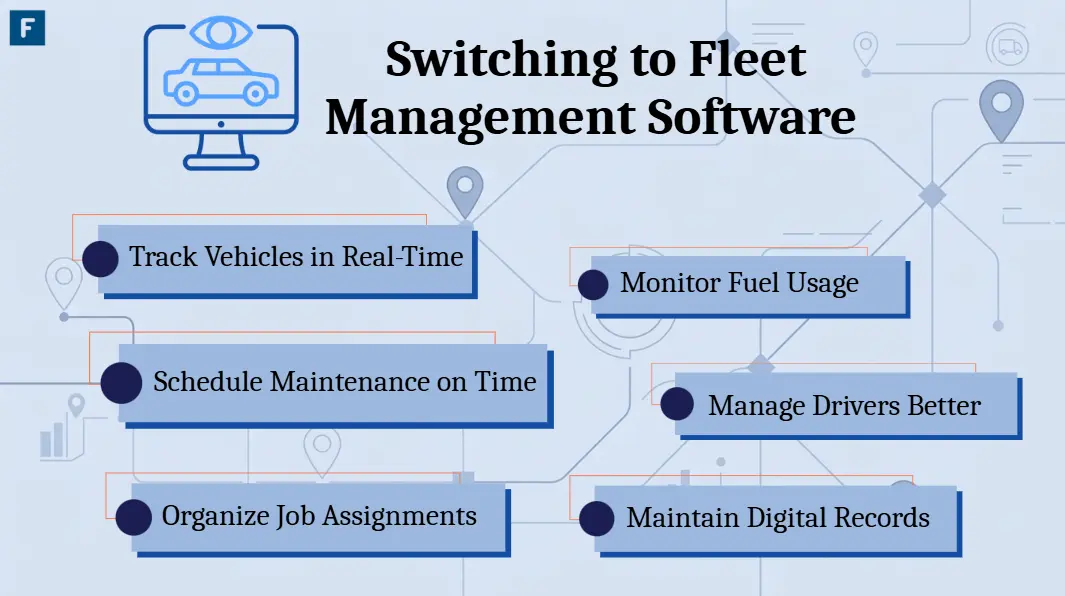
Fleet management software can help you in several ways:
1. Track Vehicles in Real-Time
You can see the live location of your vehicles through the GPS tracking feature in this software. This helps you know which driver is closest to a new job so you can assign work quickly.
It also prevents drivers from taking longer routes. Real-time tracking saves time, reduces fuel costs, and improves customer satisfaction because you can give accurate arrival updates.
2. Monitor Fuel Usage
The software shows you how much fuel each vehicle is using and if there is any unusual increase. You can identify problems like over-idling, long routes, or careless driving. Monitoring fuel regularly reduces unnecessary expenses and improves overall profit.
3. Schedule Maintenance on Time
Fleet software sends reminders for oil changes, tire rotation, servicing, and inspections to keep your vehicles in good condition and increase their lifespan. Proper fleet maintenance also improves safety and reduces the risk of sudden repair costs.
4. Manage Drivers Better
The software helps you monitor driver behavior such as speeding, harsh braking, or long idle time. This encourages drivers to drive safely and responsibly. Safe driving reduces accidents, vehicle damage, and repair costs. It also builds a professional image of your business.
5. Organize Job Assignments
Instead of calling or messaging drivers again and again, you can assign jobs directly through the software. Drivers receive job details, location, and instructions instantly on their device. This reduces confusion and miscommunication. It also saves time and helps complete more jobs in a day.
6. Maintain Digital Records
All important documents, such as insurance papers, service history, fuel records, and expense reports, can be digitally stored in this software. You don’t need to manage messy spreadsheets or physical files. This makes reporting easier and helps you make better business decisions using accurate data.
When you use technology properly, you will get better control over your fleet. It helps your business grow smoothly. This software also offers advanced technology that makes vehicle operations smarter and faster to help home service businesses manage their fleets with better control.
This software is beneficial in:
- Improving overall efficiency by automating daily fleet tasks and reducing manual work.
- Reducing fuel costs by tracking fuel usage and identifying waste or unnecessary idling.
- Increasing vehicle lifespan through regular maintenance reminders and proper servicing schedules.
- Enhancing driver safety by monitoring driving behavior like speeding and harsh braking.
- Saving time with digital job scheduling and instant communication between the office and drivers.
- Reducing human errors by keeping all records, reports, and data organized in one system.
- Improving customer satisfaction by ensuring on-time arrivals and faster service completion.
Top 3 Best Fleet Management Software
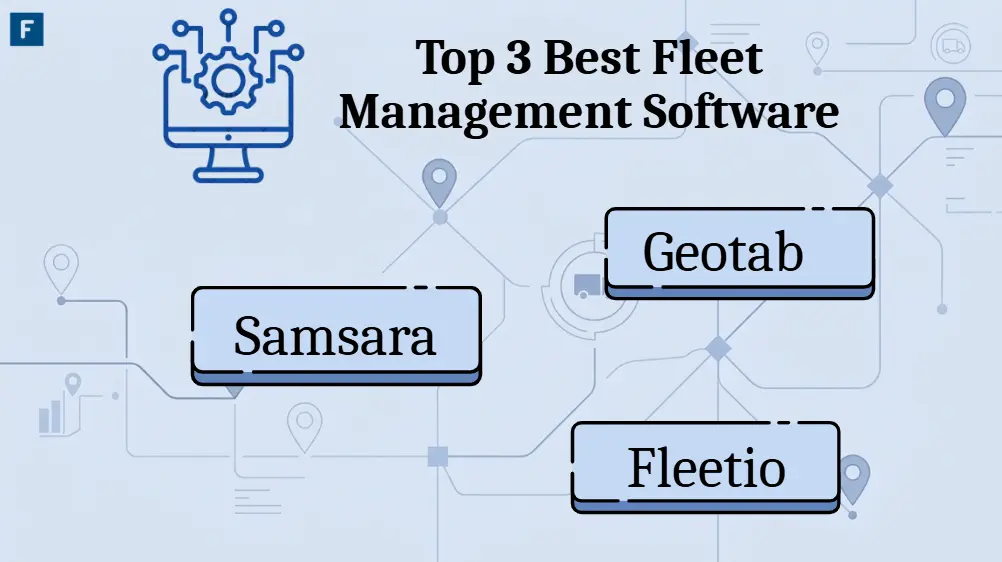 This image shows some of the most popular fleet management tools used by businesses today. We’ll clearly explain the topic in simple and practical terms to help you identify the best one for your business needs. Remember, choosing the right software can make your fleet operations smoother, more organized, and more efficient.
Let’s break them down and look at each of them in detail.
1. Samsara
Best for: Samsara is best for medium and large-sized businesses that need advanced GPS tracking and real-time fleet visibility. It is widely used by logistics, delivery, and service companies.
Pricing: Samsara has 3 pricing plans, and is usually customized depending on fleet size and hardware requirements. Most businesses pay a monthly subscription based on the number of vehicles.
Key Features:
- Real-time GPS tracking of vehicles to monitor fleet movement
- Driver safety monitoring with alerts for risky driving behavior
- Fuel usage tracking to help reduce fuel expenses
- Maintenance alerts to keep vehicles in good condition
Samsara also provides strong data analytics and reporting. Fleet managers can easily analyze driver performance, route efficiency, and vehicle usage to help businesses make better decisions and improve productivity.
2. Fleetio
Best for: Fleetio is best for small and medium-sized fleets that want to manage maintenance, fuel records, and vehicle data in one place.
Pricing: Plans start at $4 per vehicle per month when billed annually (or $5 monthly), while advanced plans like Professional and Premium start around $7 and $10 per vehicle per month.
Key Features:
- Preventive maintenance scheduling to avoid vehicle breakdowns
- Fuel tracking to monitor fuel consumption and costs
- Digital vehicle records and service history
- Mobile app for easy fleet updates and inspections
Fleetio focuses strongly on maintenance management. It helps service businesses keep track of every vehicle’s health and service schedule for companies to increase vehicle lifespan and reduce repair costs.
3. Geotab
Best for: Geotab is ideal for companies that want deep data insights and customizable fleet tracking solutions.
Pricing: Pricing depends on the selected hardware device and software plan. Businesses usually pay a monthly subscription.
Key Features:
- Advanced GPS tracking with detailed vehicle data
- Driver behavior monitoring to improve safety
- Route optimization for faster job completion
- Powerful analytics dashboards and reports
Geotab is known for its strong data capabilities. The platform processes billions of vehicle data points and uses advanced analytics and AI to improve fleet performance and operational efficiency.
Best Practices that you Should Know
Many fleet businesses offer different features at different prices, and it can sometimes be confusing to choose the right option. That’s why it’s crucial to know about the vehicles before going to fleet management.
Check out these important points in your vehicle:
- Check the overall condition of the vehicle before adding it to a fleet system. Make sure the engine, brakes, tires, and other important parts are working properly so the vehicle can run safely and smoothly.
- Review the maintenance history of each vehicle. Knowing when the last service or repair was done helps you plan future maintenance and prevents sudden breakdowns.
- Look at the fuel efficiency of the vehicle. If a vehicle consumes too much fuel, it can increase your business expenses, so it is important to monitor fuel usage.
- Make sure every vehicle has a responsible driver assigned to it. This helps track driving behavior and ensures the vehicle is used carefully.
- Check that all vehicle documents, like registration, insurance, and permits, are valid and up to date to avoid legal problems later.
- Understand how often the vehicle is used and what routes it usually takes. This helps you plan better routes and reduce unnecessary travel.
Final Recommendation
Fleet management is drastically important for any service business, so managing it effectively is completely up to you. Proper planning, identifying the right needs, and choosing the right tools can sometimes feel like a difficult process, but it is worth it for your service business.
Just like Fieldified helps businesses manage customer relationships, service requests, and daily workflows, the same idea applies to fleet management software (FMS) for vehicles.
Your fleet plays a big role in daily operations, customer satisfaction, and overall business growth. Because of this, managing vehicles carefully becomes very important.
That is why choosing the right fleet management software is a smart decision. The right tool helps you track vehicles, manage maintenance, reduce costs, and improve efficiency, making your fleet operations smoother and more organized.
FAQs
1. What is fleet management in simple terms?
Fleet management means managing and controlling business vehicles. It includes tracking vehicles, planning routes, monitoring fuel use, scheduling maintenance, and managing drivers. The goal is to keep vehicles running smoothly and reduce operational costs.
2. Why is fleet management important for home service pros?
Fleet management helps service businesses save time and money. It improves route planning, reduces fuel expenses, prevents vehicle breakdowns, and ensures technicians reach customers on time. This leads to better efficiency and customer satisfaction.
3. What are the main benefits of fleet management software?
Fleet management software helps track vehicles in real time, monitor fuel usage, schedule maintenance, manage drivers, and organize job assignments. It reduces manual work and helps businesses make better decisions using data.
4. How can fleet management reduce fuel costs?
Fleet management reduces fuel costs by optimizing routes, tracking fuel consumption, and monitoring driver behavior. It helps avoid long routes, unnecessary idling, and harsh driving habits that increase fuel usage.
5. What features should you look for in fleet management software?
Good fleet management software should include GPS tracking, fuel monitoring, maintenance reminders, driver performance tracking, and job scheduling tools. These features help businesses manage vehicles more efficiently.