 EN
EN DE
DE ES
ES FR
FR NL
NL PT
PT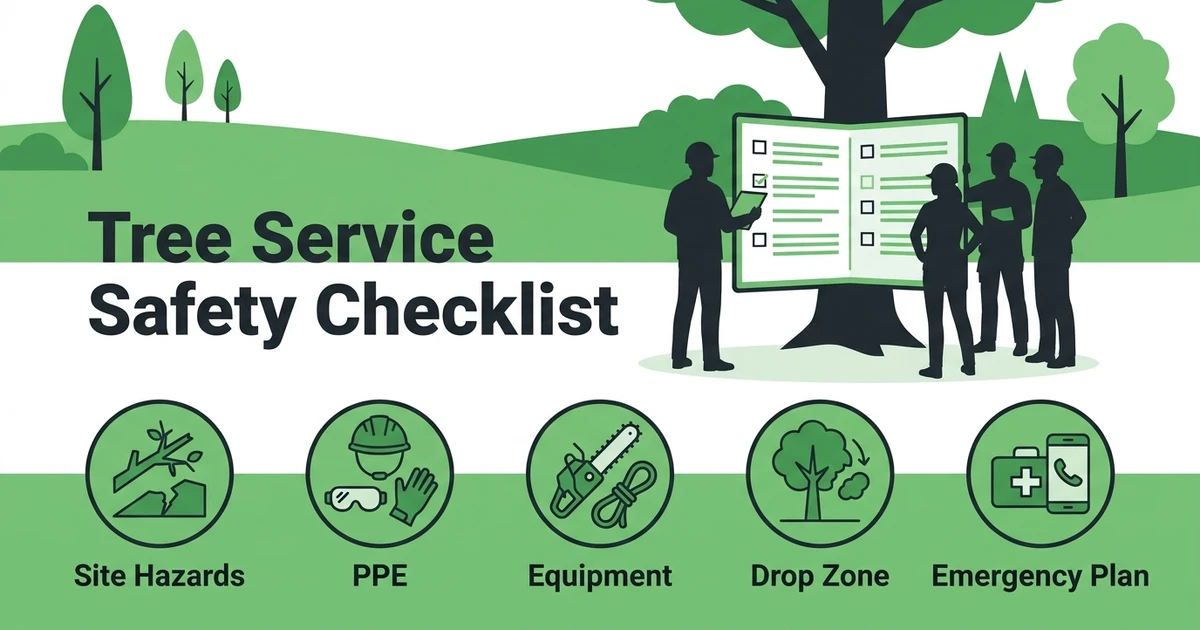





Quick Answer: Tree Service Safety Checklist
A tree service safety checklist is a documented pre-job review of the tree, site hazards, power lines, drop zones, PPE, climbing and rigging gear, equipment, crew communication, traffic control, and emergency response. It supports consistent planning, but it does not replace qualified-worker judgment, training, applicable regulations, manufacturer instructions, or the current ANSI Z133 standard.
Tree work changes from property to property. A familiar pruning job can become a different operation when the wind rises, a hanger is spotted, the drop zone narrows, or the crew changes.
A repeatable pre-job check gives the crew a moment to identify those conditions before climbing, cutting, rigging, chipping, or moving traffic around the site.
Why Every Tree Crew Needs a Pre-Job Safety Checklist
Tree care combines work at height, falling material, powered equipment, traffic, electrical hazards, and changing tree conditions. Missing one hazard can affect the climber, ground crew, customer, or public.
In 2023, trees, logs, and limbs were the primary source of 79 deaths in the administrative and support and waste management sector. Tree trimmers and pruners recorded 80 fatalities in that sector, according to the U.S. Bureau of Labor Statistics fatal injury release.
A checklist cannot make tree work risk-free. It can make the crew’s planning visible and consistent, especially when the day is busy or the job looks routine.
The pre-job review should be led by someone qualified under the company’s safety program and applicable requirements. Every worker needs to understand the work plan, hazards, controls, and their own role.
What Should a Tree Service Safety Checklist Cover?
The checklist should match the job. A pruning visit beside a quiet backyard requires a different plan from a storm-damaged removal over a roadway.
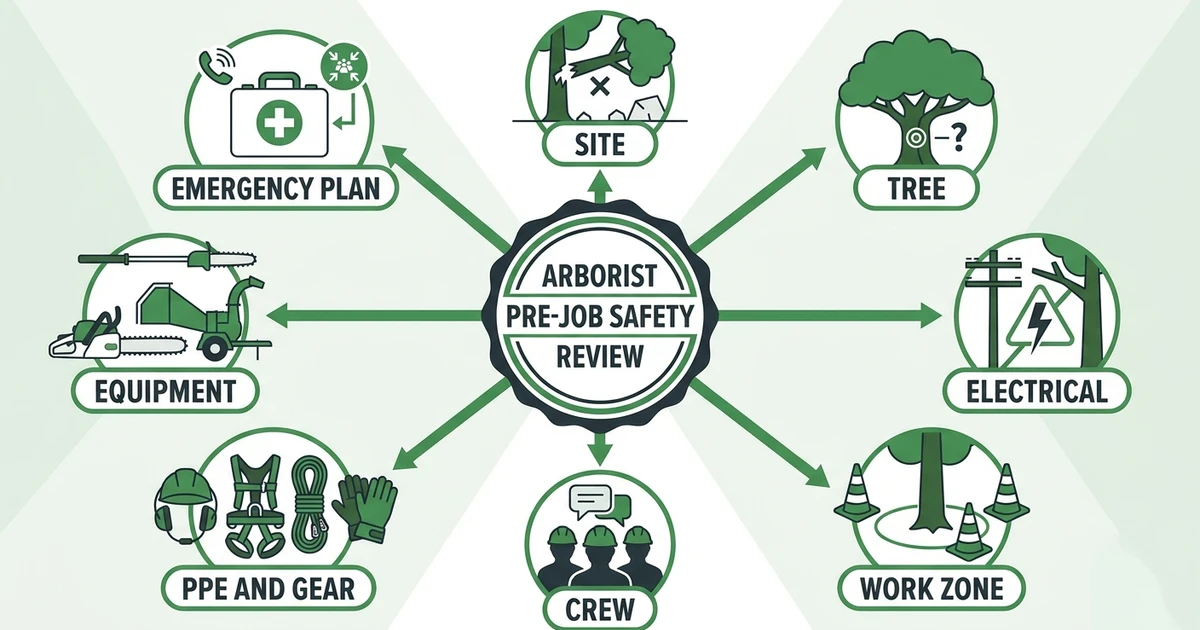
At minimum, review these categories before work starts:
- Site: access, terrain, weather, structures, public exposure, and changing conditions
- Tree: lean, decay, deadwood, hangers, cracks, root condition, and load
- Electrical: overhead conductors, service drops, utilities, and coordination needs
- Work zone: drop zones, escape routes, traffic control, and exclusion areas
- Crew: qualifications, roles, communication signals, and stop-work authority
- PPE and gear: required protection, climbing systems, rigging equipment, and condition
- Powered equipment: saws, chippers, stump grinders, lifts, vehicles, and guards
- Emergency plan: location, access, contacts, first aid, rescue readiness, and response
Use the checklist as a prompt for discussion, not a box-ticking exercise. If the crew cannot explain the hazard and control, the item is not complete.
How to Complete a Tree Work Hazard Assessment
Start with the full site before focusing on the tree. Walk the property and look for people, vehicles, structures, utilities, slopes, unstable ground, fences, and anything that affects access or material movement.
Then assess the tree and surrounding trees. Look for visible decay, cracks, dead or broken limbs, hangers, unusual lean, root damage, storm loading, and conditions that may change as cuts are made.
Consider a storm-damaged maple supporting broken limbs over a backyard. The job cannot be planned like a normal removal. The crew must account for unstable loading, limited escape paths, nearby structures, equipment position, and what could move unexpectedly.
A 2023 NIOSH-supported tree-work publication recommends planning the job and inspecting the tree and climbing equipment before each job. It reports 40 deaths and approximately 430 injuries during tree trimming and pruning activities in New Jersey from 2011 through 2020 in its tree-work safety guidance.
Reassess when conditions change. Wind, rain, equipment movement, public access, or a newly exposed defect may require the crew to stop and revise the plan.
How Should Crews Check Power Lines, Drop Zones, and Traffic?
Electrical hazards must be identified before equipment is positioned or anyone enters the tree. If conductors or service lines may affect the work, stop and follow the company’s electrical-hazard procedures, applicable rules, and required utility coordination.
Do not assume a line is safe because it looks insulated or because the crew has worked near it before. Qualifications, approach requirements, and work methods depend on the actual situation and applicable standards.
Establish drop zones and keep unauthorized people outside them. Confirm where limbs, logs, ropes, equipment, and debris may travel, not only where the crew expects them to land.
Where the job affects a road, sidewalk, driveway, or shared property, the plan must address traffic and public control. Use the traffic-control methods, trained personnel, and devices required for the location.
Escape routes should be clear before cutting starts. Vehicles, brush, ropes, and equipment should not block the path the worker expects to use.
Book a demo to see how Fieldified keeps tree-job checklists, photos, notes, and crew updates attached to the same work record for access in the field.
What PPE and Equipment Should Arborists Inspect Before Work?
Inspect the PPE and equipment selected for the specific operation. Follow manufacturer instructions, the company safety program, applicable regulations, and current industry standards.
The pre-use review may include:
- Head, eye, hearing, hand, leg, and foot protection
- Climbing lines, saddles, connectors, lanyards, and friction devices
- Rigging ropes, blocks, slings, lowering devices, and attachment points
- Chainsaws, pole saws, and required guards or controls
- Chippers, stump grinders, aerial lifts, vehicles, and communication devices
Check for wear, damage, contamination, missing guards, poor operation, and anything outside the equipment’s intended use. Remove defective gear from service and route it through the company’s repair, retirement, or qualified-inspection process.
Equipment selection matters too. Gear that is in good condition may still be wrong for the expected load, access, tree condition, or work method.
What Must the Crew Cover in a Pre-Job Safety Briefing?
The briefing turns the assessment into a shared plan. The crew leader should explain the scope, sequence, hazards, controls, and what will cause the team to pause.
Cover these points:
- Identify the job leader and each crew member’s role.
- Review the tree, site, electrical, weather, and public hazards.
- Confirm the work method, equipment, drop zones, and escape routes.
- Agree on voice, hand, radio, or whistle communication signals.
- Review the emergency plan and rescue readiness.
- Confirm that every worker can stop the job when conditions change.
Keep the record simple enough to use. It might capture the job address, date, crew, hazards found, controls selected, equipment checks, emergency details, and acknowledgments.
A NIOSH FACE report on a fatal 2023 palm-tree trimming incident found no documentation of formal employee tree-trimming training by the employer, as recorded in the incident investigation report. A checklist is not training, but a documented briefing helps show what the crew reviewed for the specific job.
What Should a Tree Service Emergency Plan Include?
An emergency plan must match the site and operation. A generic phone number on a form is not enough if responders cannot find the property or reach the work area.
Confirm the following before work starts:
- Exact job address and the best access point for responders
- Reliable way to contact emergency services and the utility when needed
- First-aid supplies and trained personnel required by the company’s program
- Aerial rescue readiness when climbing work requires it
- Location of the nearest appropriate medical support
- Who will meet responders, control the site, and guide them in
Discuss what the crew will do if the planned responder access becomes blocked. Remote properties, gated sites, and backyards with narrow access need extra attention.
The emergency plan should be easy for the crew to find. Review it again if the job method, crew, location, or hazards change.
Paper vs Digital Tree Service Safety Checklists
Paper can work when the crew completes it carefully and the company can retrieve it later. Its weakness is visibility when forms stay in trucks, become damaged, or never reach the office.
A digital checklist can connect the review with the job record, crew, photos, and updates. Tree service and arborist software can keep those records together, but the format does not replace the quality of the conversation.
| Checklist Need | Paper Process | Digital Job Record |
|---|---|---|
| Crew access | One physical copy on site | Available to authorized crew devices |
| Photo evidence | Stored separately | Attached to the job |
| Changed hazards | Handwritten update or new form | Updated record with crew notification |
| Retrieval | Search binders or vehicles | Search the related job |
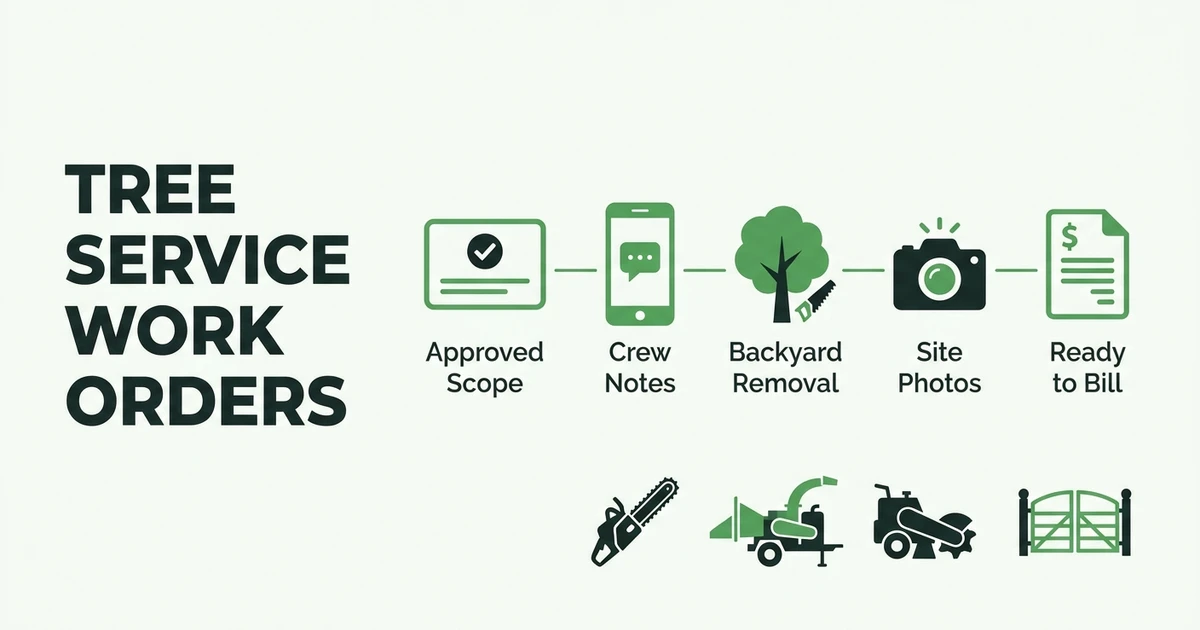
Tree service work orders can carry scope and crew instructions, while a safety checklist documents the pre-job hazard review. Keep the purposes clear even when both records live together.
For crews working away from the office, mobile access for tree crews helps make the current job record available where the review happens.
Frequently Asked Questions
What should be included in a tree service safety checklist?
Include site and tree hazards, electrical risks, weather, drop zones, traffic control, PPE, climbing and rigging gear, powered equipment, crew roles, communication, and the emergency plan. Adapt the checklist to the actual job and applicable requirements.
Who should complete the pre-job tree work briefing?
A qualified crew leader or other person designated under the company’s safety program should lead the briefing. Every crew member should understand the plan, their role, communication signals, and when to stop work.
How often should arborist equipment be inspected?
Inspect equipment before use and follow the manufacturer, company program, and applicable regulatory requirements. Remove defective gear from service and have qualified people complete any required detailed inspections.
Does an arborist safety checklist replace safety training?
No. A checklist supports consistent planning and documentation, but it does not replace qualified-worker judgment, training, manufacturer instructions, regulations, or the current ANSI Z133 standard.
How should crews document changing jobsite hazards?
Pause the work, reassess the site, update the job record, and brief the crew again before continuing. Document the new hazard, the control selected, and any change to roles, equipment, or work zones.
Conclusion: Make the Safety Check Part of Every Tree Job
A useful pre-job checklist gives the crew a repeatable way to identify hazards, agree on controls, inspect equipment, assign roles, and prepare for emergencies.
The document matters, but the conversation matters more. Stop when conditions change, involve qualified workers, and make sure every crew member understands the revised plan before work continues.
Book a demo to see how Fieldified helps tree service crews complete and document job-specific checklists, photos, notes, and updates from the field.