 EN
EN DE
DE ES
ES FR
FR NL
NL PT
PT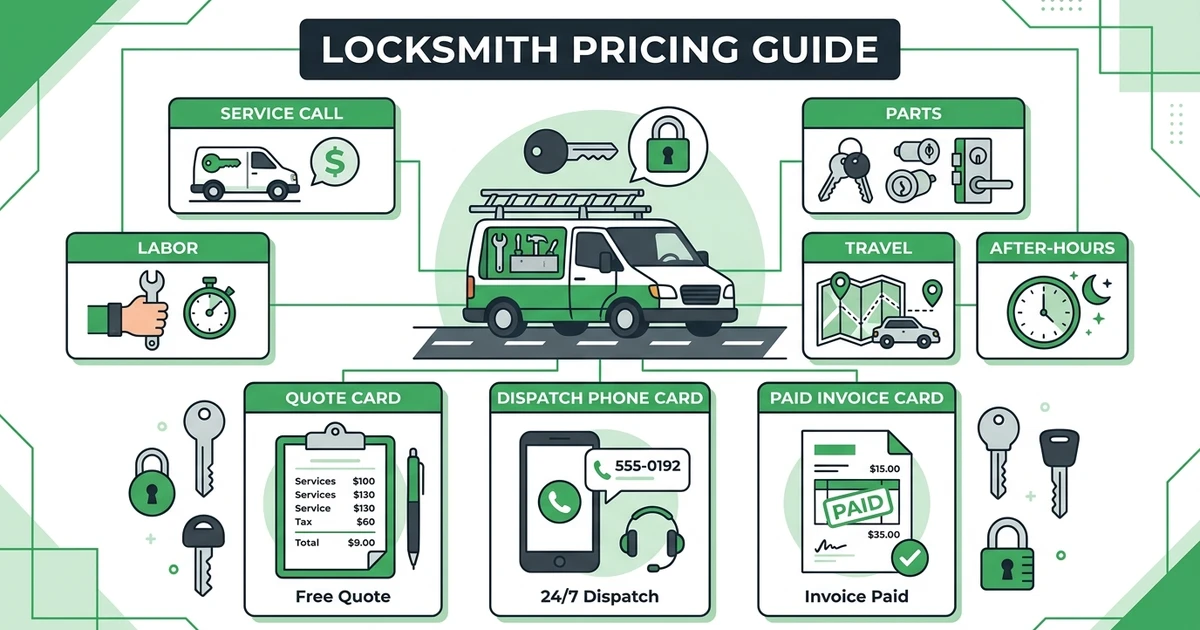





Quick Answer: Locksmith pricing should combine a service call fee, labor time, parts, travel, urgency, job complexity, and profit margin. Dispatch notes, authorization details, and invoice documentation help reduce disputes on emergency and after-hours jobs.
A locksmith pricing guide should protect the customer and the business. The customer needs to know what they are approving before a technician heads out. The owner needs pricing that covers time, parts, travel, risk, and profit.
Locksmith work has real labor value. BLS reported 14,790 locksmiths and safe repairers nationally in May 2023, with a median hourly wage of $23.26 and mean annual wage of $52,130 in its occupational wage data. If your pricing ignores paid technician time, emergency calls can become expensive favors.
This guide is written for locksmith owners and dispatchers who quote lockouts, rekeys, installations, travel, after-hours calls, and mobile invoices every week.
Why locksmith pricing needs a repeatable system
Locksmith pricing can get messy fast. One call is a straightforward residential lockout near the shop. The next is an after-hours commercial rekey across town with unclear authorization and extra hardware.
If both jobs start from a vague phone quote, the technician gets stuck explaining the difference at the door. That is uncomfortable for the customer and risky for the business.
A repeatable pricing system gives dispatchers clear rules. It also gives technicians backup when the real job does not match the original call.
The goal is not to make every locksmith job identical. It is to separate the parts that are predictable from the parts that need on-site confirmation.
What factors affect locksmith pricing?
Locksmith pricing starts with job type, then adjusts for time, parts, travel, urgency, and complexity. A rekey, lockout, deadbolt install, safe service, and access control issue should not share one generic price.
Key pricing factors include:
- Service call fee
- Technician labor
- Distance and travel time
- Time of day
- Emergency response need
- Lock type and complexity
- Parts and hardware
- Commercial or residential setting
- Authorization checks
- Parking, building access, and wait time
O*NET describes locksmith and safe repairer work as including opening locks, repairing locks, changing combinations, cutting keys, and installing locks in its occupation summary. That range of work is exactly why one flat number can create friction.
Build your pricing around categories. Then train dispatchers to explain which parts are fixed, which parts are estimated, and which parts depend on what the technician finds.
How to price lockouts, rekeys, installs, and emergency calls
Start with a minimum service call fee. This fee should cover dispatch time, travel, vehicle cost, and the technician showing up prepared. It also helps reduce no-shows and price shoppers who are not ready to approve work.
Then add labor and parts based on the job category:
- Lockout service
- Rekey by cylinder or lock count
- New lock installation
- Deadbolt installation
- Commercial hardware work
- Safe or specialty lock work
- After-hours emergency call
For lockouts, the range often depends on time of day, lock type, and whether the job is residential, automotive, or commercial. For rekeys, the price should reflect the number of locks, key copies, travel, and whether hardware needs adjustment.
For installations, include hardware, drilling, alignment, door prep, strike plate work, cleanup, and testing. A simple deadbolt replacement is not the same as installing a new lock on a metal commercial door.
Use clear authorization steps too. On emergency lockouts, your dispatcher should confirm identity requirements, address, phone number, and payment expectations before dispatch.
Example locksmith quote calculation
Here is a simple example for a residential rekey visit with four locks inside the normal service area.
| Cost item | Estimate | Notes |
|---|---|---|
| Service call and travel | $65 | Dispatch, drive time, vehicle cost |
| Labor | $90 | Rekey labor and testing |
| Parts and key blanks | $24 | Basic supplies and copies |
| Office and payment cost | $16 | Booking, notes, payment processing |
| Total cost | $195 | Before profit |
If you quote $225, the job may be profitable only when everything goes smoothly. If the customer adds locks, needs hardware adjustment, or lives near the edge of your area, your rules should explain how the price changes.
For emergency lockouts, make the service fee and after-hours premium clear before dispatch. Nobody likes surprise pricing at the door, and technicians should not have to negotiate the company policy alone.
If you are rebuilding your quote format, test labor, travel, overhead, and margin before publishing a new rate sheet.
How to explain locksmith pricing before dispatch
Locksmith customers are often stressed. They may be locked out, late for work, managing a tenant issue, or dealing with a security concern. Clear pricing helps calm the call.
A strong pre-dispatch explanation includes:
- The service call fee
- What the fee includes
- The likely labor range
- Parts that may cost extra
- After-hours or emergency premium
- Authorization requirements
- Payment options
Use plain language. Instead of saying “pricing depends on the mechanism,” say the technician needs to see the lock type before confirming labor and parts.
Also document the conversation. If the customer approved a service call fee and after-hours premium, that note should appear on the job record before the technician arrives.
Fieldified helps locksmith teams capture calls, dispatch the right technician, document approvals, send invoices, and collect payment from one job record. Book a Fieldified demo to see how locksmith dispatch and billing can stay connected.
Build a dispatcher pricing script
A dispatcher pricing script is not a robotic phone script. It is a checklist that helps the person answering the call collect the right details before a technician is sent.
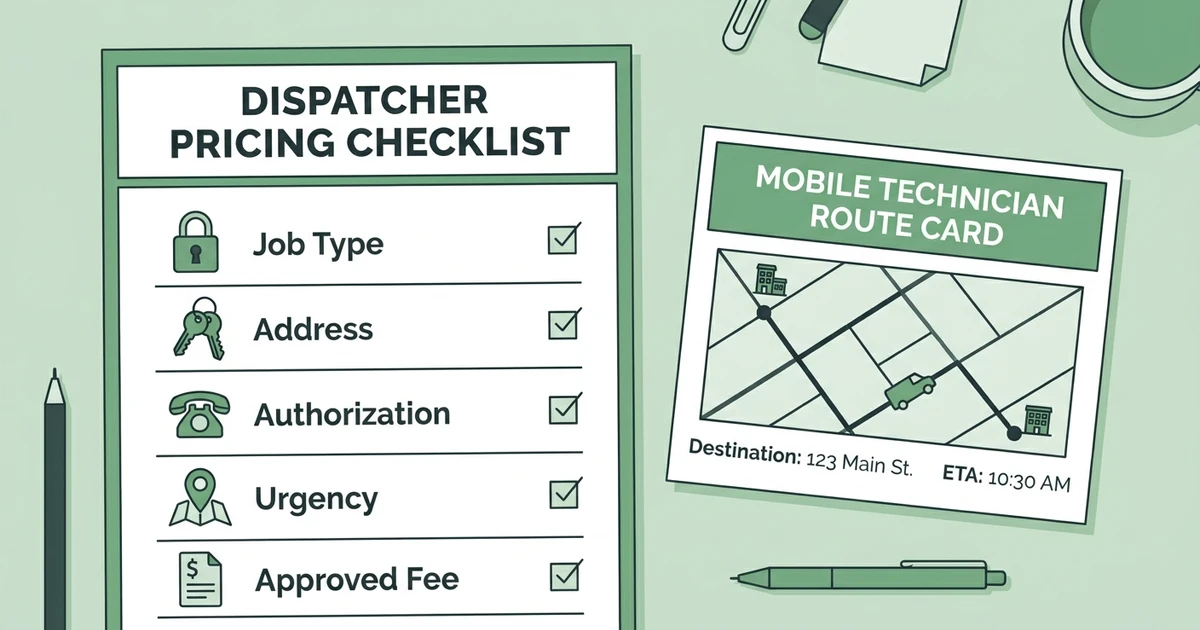
For a locksmith call, the script should ask:
- What type of property is this?
- What is the exact address?
- Is this a lockout, rekey, repair, install, or safe issue?
- Is the customer authorized to approve work?
- What type of lock or door is involved?
- Is the job urgent or after hours?
- Are there parking, gate, tenant, or building-access issues?
- What service call fee and price range has the customer approved?
The script should also help the dispatcher avoid overpromising. If the customer asks for a fixed price on a job that depends on the lock type, give the service call fee and explain what the technician must confirm on site.
This protects technicians. They arrive with better notes, fewer surprises, and a customer who already understands the pricing structure. It also protects the office when a customer later questions the invoice.
Review the script with technicians every few weeks. They will know which questions are missing because they are the ones standing at the door when the original notes were too thin.
How scheduling and invoicing software supports locksmith pricing
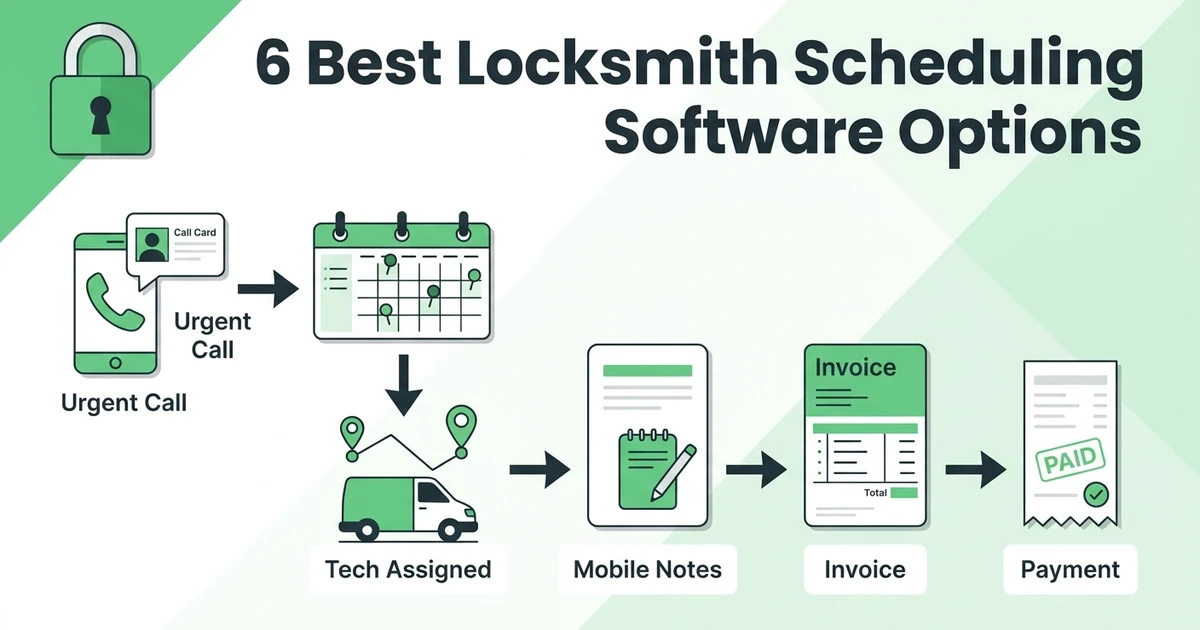
Locksmith companies lose margin when the phone call, schedule, job notes, invoice, and payment are disconnected. The dispatcher may quote one thing, the technician may find another, and the office may invoice from incomplete notes.
Locksmith software keeps job details tied to the customer record. That is useful when a customer calls back about a rekey, a commercial client needs more doors serviced, or an emergency call becomes a follow-up installation.
The right software also helps with urgent calls. An AI receptionist for service calls can help capture caller details when the office is busy, while payment tools help locksmiths get paid sooner after the job is complete.
If you already use a broad contractor app, compare workflow and pricing before switching. A flat-pricing comparison can help you decide whether your locksmith team needs a simpler setup.
Locksmith pricing mistakes to avoid
The biggest mistake is giving a firm price when you do not have enough information. Dispatchers can give starting prices and clear ranges, but some work needs on-site confirmation.
Avoid these pricing mistakes:
- Quoting without asking lock type
- Hiding the service call fee
- Forgetting after-hours premiums
- Undercharging for travel
- Not charging for wait time
- Including extra keys without limits
- Letting commercial work use residential pricing
- Sending invoices after details are forgotten
Another mistake is treating every emergency call as a quick win. Emergency work can be profitable, but it can also disrupt the whole schedule. The price should reflect that operational cost.
Review completed jobs monthly. Look at which calls ran long, which parts were missed, which invoices were disputed, and which customer types were most profitable.
Frequently Asked Questions
What should a locksmith pricing guide include?
A locksmith pricing guide should include service call fees, labor, parts, travel, urgency, after-hours premiums, job complexity, authorization checks, and profit margin. It should also explain what is included before the technician is dispatched.
How should locksmiths price emergency calls?
Emergency locksmith calls should include a clear service call fee, estimated labor, travel, time of day, and any parts needed. After-hours or high-urgency calls should usually carry a premium because they interrupt the schedule.
Should locksmith pricing include a service call fee?
Yes. A service call fee helps cover travel, dispatch time, vehicle cost, and the technician’s availability. The fee should be explained before dispatch so customers understand what they are approving.
Can locksmith software help with pricing?
Yes. Locksmith software can store price templates, dispatch notes, customer details, photos, invoices, and payment records. That makes emergency jobs easier to document and bill consistently.
How often should a locksmith update pricing?
Review locksmith pricing at least twice a year and whenever labor, fuel, insurance, parts, or after-hours coverage costs change. Emergency and commercial work may need separate review because the risk and response expectations differ.
Conclusion
Locksmith pricing should be clear enough for dispatchers, fair enough for customers, and strong enough to protect margin. Build from service call fees, labor, parts, travel, urgency, complexity, and profit instead of guessing under pressure.
If you want to manage locksmith calls, dispatch, job notes, invoices, and payments in one place, book a Fieldified demo. Fieldified helps locksmith teams quote clearly, document approvals, and get paid while the job details are still fresh.