 EN
EN DE
DE ES
ES FR
FR NL
NL PT
PT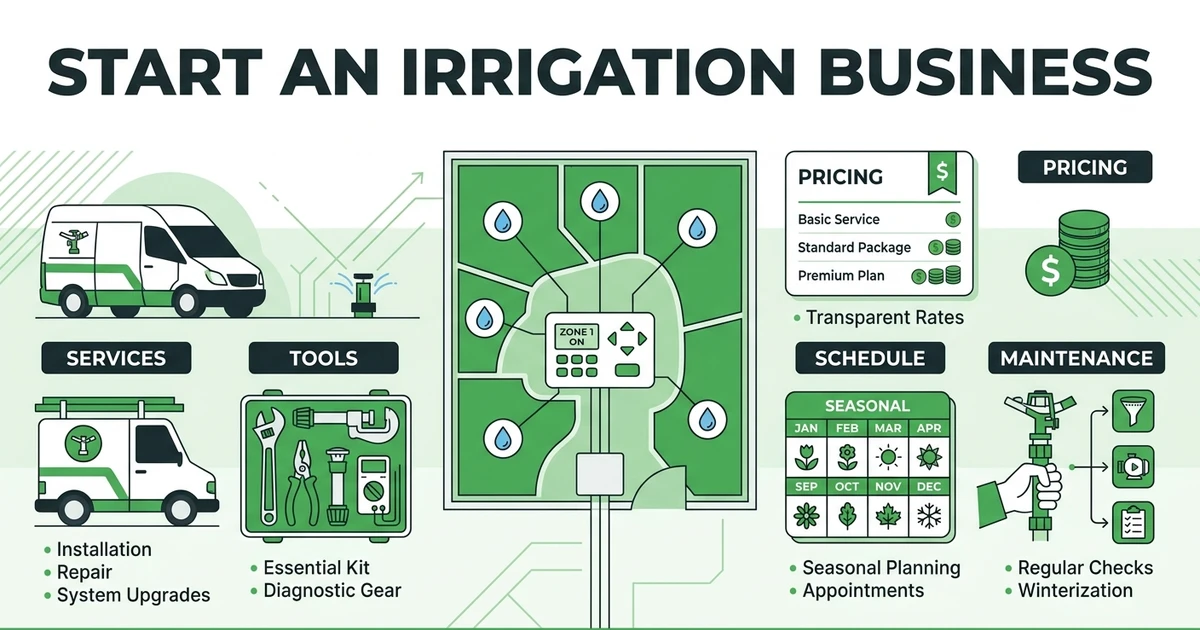





Quick Answer: Starting an irrigation business requires more than tools and sprinkler knowledge. You need local licensing research, service packages, seasonal scheduling, a pricing model, customer records, and a reliable system for maintenance renewals and invoices.
If you want to start an irrigation business, the technical work is only half the job. The other half is running a seasonal operation that can answer calls, quote fast, schedule crews, track parts, and remind customers before peak demand hits.
The demand is real. EPA WaterSense says residential outdoor water use across the United States accounts for nearly 8 billion gallons each day, mainly for landscape irrigation on its outdoor water use page. That creates a market for irrigation installers and repair teams that can help homeowners use water more carefully.
This guide walks through the business side: services, licensing checks, equipment, pricing, seasonal scheduling, maintenance plans, and software.
Is an irrigation business a good service business to start?
An irrigation business can be a strong trade business because customers need seasonal help. Spring startups, repairs, controller adjustments, leak checks, sprinkler head replacement, and winterization create repeat work when the customer trusts your team.
The landscape market is also large. NALP reports that the landscape services industry had $188.8 billion in 2024 revenue, more than 1.4 million employees, and 692,777 businesses in its landscape industry statistics. Irrigation services fit inside that broader outdoor-service demand.
That said, irrigation is not a casual side hustle if you want to build it properly. Water rules, backflow requirements, excavation risk, electrical controllers, landscape damage, and callbacks all require discipline.
The best early operators are organized. They do not just know how to fix a zone that will not run. They know how to document the repair, invoice the customer, and schedule the next seasonal check before the relationship goes cold.
Choose the irrigation services you will offer
Start narrow. A new irrigation company does not have to sell every service on day one. It is better to offer a focused menu that your team can price, schedule, and complete well.
Common starter services include:
- Spring system startup
- Sprinkler head adjustment and replacement
- Broken pipe and valve repair
- Controller setup and programming
- Leak troubleshooting
- Zone coverage checks
- Mid-season inspection
- Winterization
- Small system upgrades
Installations can be profitable, but they also carry more estimating risk. You need accurate measurements, parts planning, labor planning, trenching or boring decisions, local code awareness, and a clear change-order process.
For many new owners, repairs and seasonal maintenance are the safer starting point. They build customer relationships, create repeat visits, and teach you which neighborhoods, systems, and job types are most profitable.
Check licensing, insurance, and local water rules
Before you advertise irrigation work, check your state, county, and city requirements. Licensing rules vary widely, and some areas have specific irrigation, plumbing, backflow, or contractor registration requirements.
Also check insurance needs. Irrigation work can involve property damage, water damage, trenching, electrical controls, sidewalks, driveways, and customer landscaping. A single mistake can cost more than the original job.
Ask about:
- Contractor registration
- Irrigation or landscape licensing
- Backflow testing rules
- Business insurance
- Workers’ compensation
- Local water restrictions
- Permit requirements for larger installs
EPA WaterSense also notes that experts estimate as much as 50% of residential outdoor water can be wasted because of overwatering from inefficient irrigation methods and systems on its irrigation controller page. That makes water rules and efficient system setup part of your customer value.
Do not guess here. Call the local authority, read the requirements, and keep notes. Your future self will thank you when a customer asks whether the work is compliant.
Build your startup equipment and supplier list
Your first equipment list depends on the services you offer. Repairs, startups, and winterization need different tools than full installations.
For repair and maintenance work, you may need:
- Service vehicle
- Hand tools
- Valve locator or wire tracer
- Multimeter
- Pipe cutters
- PVC tools and fittings
- Common sprinkler heads and nozzles
- Controllers and wiring supplies
- Shovels and digging tools
- Air compressor access for winterization
- Phone or tablet for job notes and invoices
Build supplier relationships early. Know where to get common parts quickly, which brands you prefer, and how pricing changes when you buy in volume.
Also decide what you will keep on the truck. Carry too little and technicians waste time driving for parts. Carry too much and cash sits in inventory that may not move.
Price irrigation installs, repairs, startups, and winterization
Irrigation pricing should start with cost, not guesswork. A repair visit must cover technician time, travel, parts, vehicle cost, office time, insurance, payment fees, and profit.
Grounds maintenance labor is not free background cost. BLS reported median pay of $18.50 per hour for grounds maintenance workers in May 2024 and projected about 171,600 openings per year from 2024 to 2034 in its Occupational Outlook Handbook. If you underprice labor, the business feels busy but cash stays thin.
Use separate pricing logic for:
- Diagnostic service calls
- Small repairs
- Seasonal startup
- Mid-season inspection
- Winterization
- Controller replacement
- Larger upgrades
- Full installation estimates
For full installs, measure carefully and build the price from materials, labor hours, equipment, subcontractors, permits, overhead, and margin. Do not let a square-foot shortcut replace a real estimate when the site has slope, hardscape, poor access, or water-pressure concerns.
A job quote guide can help you present scope clearly so the customer understands what is included and what triggers a change order.
Set up scheduling for seasonal peaks
Irrigation is seasonal. Spring startup and fall winterization can flood the calendar, while mid-season repairs often arrive as urgent calls from customers with brown patches or leaking zones.
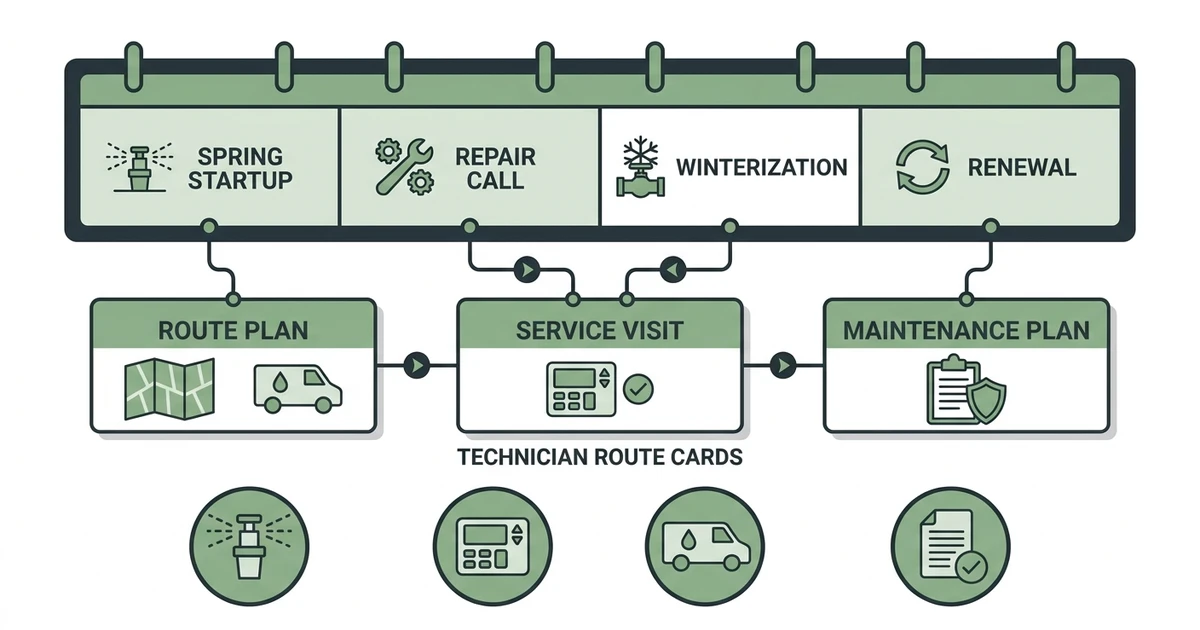
That means you need scheduling rules before the phone gets busy. Decide how many jobs a technician can complete per day, how far you will drive, which ZIP codes belong together, and how you will handle urgent repair calls.
Without a system, a common day looks like this: one tech drives across town for a 30-minute startup, then backtracks for a repair, then discovers the last appointment needs parts that were not on the truck.
With a better workflow, the office captures job type, zone count, controller details, symptoms, gate access, and customer availability before dispatch. The technician starts with better information and fewer surprises.
Irrigation business software helps connect requests, customer records, schedules, estimates, and invoices so the busy season does not live in text messages.
Create maintenance plans and recurring revenue
Maintenance plans are one of the best ways to make an irrigation business less unpredictable. They turn one-time repair customers into scheduled seasonal accounts.
A simple irrigation maintenance plan might include:
- Spring startup and system check
- Controller programming
- Mid-season coverage review
- Priority repair scheduling
- Fall winterization
- Notes for recommended upgrades
Use a recurring maintenance revenue calculator to test how many plans you need to cover truck cost, office time, and slower months.
Maintenance plans also improve customer experience. The homeowner does not need to remember when to call. Your team already knows the system, the property, and the next seasonal step.
Fieldified helps irrigation teams collect requests, schedule seasonal visits, track customer history, and follow up on estimates from one place. Book a Fieldified demo to see how recurring work can stay organized before peak season hits.
Use software before admin work slows down growth
Many irrigation owners wait too long to adopt software. At first, a phone, calendar, spreadsheet, and invoice app feel manageable. Then spring arrives, and the system cracks.
The warning signs are easy to spot:
- You forget who needs winterization
- Customers ask for quote updates you cannot find
- Technicians text job notes instead of updating records
- Invoices go out days late
- The same customer details get typed three times
- The schedule depends on one person remembering everything
Collecting requests and bookings early helps every job start with cleaner information. Scheduling seasonal service calls helps the office avoid scattered routes and overloaded days.
Software will not fix unclear pricing or poor workmanship. But it can give a good operator the structure to scale without burying the business in admin.
Frequently Asked Questions
How do I start an irrigation business?
Start by choosing your irrigation services, checking local licensing rules, buying essential tools, setting pricing, and building a scheduling process for seasonal demand. You also need a system for estimates, invoices, customer records, and maintenance renewals.
Is starting an irrigation business profitable?
An irrigation business can be profitable when pricing covers labor, travel, parts, overhead, callbacks, and profit. Recurring maintenance plans can make revenue more predictable outside installation work.
What services should a new irrigation business offer?
Many new irrigation businesses begin with startups, repairs, sprinkler head replacement, controller setup, leak troubleshooting, seasonal inspections, and winterization. Installations can be added when the team has the equipment and experience to quote them accurately.
When should I use irrigation business software?
Use software as soon as calls, estimates, job notes, and seasonal reminders become hard to manage manually. Waiting too long can create missed appointments, late invoices, and lost renewal opportunities.
How do irrigation maintenance plans work?
Maintenance plans usually bundle seasonal startup, mid-season inspection, repairs or priority scheduling, and winterization. The goal is to keep customers on a predictable service schedule while creating recurring revenue for the business.
Conclusion
Starting an irrigation business is part trade skill and part operations discipline. The owners who grow cleanly know what they sell, how they price it, how they schedule seasonal work, and how they keep customers on a maintenance rhythm.
If you want to manage irrigation requests, estimates, seasonal scheduling, maintenance reminders, invoices, and customer history in one place, book a Fieldified demo. Fieldified gives irrigation companies a practical operating system before busy season turns every loose note into a problem.