 EN
EN DE
DE ES
ES FR
FR NL
NL PT
PT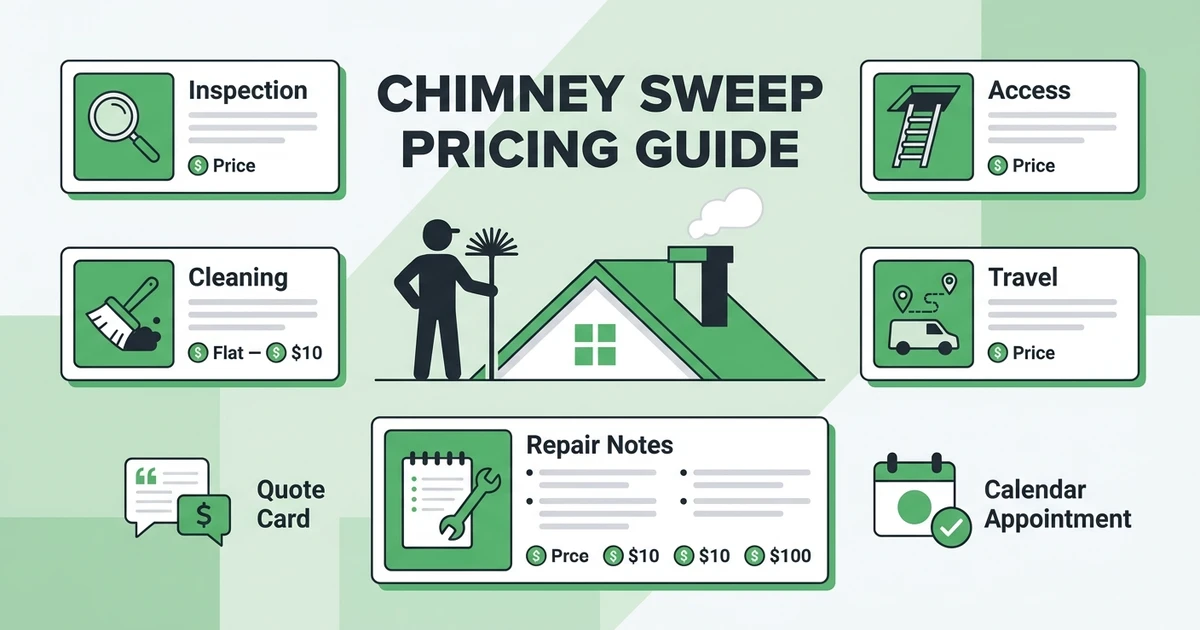





Quick Answer: Chimney sweep pricing should account for inspection scope, cleaning difficulty, roof or ladder access, technician time, travel, equipment, overhead, and profit margin. A good pricing guide gives your team a repeatable way to quote cleanings, inspections, and add-on repairs without guessing on the phone.
Chimney sweep pricing is not just a cleaning fee. A simple fireplace cleaning at a ranch-style home is different from a steep-roof access job, a wood stove with heavy buildup, or an inspection that needs photos and written documentation.
The risk is also real. The U.S. Fire Administration estimated 27,900 residential building heating fires in 2023, with 115 deaths, 525 injuries, and $488 million in dollar loss in its national heating fire estimates. Homeowners call chimney professionals because safety and documentation matter, not because they want a generic house-cleaning price.
This guide is for chimney sweep owners who want a pricing system that is clear to customers, fair to technicians, and profitable for the business.
Why chimney sweep pricing needs more than a flat cleaning fee
A flat cleaning fee is easy to advertise, but it can create problems when the real job is harder than the phone description. One chimney may take 45 minutes. Another may need extra setup, roof access, drop cloths, added documentation, and a careful conversation about repairs.
If both jobs are priced the same, one customer subsidizes the other. The business might stay busy, but the schedule becomes uneven and technicians feel rushed on the harder work.
Flat pricing also hides risk. Chimney work can involve ladders, roofs, confined spaces, soot, creosote, customer property protection, and fire-safety explanations. Your price needs to reflect the skill and care involved.
That does not mean every quote has to be complicated. It means your price sheet should have clear categories. A standard cleaning, inspection, repair evaluation, and high-access job should not all live under one vague number.
What factors affect chimney sweep pricing?
The strongest chimney sweep pricing systems start with job type and then adjust for difficulty. The more accurately you define the work, the easier it is to explain the price.
Key pricing factors include:
- Inspection level and documentation
- Chimney height and access
- Roof pitch and ladder requirements
- Fireplace, insert, or wood stove type
- Creosote buildup and blockage
- Animal nests or debris
- Travel distance
- Parking and setup time
- Customer protection needs
- Add-on repairs or parts
Seasonality matters too. During fall rush, every appointment slot is valuable. If a job takes twice as long as expected, it can push the whole day behind and delay other customers who are trying to prepare for heating season.
NFPA reports that heating equipment was involved in an annual average of 37,365 home structure fires from 2020 to 2024 in its heating safety data. That context helps explain why careful inspection notes and customer education should be part of the value, not free extras squeezed into every visit.
How to price chimney cleaning, inspections, and add-on repairs
Start by separating your services. A customer who wants a basic annual sweep is not buying the same scope as a real estate inspection or a troubleshooting visit after smoke backs into the room.
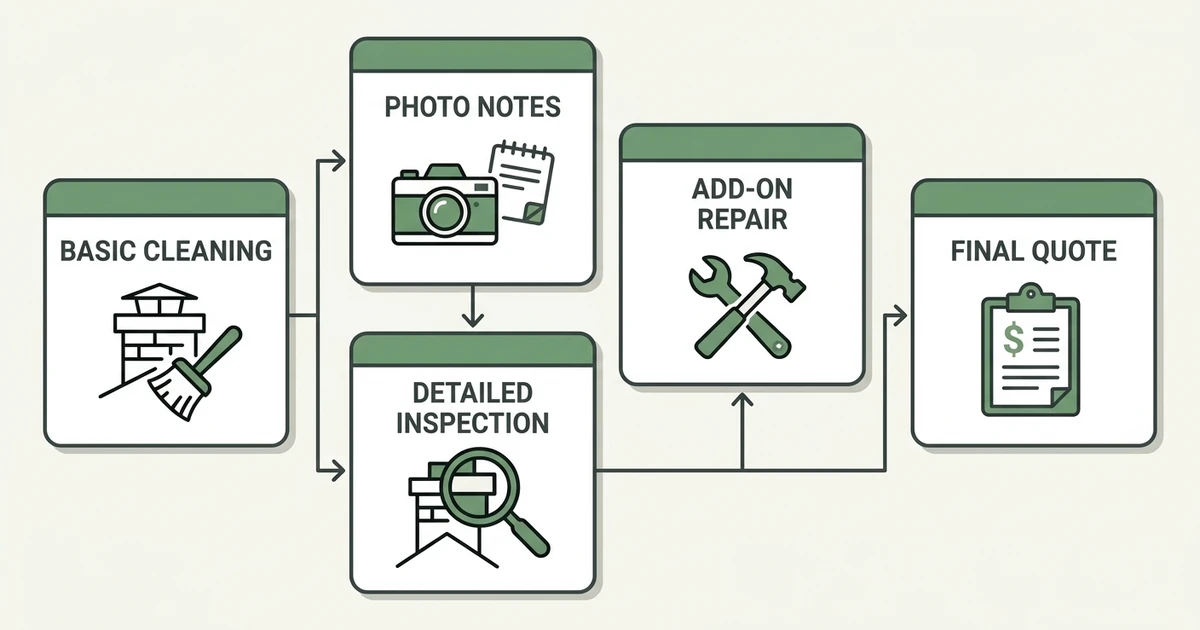
Use service categories like:
- Basic visual check and cleaning
- Cleaning plus photo documentation
- Detailed inspection with written notes
- Wood stove or insert service
- Animal nest or obstruction removal
- Minor repair quote visit
- High-access or steep-roof appointment
Each category should have a base price and a list of adjustment rules. For example, a standard cleaning might include one flue, normal access, and a defined service radius. Extra flues, difficult access, long travel, or heavy buildup can be priced as add-ons.
Then calculate the labor behind each category. If a technician appointment uses two hours of paid time including drive, setup, cleaning, documentation, and cleanup, the price needs to cover those two hours plus overhead and profit.
Do not forget office time. Someone answers the call, confirms the address, asks about the fireplace type, schedules the appointment, sends reminders, and handles payment. That work belongs in your pricing model.
Example chimney sweep quote calculation
Here is a simple pricing example for a standard cleaning with photo notes. The home is inside your service area, access is normal, and the technician expects a one-flue cleaning.
| Cost item | Estimate | Notes |
|---|---|---|
| Technician labor | $95 | On-site work, drive time, and documentation |
| Vehicle and fuel | $22 | Local travel and equipment transport |
| Supplies and equipment wear | $18 | Brushes, vac use, protection, cleaning supplies |
| Office and payment cost | $20 | Scheduling, reminders, processing |
| Total cost | $155 | Before profit |
If you quote $179, you may be close to break-even after overhead. If you quote $229 to $249, you have more room for profit, small delays, and the customer service time that keeps reviews strong.
This example is not a universal price. The better lesson is the method. Build from cost, then add margin, then compare against the market.
For repair-heavy visits, separate diagnosis from the repair. If the technician discovers a damaged cap, cracked crown, or liner concern, create a separate quote instead of letting the original cleaning price absorb the extra work.
How to explain chimney pricing to homeowners clearly
Customers do not always understand why chimney prices vary. They may compare your quote to a coupon from another company without knowing what is included.
Make the scope visible. A good chimney quote should explain:
- What service is included
- Whether inspection notes or photos are included
- What access assumptions were used
- Whether extra flues cost more
- What happens if heavy buildup or repairs are found
- How payment is collected
Plain language reduces disputes. Instead of saying “Level 2 style documentation may be extra,” explain what the customer gets: photos, written findings, and a repair recommendation if needed.
This also protects the technician. If the customer adds a second fireplace after arrival, the tech can point back to the approved scope and update the quote professionally.
Fieldified helps chimney sweep companies keep customer requests, quote details, inspection notes, schedules, and invoices connected. Book a Fieldified demo to see how your team can quote and invoice without rebuilding job details by hand.
How scheduling and invoicing software improves chimney sweep pricing
Chimney companies lose money when pricing and scheduling are disconnected. A quote may be profitable on paper but painful in practice if it is placed across town from the previous job or squeezed into too small a time window.
Chimney sweep software helps by keeping the job details attached to the appointment. The dispatcher can see scope, access notes, customer history, and technician assignment together.
Software also helps with quote consistency. With professional quote management, you can create service templates for common job types, then adjust for access, travel, or add-ons.
After the job, online booking forms and invoice workflows reduce admin backtracking. The technician should not finish three homes, then rely on memory to tell the office what to bill.
If you are still building your price sheet, a service price calculator can help test labor, overhead, and margin assumptions before you publish new rates.
Chimney sweep pricing mistakes to avoid during busy season
Busy season makes weak pricing worse. The phone rings more, customers want faster appointments, and technicians have less room for surprise delays.
Avoid these mistakes:
- Advertising one flat price without scope limits
- Failing to charge for hard access
- Underpricing documentation-heavy inspections
- Letting repairs creep into cleaning appointments
- Forgetting travel time
- Not charging for extra flues
- Sending invoices after the office catches up days later
- Ignoring which appointments regularly run long
Also avoid discounting every hesitant customer. A full schedule at weak prices is not a win. It can burn out technicians and leave the business short on cash after payroll.
Review completed jobs by service type. If wood stove appointments always take longer, price them differently. If certain neighborhoods require longer travel, adjust the service-area rules. If inspection reports take real office time, price that time.
Good pricing is not static. It should improve as your records improve.
Frequently Asked Questions
What affects chimney sweep pricing the most?
Chimney sweep pricing is affected by inspection scope, chimney height, access risk, creosote buildup, appliance type, travel time, and add-on repairs. Seasonal demand can also affect price because appointment slots are limited.
How should a chimney sweep quote inspections?
Quote inspections based on the level of documentation, time required, access, travel, and whether photos or written findings are included. Do not price a quick visual check the same as a detailed inspection report.
Should chimney sweep pricing include travel time?
Yes. Travel time is paid time and reduces how many appointments your technician can complete. Include travel in the minimum fee, service-area pricing, or a clear trip charge.
Can chimney sweep software help with pricing?
Yes. Software can store quote templates, customer history, photos, inspection notes, schedules, and invoices. That makes pricing more consistent from one call to the next.
How often should a chimney sweep update pricing?
Review pricing at least twice a year and always before busy season. Update rates when labor, insurance, fuel, equipment, or admin costs change.
Conclusion
Chimney sweep pricing should reflect the real work behind the visit: inspection scope, access, cleaning difficulty, technician time, travel, documentation, overhead, and profit. If your team quotes all jobs like they are the same, the hard jobs will quietly drain margin.
A clear pricing system helps customers understand the value and helps technicians protect the schedule. It also gives the owner a cleaner view of which work is actually profitable.
If you want to manage chimney sweep quotes, scheduling, notes, invoices, and payments in one place, book a Fieldified demo and see how Fieldified supports the full appointment workflow.