





Imagine you receive a call from a customer about an electrical issue at their home. You assign one of your workers without clearly checking whether they are the right person for the job. The worker visits the site, fixes the issue, and then calls you for the invoice.
To create the invoice, you rely on spreadsheets or paper, which takes a lot of time. The customer must wait for the bill, and this delay can negatively impact your service experience.
This is how most electrical contractors operate today, often facing challenges of poor scheduling and manual invoicing. This process is time-consuming and can even affect your business efficiency and customer satisfaction.
If you’re also struggling with these, you’re in the right place. Here, we’ll guide you step by step on how to simplify your scheduling and invoicing + also explain how electrician scheduling software helps you with that.
Let’s start by understanding the common problems that electricians face.
Challenges Electricians Face
Electrical startups and independent electricians face numerous challenges in managing their daily operations nowadays. Most of these problems are not related to technical skills, but to planning, coordination, and business management.
Without proper systems, electricians often struggle with these problems, which affects both their productivity and customer satisfaction.
In the image below, some of the problems are highlighted: 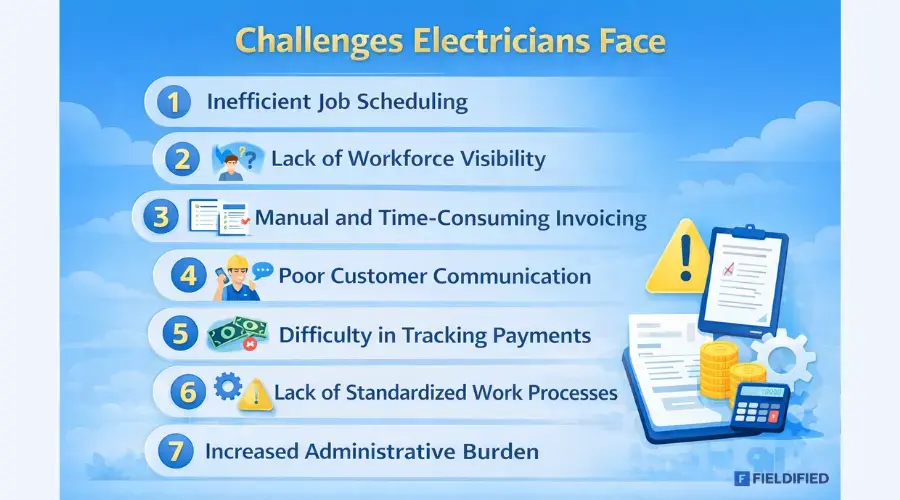
1. Inefficient Job Scheduling
Electricians often assign workers without verifying their availability, skills, or suitability for the job location. This miscommunication leads to:
- Overlapping job schedules
- The wrong technician was assigned to the job
- Missed or delayed appointments
- Bad time management
2. Lack of Workforce Visibility
Contractors don’t always know where their technicians are or what task they are handling. This makes it difficult to manage urgent jobs or reschedule tasks quickly, which creates confusion.
Without visibility, daily operations become disorganized and stressful.
3. Manual and Time-Consuming Invoicing
Many electricians still create invoices using paper or spreadsheets; It takes time, and customers have to wait longer for bills. This process is slow and prone to errors. which can lead to:
- Delayed invoice generation
- Late customer payments
- High chances of billing mistakes
- Reduce your customer trust
4. Poor Customer Communication
Without proper updates, the customer didn’t get informed about job status, delays, or technician arrival times. This can lead to frustration and poor communication in your customer’s mind.
This directly affects your customer trust and service quality.
5. Difficulty in Tracking Payments
Many electricians struggle to track paid and pending invoices. Electricians often lose track of pending payments, which creates cash flow problems for the business. And that’s why:
- Cash flow becomes unstable
- Follow-ups increase workload
- Financial planning becomes difficult
6. Lack of Standardized Work Processes
Each job is handled differently due to the absence of a proper system. Manual work makes it difficult to manage more jobs at the same time.
For example, an electrician completes a job and tells the office verbally, but the details are not written anywhere. Later, when that customer calls for an update, no one has clear information, which leads to confusion and poor service.
This is one of the clear signs your business has outgrown spreadsheets, and because of this, electricians find it difficult to grow their business.
7. Increased Administrative Burden
Electricians spend a lot of time on non-technical tasks like scheduling, billing, and follow-ups.
And they are not able to focus on their main work, such as electrical installations, troubleshooting faults, maintenance and repairs, safety inspections, and delivering quality service to customers.
This inefficient workflow shows inconsistency in service quality and reduces overall customer satisfaction.
How These Challenges Affect Your Electrical Business
These problems are part of everyday work for many electricians, and they often lead to slow growth and missed opportunities. When daily operations are not managed properly, the impact on the business becomes visible.
Time Waste: Too much time is spent on calls, messages, and manual paperwork instead of actual electrical work.
Revenue Loss: Missed follow-ups and delayed invoices result in lost payments and fewer repeat jobs.
Unhappy Customers: Late responses and poor communication frustrate customers and reduce trust.
Unprofessional Image: Using scattered tools and informal systems makes the business look unorganized and less reliable.
But don’t worry, Fieldified is here to solve these electricians’ problems and help electrical businesses. Instead of struggling with these problems, electricians can focus more on what matters and less on what doesn’t.
So let’s come to the
Contractor CRM Scheduling Software Solution
A contractor scheduling software is a digital CRM tool that brings everything into one clear system. It removes the need for multiple tools like WhatsApp and spreadsheets, and helps electricians to do daily work without confusion.
This software helps electricians manage jobs, customers, and invoices smoothly, saving time and reducing daily stress. It saves time, reduces daily stress, and solves problems like missed follow-ups and delayed payments.
It also improves communication and gives the business a more professional image. This allows electricians to focus on quality work and business growth instead of daily management issues.
Now you may wonder - Is the contractor CRM really helpful for growing my electrical business?
The answer is yes.
If you are facing any of the problems mentioned above, then moving to a good scheduling software can truly help you.
And don’t worry about
How to Use Electrician Scheduling Software?
(Step-by-Step Roadmap) Below are simple and beginner-friendly roadmap images specially designed for electrician startup businesses. This roadmap helps electricians to know how to use CRM software at first 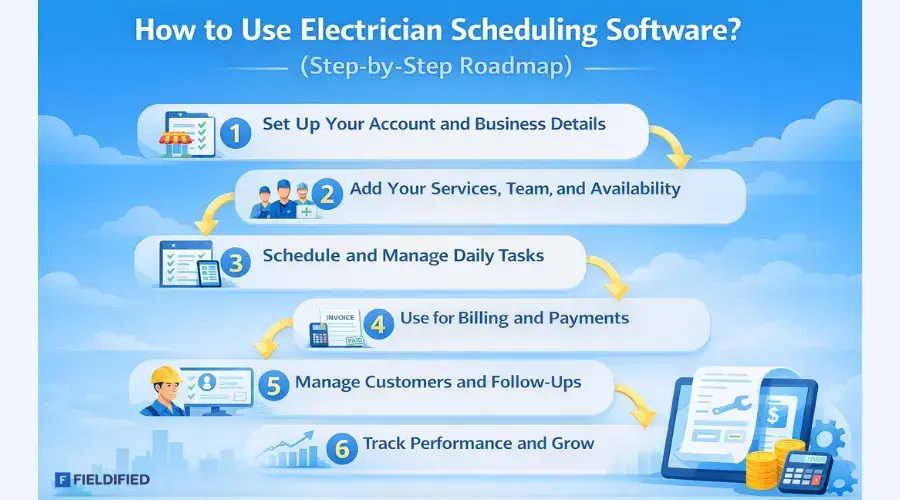
Let’s break down each step and see how it helps electricians work smarter every day:
Step 1: Set Up Your Account and Business Details
The first step is to create your account in your scheduling software. Enter basic business details like your business name, contact number, service area, and working hours. This helps the software organize your work according to your business needs.
Once setup is done, you will have a clear dashboard where you can see jobs, customers, and schedules in one place. This removes the need to manage everything through WhatsApp or spreadsheets.
Step 2: Add Your Services, Team, and Availability
Now, list all the electrical services you provide, such as wiring, repairs, installations, or maintenance. Then, add your electricians’ team members with their working hours and availability.
This step is important because the contractor CRM uses this information to assign jobs correctly. It ensures no electrician is overbooked and every job is handled on time.
Step 3: Schedule and Manage Daily Tasks
Now you can start scheduling jobs easily using the electrical scheduling software. When a customer calls or submits a request, you can create a job and assign it instantly.
This helps you:
- See all jobs in one calendar view
- Avoid overlapping or missed jobs
- Track job status from start to finish With a CRM system, daily work becomes smooth and organized.
Step 4: Use CRM for Billing and Payments
After completing a job, you can generate an invoice directly using this CRM tool. This saves time and avoids billing mistakes. You don’t need to create invoices manually or follow up through messages.
The invoicing CRM helps you:
- Create professional invoices quickly
- Track pending and completed payments
- Maintain clear financial records This improves cash flow and builds customer trust.
Step 5: Manage Customers and Follow-Ups
Customer details like contact information, service history, and past invoices are stored safely in one place. With an invoicing CRM, you can automate follow-ups and invoicing, which makes it easy to check customer satisfaction after service without extra effort.
Regular follow-ups help build customers’ trust and increase repeat customers, which is very important for growing your electric business.
Step 6: Track Performance and Grow
As you continue using the scheduling CRM software, you can track every job detail, including completed jobs, earnings, and team performance, directly on the dashboard. All important data is shown in one place, making it easy to see daily progress and overall business performance.
These insights help you understand what is working well and where improvements are needed. By having clear reports and job history, electricians can focus more on long-term growth.
Final Thoughts
Electricians really face many problems while scheduling jobs and creating invoices. Most of the work is still handled manually using calls, WhatsApp messages, or spreadsheets, which leads to confusion, missed jobs, and delayed payments. Managing everything without a proper system becomes difficult.
But an electrical scheduling software makes an electrician’s work easy and smooth without any juggling. It helps manage jobs, schedules, customers, and payments in one place. Electricians can plan daily tasks better, avoid overlaps, and deliver services on time with a more professional approach.
A contractor CRM can also create invoices automatically after job completion. This invoicing CRM tool saves time, reduces billing errors, and improves cash flow.
However, choosing the best contractor CRM tools for your electric business can be confusing because many options are available. That’s why it is important to check features, ease of use, and support before selecting a CRM for your electrical business.
FAQs
1. What is electrician scheduling software?
Electrician scheduling software helps electrical contractors manage jobs, technicians, schedules, and invoices from one platform.
2. How does scheduling software help electrical contractors?
It helps assign the right technician, avoid overlapping jobs, track work status, and save time on daily operations.
3. Is electrician invoicing software useful for small businesses?
Yes, it helps small electrical businesses create invoices faster, reduce billing errors, and track payments easily.
4. Can electricians use scheduling software to track payments?
Yes, most contractor CRM tools allow electricians to track paid and pending invoices in one place.
5. What features should electricians look for in scheduling software?
Electricians should look for job scheduling, invoicing, payment tracking, customer management, and easy-to-use dashboards.
Blog Summary
- Electricians face daily problems like poor job scheduling, manual invoicing, and payment tracking, which waste time and create confusion.
- Manual systems such as calls, WhatsApp, and spreadsheets slow down work and affect customer satisfaction.
- Poor scheduling and communication lead to missed jobs, delayed services, and unhappy customers.
- Electrician scheduling software helps manage jobs, teams, customers, and invoices in one place.
- CRM tools make invoicing and payments easy, reduce errors, and improve cash flow for electrical businesses.
- Using the right contractor CRM helps electricians work professionally, save time, and grow their business smoothly.