 EN
EN DE
DE ES
ES FR
FR NL
NL PT
PT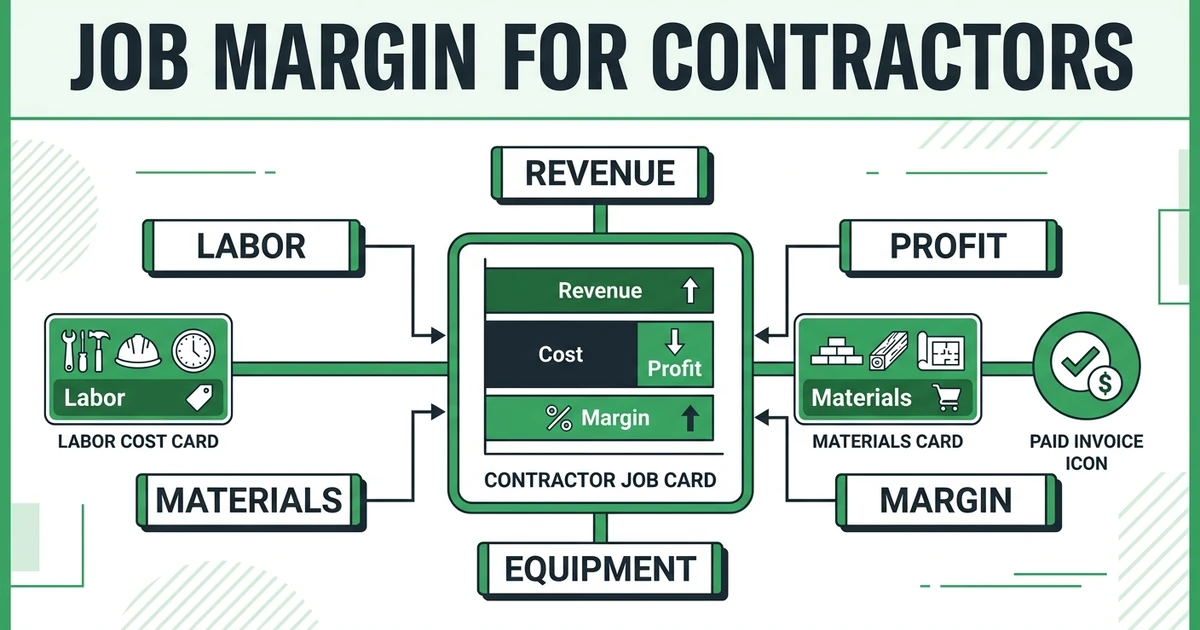





Quick Answer:
Job-level margin is the percentage of job revenue left after direct labor, materials, subcontractors, equipment, and job-specific costs are removed. Tracking it by job helps you see which services make money, which crews protect profit, and which prices need to change.
Job margin for contractors is one of the clearest numbers in a service business. Revenue tells you how much work came in. Job margin tells you whether that work was worth doing.
A full calendar can still hide weak profit.
An HVAC crew may stay busy all week but lose margin on callbacks. A cleaning company may win new accounts but underprice labor. A concrete contractor may quote materials correctly and still miss equipment time. The job looks complete, but the profit is thinner than expected.
What Is Job Margin for Contractors?
This metric measures how much revenue remains after direct job costs are removed. It is usually shown as a percentage of the selling price.
The basic formula is:
Job margin = (Job revenue - Direct job costs) / Job revenue
If a contractor charges for a job and spends part of that money on labor, materials, subcontractors, disposal, equipment, permits, and job-specific travel, job margin shows what is left after those direct costs.
That number is different from total company profit. Office salaries, rent, software, insurance, marketing, and vehicles still matter. But job margin helps you see whether the work itself is priced correctly before overhead gets added.
Why a Busy Schedule Can Still Hide Low-Margin Jobs
Contractors often feel profitable when every technician is booked. The phones are ringing, crews are moving, and invoices are going out.
Busy does not always mean profitable.
Low-margin jobs can hide inside a full schedule when crews run long, materials cost more than expected, travel time is ignored, or follow-up visits are not priced. A painting job that needs extra prep, a plumbing job that needs another parts run, or a lawn care route with too much windshield time can all shrink margin.
The Federal Reserve reported that 75% of employer firms cited rising costs of goods, services, and/or wages as a financial challenge in its 2025 Small Business Credit Survey. If costs rise but pricing does not change, job margin absorbs the hit.
That is why contractors need to review margin by job type, crew, and service area, not just total monthly revenue.
Which Costs Should Contractors Include Before Calling a Job Profitable?
A job is not profitable just because the customer paid more than the materials cost. Contractors need to include the direct costs required to complete the work.
Start with costs that clearly belong to the job:
- Field labor
- Labor burden
- Materials and parts
- Subcontractors
- Equipment rental or use
- Disposal fees
- Permits
- Job-specific travel
- Warranty or callback work
Labor is the cost many teams undercount. The hourly wage is only the start. Payroll taxes, workers’ compensation, insurance, paid time, and supervision all affect what the job really costs.
This is where job costing software for contractors can help. It keeps estimated costs and actual job activity closer together, so the office is not guessing after the invoice is sent.
How to Calculate Job Margin Without Guessing
To calculate job margin, start with job revenue. Then subtract direct job costs. Divide the result by job revenue.
Here is the workflow:
- Start with the final job price.
- Add direct labor cost.
- Add materials, parts, equipment, subcontractor, and disposal costs.
- Include job-specific travel or permit costs when they matter.
- Subtract total direct costs from job revenue.
- Divide the result by job revenue.
- Compare the margin against similar jobs.
The formula is simple. The hard part is collecting the right cost data.
If technicians track time in one place, materials in another, and invoices somewhere else, the margin calculation becomes cleanup work. A job costing calculator for contractors can help estimate the number, but the long-term fix is cleaner job data.
Use the formula to find patterns. If small repair jobs regularly beat larger installs, or one crew protects margin better than another, those patterns should change pricing and scheduling decisions.
What Labor Rate and Billable Rate Tell You About Each Job
Labor rate and billable rate are not the same thing. Labor rate is what it costs the business to put a technician or crew on the job. Billable rate is what the customer is charged for that labor.
The gap between them helps protect margin.
For example, an electrical contractor may charge enough for materials but underprice labor on troubleshooting work. A cleaning company may set a flat rate that works for small homes but breaks when homes take longer than expected. A landscaping crew may ignore travel time between stops.
Use a labor rate calculator to pressure-test whether your labor price covers real field cost. Then compare that number to actual job results.
The Federal Reserve’s Main Street Metrics report showed that 46% of employer firms in the 2024 survey were operating profitably at the end of the prior year in its 2025 trend chartbook. Contractors should not assume revenue alone will carry profit. Labor and pricing discipline matter.
Before you quote another job, check whether the labor rate supports the margin you need. Use Fieldified’s labor rate calculator to pressure-test pricing before low-margin work becomes normal.
How to Spot Margin Leaks Across Crews, Services, and Service Areas
Margin leaks are easier to spot when you compare similar jobs. One bad job may be an exception. A pattern means something needs to change.
Look across:
- Service type
- Crew or technician
- Route or service area
- Job size
- Quote source
- Material category
- Callback rate
- Invoice timing
For example, a cleaning company may find that one-time deep cleans look profitable until labor hours are counted properly. A plumbing business may find that emergency jobs are profitable, but follow-up work is often underquoted. A concrete contractor may see margin drop whenever equipment time is not included.
Do not treat margin as a finance-only report. Use it to improve estimates, crew planning, service area decisions, and follow-up pricing.
How Fieldified Helps Track Job Costs From Estimate to Invoice
Fieldified helps contractors connect job details from estimate to invoice. That matters because margin gets harder to track when estimates, schedules, field notes, costs, and billing all live in separate places.
The goal is not more paperwork. The goal is better job visibility.
With Fieldified, a service team can keep customer records, quotes, schedules, job updates, invoices, payments, and reporting closer together. That makes it easier to see how work moved from price to completion to payment.
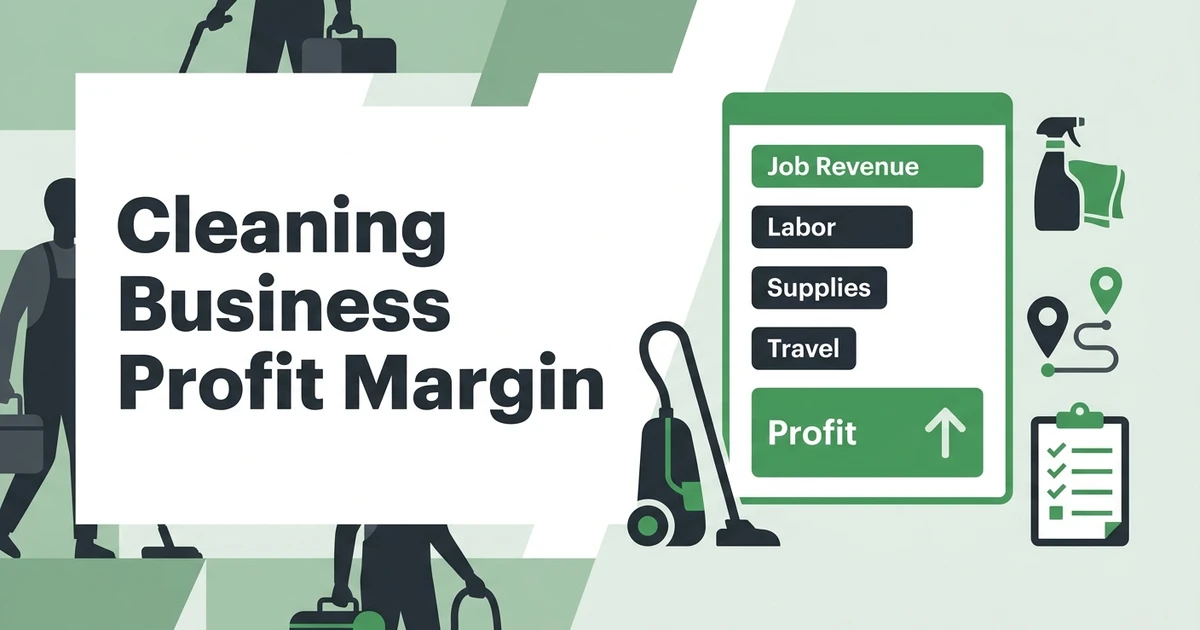
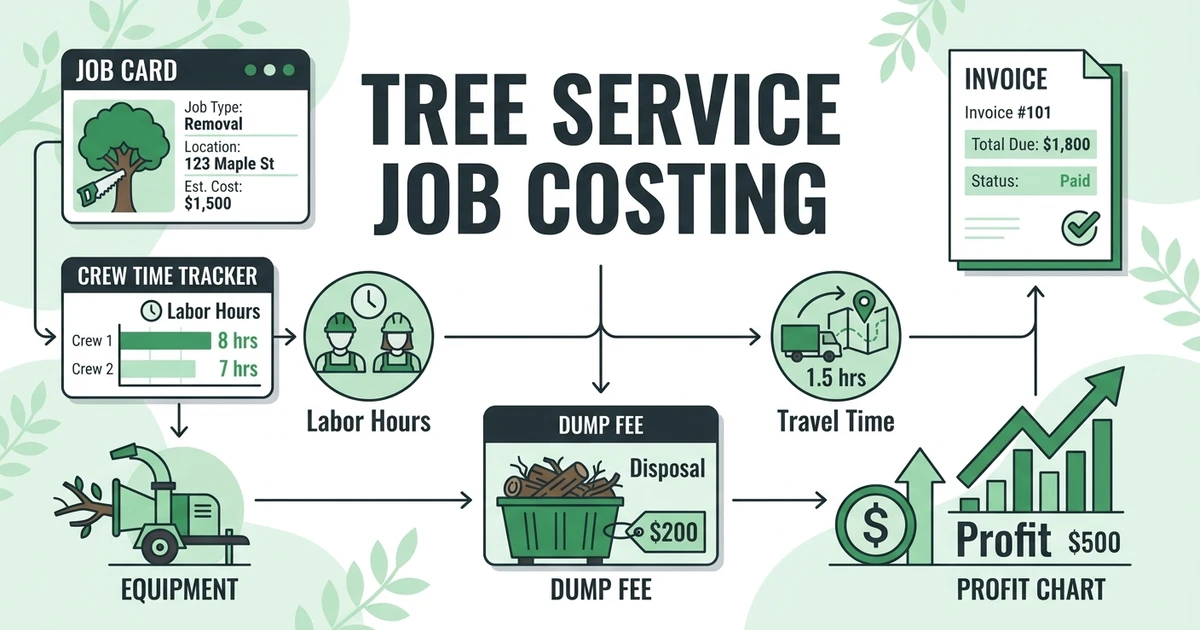
Fieldified’s business performance dashboard helps service teams watch the numbers that shape daily decisions. For trade-specific pricing context, compare this guide with the cleaning business profit margin guide and the tree service job costing guide.
Frequently Asked Questions
What is job-level margin for contractors?
Job-level margin is the percentage of job revenue left after direct job costs are removed. Those costs usually include labor, materials, equipment, subcontractors, permits, and other expenses tied to that job.
What is a good job-level margin?
A good job margin depends on the trade, service type, overhead, and risk level. The key is to compare margin by job type so low-margin work does not hide inside a busy schedule.
What is the difference between job margin and markup?
Markup is added to cost to create the selling price. Job margin measures how much of the selling price remains after direct costs are removed.
Should labor burden be included in job margin?
Yes. Contractors should include the real cost of field labor, not only the hourly wage. Payroll taxes, insurance, benefits, paid time, and supervision can all affect the true labor cost of a job.
How does job costing software help protect margin?
Job costing software helps contractors compare estimated costs against actual labor, materials, and job expenses. That makes it easier to spot margin leaks before the same pricing mistake repeats.
Conclusion: Profit Is Easier to Protect When You Track It by Job
Job margin gives contractors a clearer view of profit than revenue alone. It shows whether labor, materials, travel, equipment, and callbacks are priced into the work.
The more consistently you track margin by job, the easier it is to quote better, schedule smarter, and stop repeating low-profit work.
Book a demo to see how Fieldified helps contractors connect estimates, job costs, invoices, payments, and performance reporting in one workflow.